


















AI Summary
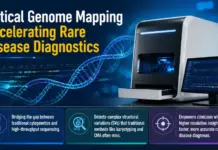
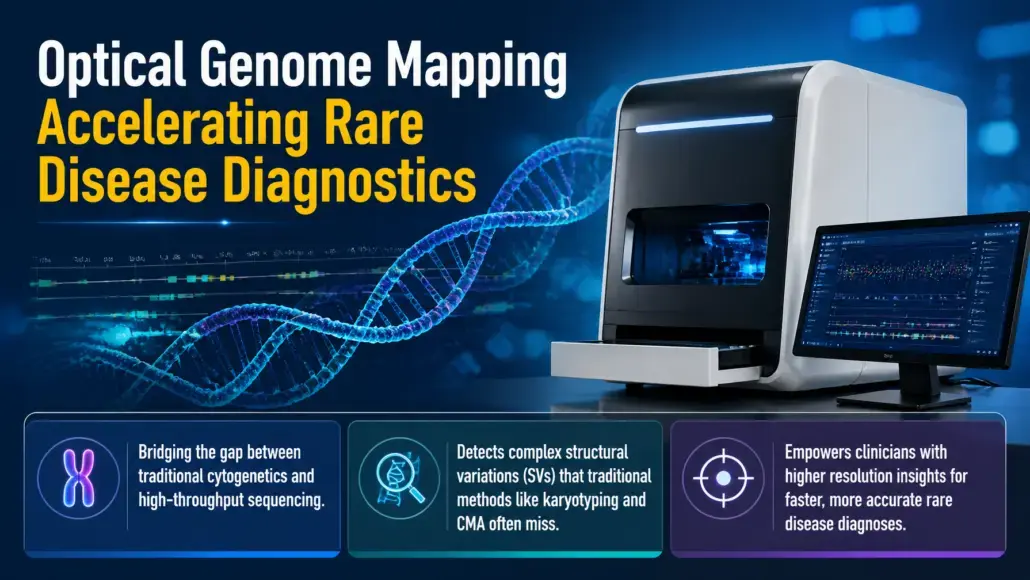
The landscape of clinical genomics is currently witnessing a transformative shift as new technologies emerge to bridge the critical gap between traditional cytogenetics and high-throughput sequencing. For decades, the diagnosis of rare genetic diseases was hampered by the limitations of conventional methods like karyotyping and chromosomal microarray (CMA), which often failed to detect complex structural variations (SVs). However, the rise of Optical Genome Mapping (OGM) has provided clinicians and researchers with a powerful new lens through which to view the human genome, offering a resolution and sensitivity that were previously unattainable. Pharma Advancement notes that by providing a comprehensive, high-definition map of the genome’s structural landscape, OGM is accelerating the path to diagnosis for millions of patients and their families, marking a new era of precision medicine.
Structural variations, which include large-scale insertions, deletions, inversions, and translocations, are a major driver of rare diseases but are notoriously difficult to detect using short-read sequencing technologies. OGM overcomes this challenge by imaging long, intact molecules of DNA, allowing for the direct visualization of structural changes in their native genomic context. This approach eliminates the need for complex bioinformatic reconstruction of fragmented sequences, providing a much clearer and more reliable picture of the genome’s architecture. The ability of OGM to detect balanced translocations and other complex rearrangements—which are often invisible to other methods—is particularly significant for the diagnosis of neurodevelopmental disorders and congenital anomalies.
Nanochannel Imaging and Multi-Platform Synergy
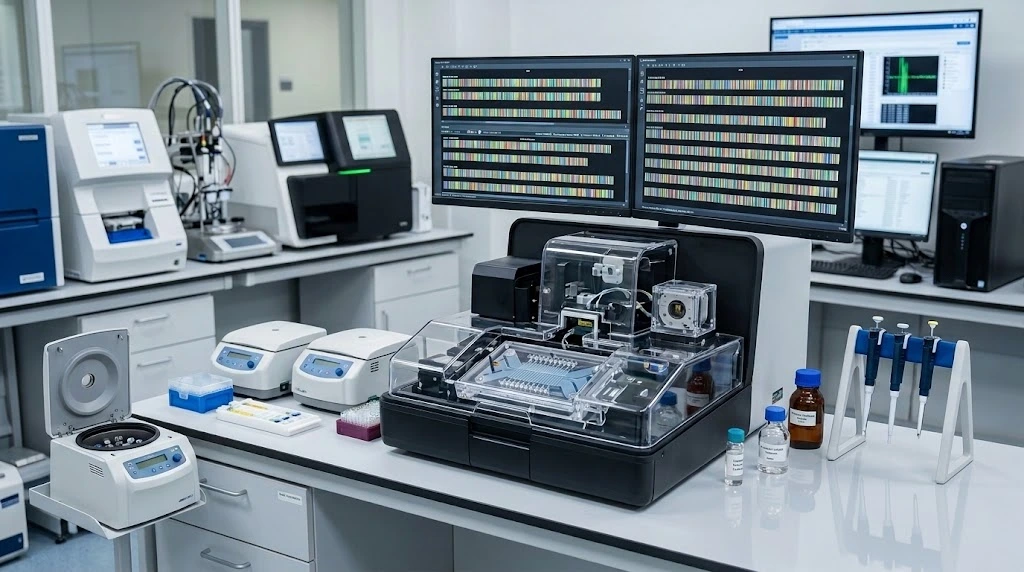
The technical process of OGM involves labeling specific DNA sequences on ultra-high-molecular-weight (UHMW) DNA molecules, which are then linearized and flowed through nanochannel arrays. High-speed imaging systems capture the pattern of these labels, creating a unique ‘barcode’ for each molecule. By comparing these barcodes to a reference genome, researchers can identify deviations that indicate the presence of structural variations. The length of the molecules—often exceeding 150,000 base pairs—is what allows OGM to bridge the gaps that short-read sequencing cannot cross, providing a truly holistic view of the genome. This ability to maintain long-range genomic information is the defining technical advantage of the mapping approach.
Furthermore, the integration of OGM with existing sequencing data is creating a new gold standard for ‘complete’ genomics. By combining the high-resolution structural information of OGM with the single-nucleotide precision of next-generation sequencing (NGS), clinicians can achieve an unprecedented level of diagnostic accuracy. This dual-layered approach is particularly valuable for identifying complex ‘compound’ genotypes, where a small mutation on one allele is paired with a large structural rearrangement on the other. The synergy between mapping and sequencing is essential for unraveling the most challenging cases in rare disease medicine.
A pivotal moment in the clinical validation of this technology occurred in March 2025, when Bionano Genomics and the Greenwood Genetic Center (GGC) published a significant study demonstrating the efficacy of OGM in identifying previously unreported variants in patients with neural tube defects (NTDs). The study utilized the Saphyr system to analyze the genomes of affected individuals, revealing a wealth of new structural variants and candidate genes that were missed by standard genetic testing. This collaboration underscores the critical role that Optical Genome Mapping plays in uncovering the hidden genetic drivers of devastating birth defects and serves as a powerful testament to the technology’s potential to become a standard of care in rare disease diagnostics.
Clinical Utility: Preclinical Quality Control to Pharmacogenomics
The acceleration of rare disease diagnostics through OGM is intrinsically linked to the broader goals of precision medicine. By providing a more precise and comprehensive genetic profile, OGM allows for the development of highly personalized treatment plans and the identification of new therapeutic targets. For instance, the transition toward multi-omics data integration is bolstered by the high-quality structural data provided by OGM, creating a more holistic understanding of the patient’s molecular biology. Crucially, as researchers uncover how these large-scale genomic rearrangements alter chromatin architecture and gene regulation, insights into epigenetics powering reversible precision therapeutics are enabling interventions that can modulate aberrant gene expression without permanently altering the underlying DNA sequence. This systemic approach ensures that the diagnosis is not just the end of a journey, but the beginning of a tailored clinical pathway that optimizes patient outcomes.
In the realm of drug development, OGM is also proving to be an invaluable tool for characterizing the genomic stability of cell lines and animal models. By ensuring that these research tools are free from unwanted structural variations, pharma companies can improve the reliability of their preclinical studies and reduce the risk of unexpected outcomes during clinical trials. The use of OGM for quality control in the manufacturing of cell and gene therapies is another burgeoning area of application, providing the high level of genomic oversight needed to ensure patient safety. The influence of OGM thus extends from the laboratory bench to the patient’s bedside.
Moreover, the role of OGM in identifying ‘copy number variations’ (CNVs) that influence drug metabolism is a key area of research. Many genes involved in how the body processes medications are subject to structural changes that can lead to varying levels of efficacy or toxicity. By mapping these variations, OGM can help to guide the selection and dosing of personalized medications, minimizing the risk of adverse drug reactions. This pharmacogenomic application of OGM is a vital component of the broader effort to make medicine safer and more effective for everyone. The ability to predict a patient’s response to therapy based on their structural genomic profile is a hallmark of the new precision medicine paradigm.
Health Economics and Global Standardization
Furthermore, the adoption of OGM is driving a significant improvement in the efficiency of clinical workflows. In many cases, OGM can replace multiple conventional tests, reducing the diagnostic odyssey that patients with rare diseases often endure for years. By providing a definitive answer in a single assay, OGM not only saves time and resources for the healthcare system but also provides much-needed clarity for families. This streamlined approach to genetic testing is a vital component of a modern, patient-centered healthcare system, ensuring that the benefits of genomic innovation reach the individuals who need them most.
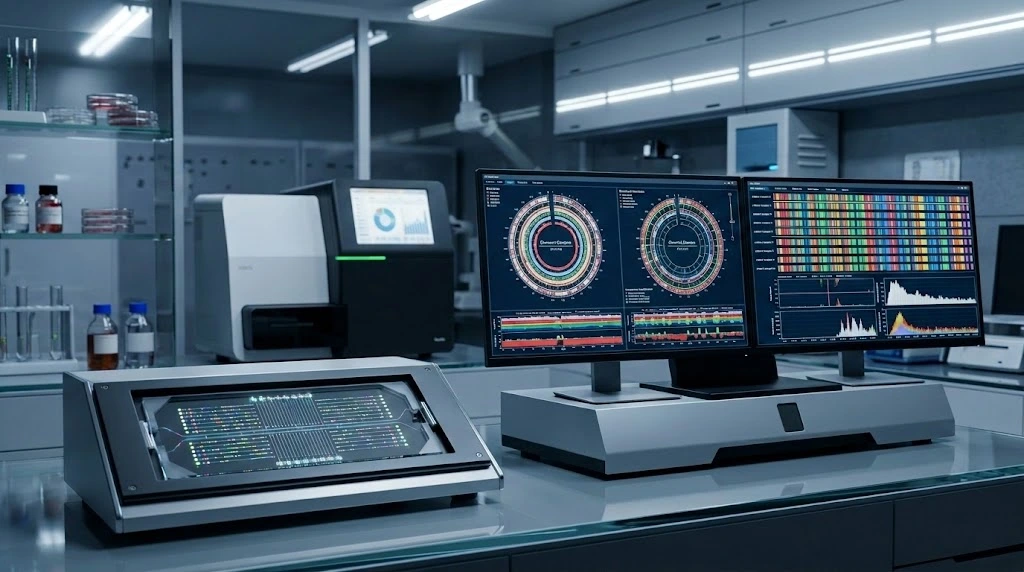
The technical sophistication of OGM is also fostering a new era of research into the structural basis of human disease. Scientists are using the technology to map the structural landscape of various cancers, neurological disorders, and cardiovascular conditions, revealing the complex ways in which genomic rearrangements drive disease progression. These insights are leading to the discovery of new biomarkers and the development of next-generation diagnostics that can detect diseases earlier and more accurately. The expertise gained in applying OGM to rare diseases is thus providing a foundation for the broader application of structural genomics across the entire spectrum of human health.
The economic case for OGM is also becoming increasingly compelling. While the initial investment in the technology can be significant, the long-term savings associated with faster diagnosis and more effective treatment are substantial. Reducing the number of inconclusive tests and avoiding unnecessary medical procedures can significantly lower the overall cost of care for patients with rare diseases. As the technology becomes more widely adopted and the cost of reagents and imaging continues to fall, the financial benefits of OGM will only grow, making it a viable and attractive option for clinical laboratories around the world.
Moreover, the role of international collaboration in the growth of the OGM market is critical. Global initiatives like the Solve-RD project in Europe are utilizing OGM to solve cold cases in rare disease diagnostics, sharing data and expertise across borders to improve patient outcomes. These collaborative efforts are essential for building the large-scale datasets needed to fully understand the clinical significance of structural variants and for developing standardized protocols for their interpretation. The fusion of cutting-edge technology and global cooperation is the key to unlocking the full potential of structural genomics.
Future Innovations, AI Integration, and Workforce Training
Looking ahead, the commitment to Optical Genome Mapping will be a defining characteristic of the precision medicine landscape in the coming decades. The ongoing development of even higher-resolution imaging systems, including the use of advanced optics and more sensitive detectors, will further improve the performance and reduce the cost of structural mapping. The integration of AI-driven variant interpretation—using deep learning algorithms to automatically identify and classify complex structural changes—will be essential for scaling the technology to meet the growing demand for genetic testing.
The expansion of global genomic databases to include high-quality structural data from diverse populations will also be critical for improving the accuracy of variant interpretation and reducing health disparities. By ensuring that the benefits of OGM are available to everyone, regardless of their background, the healthcare community can build a more equitable and effective foundation for the future of medicine. Optical Genome Mapping is not just a technological advancement; it is a strategic imperative that will ensure that every patient has access to the precise and timely diagnosis they deserve. The fusion of structural genomics and precision therapeutics, embodied in the rise of OGM, is the defining vision for the medicine of the 21st century.
Finally, the importance of education and training for clinicians and genetic counselors in the interpretation of OGM data cannot be overstated. As the technology becomes a standard part of the diagnostic toolkit, there is a need for a new generation of healthcare professionals who are fluent in the language of structural genomics. Pharma Advancement believes that by investing in the human capital needed to operate and understand these complex systems, the healthcare community can ensure that the full potential of OGM is realized. The journey from genomic discovery to clinical impact is a collective effort that requires the dedication and expertise of stakeholders across the entire medical spectrum.
References
- Bionano Genomics and Greenwood Genetic Center Study Reveals New Genetic Variants in Neural Tube Defects Using OGM
- Bionano Genomics Announces Peer-Reviewed Publication Supporting OGM as Standard of Care in Genetic Disease Testing
- Saphyr System and the Future of Structural Variation Detection
- Greenwood Genetic Center – Leading the Way in Rare Disease Research
