


















In the pharmaceutical industry, the discovery of a potent new drug molecule is only half the battle. For that molecule to become a successful medicine, it must be transformed into a stable, safe, and effective dosage form, whether it be a pill, an injection, or an inhaler. This process, known as formulation development, involves selecting the right combination of inactive ingredients (excipients) to ensure the drug is absorbed by the body at the right rate and remains stable throughout its shelf life. Traditionally, this has been a process of trial and error, requiring hundreds of laboratory experiments and months of stability testing. However, the introduction of artificial intelligence is fundamentally changing this landscape. Pharma Advancement notes that AI is enabling smarter formulation development by using predictive modeling and machine learning to optimize drug delivery and manufacturing, significantly reducing the time and cost of bringing new therapies to patients.
The Complexity of Pharmaceutical Formulation
The development of a pharmaceutical formulation is a multi-dimensional optimization problem. A researcher must consider the physical and chemical properties of the drug molecule, its solubility, its stability under different temperatures and humidity levels, and its compatibility with various excipients. Furthermore, the formulation must be designed for large-scale manufacturing, ensuring that every pill produced is identical and meets strict quality standards. Traditionally, scientists relied on their experience and small-scale experiments to navigate this complexity. This approach, while effective, is slow and often misses the most optimal combinations. AI enables smarter formulation development by analyzing vast datasets of past formulation experiments to predict how a new molecule will interact with different excipients, allowing researchers to skip the dead ends and focus on the most promising paths.
By utilizing machine learning algorithms, such as random forests or neural networks, AI enables smarter formulation development by identifying non-linear relationships between ingredients and performance metrics. For example, an AI model can predict how changing the concentration of a specific binder will affect the disintegration time of a tablet or how the choice of a surfactant will impact the solubility of a poorly water-soluble drug. This predictive capability allows formulation scientists to conduct thousands of virtual experiments in a matter of seconds, providing a level of insight that was previously impossible to achieve in a laboratory setting.
Optimizing Drug Delivery Systems and Bioavailability
One of the most critical areas where AI helps with smarter formulation development is in the design of advanced drug delivery systems. Many modern drug candidates, particularly those from the burgeoning field of biotechnology, are highly potent but difficult to deliver to the specific target in the body. AI is being used to design nanocarriers, liposomes, and other sophisticated delivery vehicles that can protect the drug from degradation and ensure its release at a controlled rate. By modeling the interaction between the drug, the delivery vehicle, and the biological environment, AI helps scientists create more efficient and targeted therapies.
Furthermore, AI makes smarter formulation development possible by addressing the challenge of bioavailability—the proportion of a drug that enters the circulation and is able to have an active effect. Poor bioavailability is a major reason why many promising drug candidates fail in clinical trials. AI models can analyze the molecular structure of a drug and suggest specific formulation strategies, such as the use of solid dispersions or lipid-based formulations, to enhance its absorption. This specific application of AI in smarter formulation development in rescuing molecules that might otherwise have been discarded, potentially leads to new treatments for diseases that were previously difficult to address.
Enhancing Stability and Shelf-Life Prediction
Ensuring the stability of a drug product over its intended shelf life is a regulatory requirement and a patient safety priority. Traditionally, stability testing involves placing the drug in specialized chambers under varying conditions for six to twelve months, a process that significantly delays the development timeline. AI enables smarter formulation development by providing tools for accelerated stability testing and predictive modeling. By analyzing early-stage data and comparing it with historical patterns, AI can predict the long-term degradation of a drug product with high accuracy, allowing companies to make informed decisions much earlier in the process.
This predictive capability also allows for the development of more robust formulations that are less sensitive to environmental factors. AI can identify the specific factors that lead to degradation—such as oxidation or light sensitivity—and suggesting the right combination of antioxidants or protective coatings to mitigate these risks. This is particularly important for global health, where medications must often be transported and stored in regions with extreme climates and limited refrigeration. By using AI to design more stable formulations, pharma companies can ensure that their products remain effective and safe for patients regardless of their location.
Digital Twins and Smart Manufacturing in Pharma
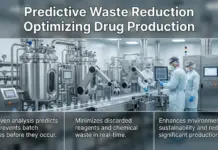
The impact of AI on formulation is not limited to the laboratory; it extends to the manufacturing floor. AI enables smarter formulation development through the creation of digital twins—virtual models of the manufacturing process. By simulating how a formulation will behave in a large-scale mixer or a high-speed tablet press, digital twins allow engineers to optimize the process parameters before a single physical batch is produced. This reduces waste, improves yield, and ensures a higher level of product quality and consistency.
Furthermore, AI enables smarter formulation development by supporting the transition to continuous manufacturing, where drugs are produced in a single, uninterrupted process rather than in separate batches. Continuous manufacturing is more efficient and allows for real-time quality monitoring. AI algorithms analyze data from sensors throughout the production line to detect and correct deviations instantly, ensuring that every dose meets the required specifications. This integration of AI into the manufacturing lifecycle is a key component of the Pharma 4.0 revolution, making the production of complex medicines more reliable and cost-effective.
Personalized Formulation and Patient Adherence
Looking toward the future, the most exciting frontier where AI enables smarter formulation development is in the realm of personalized medicine. Instead of a standard dose for every patient, AI could be used to design a customized formulation based on an individual’s specific needs, such as their age, weight, and genetic profile. This could involve the use of 3D printing technology to create personalized tablets with multiple active ingredients or specific release profiles, improving patient adherence and reducing the risk of side effects.
Patient adherence—the extent to which a patient follows their prescribed medication regimen—is a major challenge in healthcare, particularly for elderly patients or those with chronic conditions. AI enables smarter formulation development by helping scientists design patient-centric dosage forms. This might include developing smaller, easier-to-swallow tablets, or longer-acting injections that reduce the frequency of dosing. By using AI to analyze patient feedback and behavioral data, formulation scientists can create medicines that are not only more effective but also easier for patients to take, leading to better overall health outcomes.
Overcoming Data Silos and Ethical Considerations
The success of AI in this field depends heavily on the availability of high-quality data. Historically, formulation data has been siloed within individual companies and even within different departments. To fully realize how AI enables smarter formulation development, the industry must embrace a more collaborative approach to data sharing, using platforms that allow for the secure and anonymized exchange of experimental results. Standardizing the way formulation data is recorded and stored is also essential for building robust AI models that can be used across the industry.
Ethical considerations must also be addressed. As AI plays a larger role in designing medications, it is vital to ensure that the process remains transparent and that the final decisions are validated by human experts. AI enables smarter formulation development by acting as a powerful tool for scientists, not a replacement for their expertise. The goal is to combine the computational power of AI with the human-centric focus of pharmacy and medicine, ensuring that the next generation of therapies is developed with the highest standards of safety, ethics, and care for the patient.
The Future of Pharmaceutical Engineering
In conclusion, the integration of artificial intelligence into the world of pharmaceutical formulation marks the beginning of a new era in drug development. By turning the traditional trial-and-error approach into a data-driven, predictive science, AI enables smarter formulation development that is faster, cheaper, and more precise. It allows the industry to tackle the challenges of complex drug delivery, enhance product stability, and move toward a more personalized approach to patient care.
As technology continues to evolve, Pharma Advancement believes that the impact of AI will only grow, leading to the development of medicines that were previously unthinkable. AI enables smarter formulation development by providing the architectural framework for the next century of pharmaceutical innovation. The transition is not without its hurdles, particularly in data management and regulation, but the potential to improve the lives of patients around the world is far too significant to ignore. The science of formulation has always been an art. With the help of AI, it is becoming a masterpiece of precision and efficiency, ensuring that every drug discovery reaches its full therapeutic potential.
