

















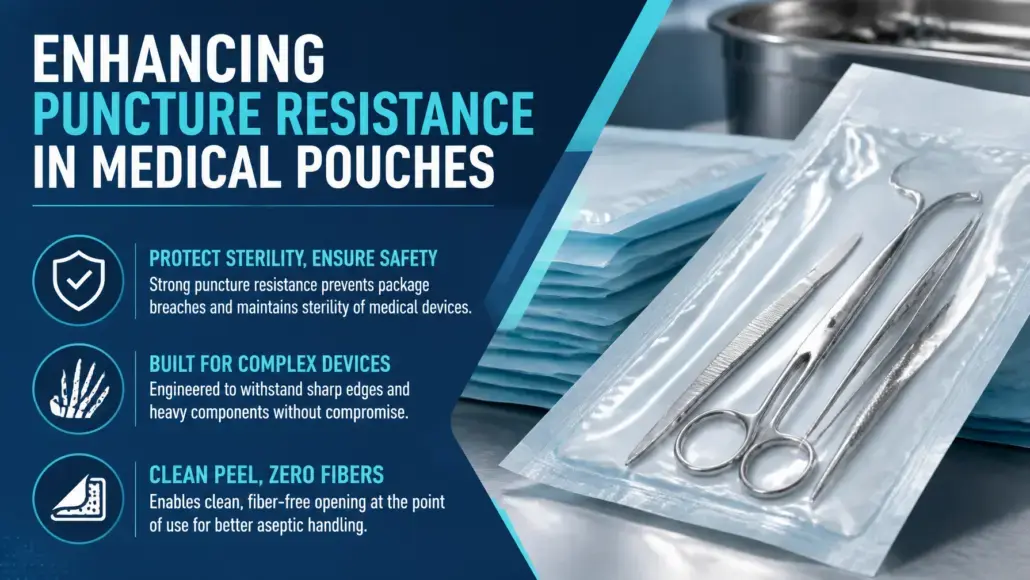
The medical device industry is seeing a shift toward more complex and irregular instruments, many of which feature sharp edges or heavy components. These devices place significant mechanical stress on their primary packaging, creating a high risk of breaches that can compromise sterility.
Pharma Advancement observes that enhancing medical pouch puncture resistance has become a top priority for packaging engineers who must balance the need for durability with the requirement for a clean, fiber free peel at the point of use. The global mono PE medical device pouches market was valued at 0.58 billion USD in 2025 and is expected to grow steadily, driven by the demand for materials that offer both sustainability and superior physical protection.
Sterility Risks and Material Solutions
A breach in a sterile pouch is not always obvious to the naked eye. Microscopic pinholes can allow bacteria to enter the package, potentially leading to serious hospital acquired infections. Traditional medical pouches often rely on a combination of Tyvek and plastic films, which offer excellent microbial barriers but can be vulnerable to sharp points during transport and handling. To address this, manufacturers are increasingly turning to multi layered laminates that incorporate high strength polymers like nylon or specialized polyethylenes. These layers work together to absorb impact and resist piercing, ensuring that the device remains securely contained throughout its shelf life.
Recent developments in material science have led to the creation of next generation films that provide exceptional toughness without excessive thickness. Amcor, a leader in the global packaging market, launched its new recycle ready high shield medical laminates in early 2025. These materials are designed to provide the necessary oxygen and moisture barrier while offering enhanced mechanical properties to protect against puncture. This innovation is particularly relevant for heavy orthopedic implants or surgical sets that are often subjected to significant vibration during air transit. By improving medical pouch puncture resistance, Amcor is helping manufacturers reduce the rate of damaged goods and improve the reliability of their supply chains.
Optical Clarity and Compliance Standards
Maintaining a clear surface for identification is another challenge when enhancing medical pouch puncture resistance:
-
Visual Clarity vs. Strength Trade-off: Adding material layers increases pouch strength but can compromise optical clarity, hindering clinicians’ ability to identify devices.
-
High-Clarity Resins: Modern packaging uses specialized resins that maintain strong protective barriers while preserving package transparency.
-
Advanced Printing: Upgraded printing processes ensure regulatory details, labels, and barcodes remain sharp and legible.
-
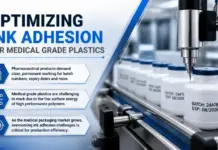
Surface Treatments & Ink Adhesion: Optimizing surface treatments on medical-grade plastics is critical to strengthen ink adhesion and ensure barcode integrity on durable substrates.
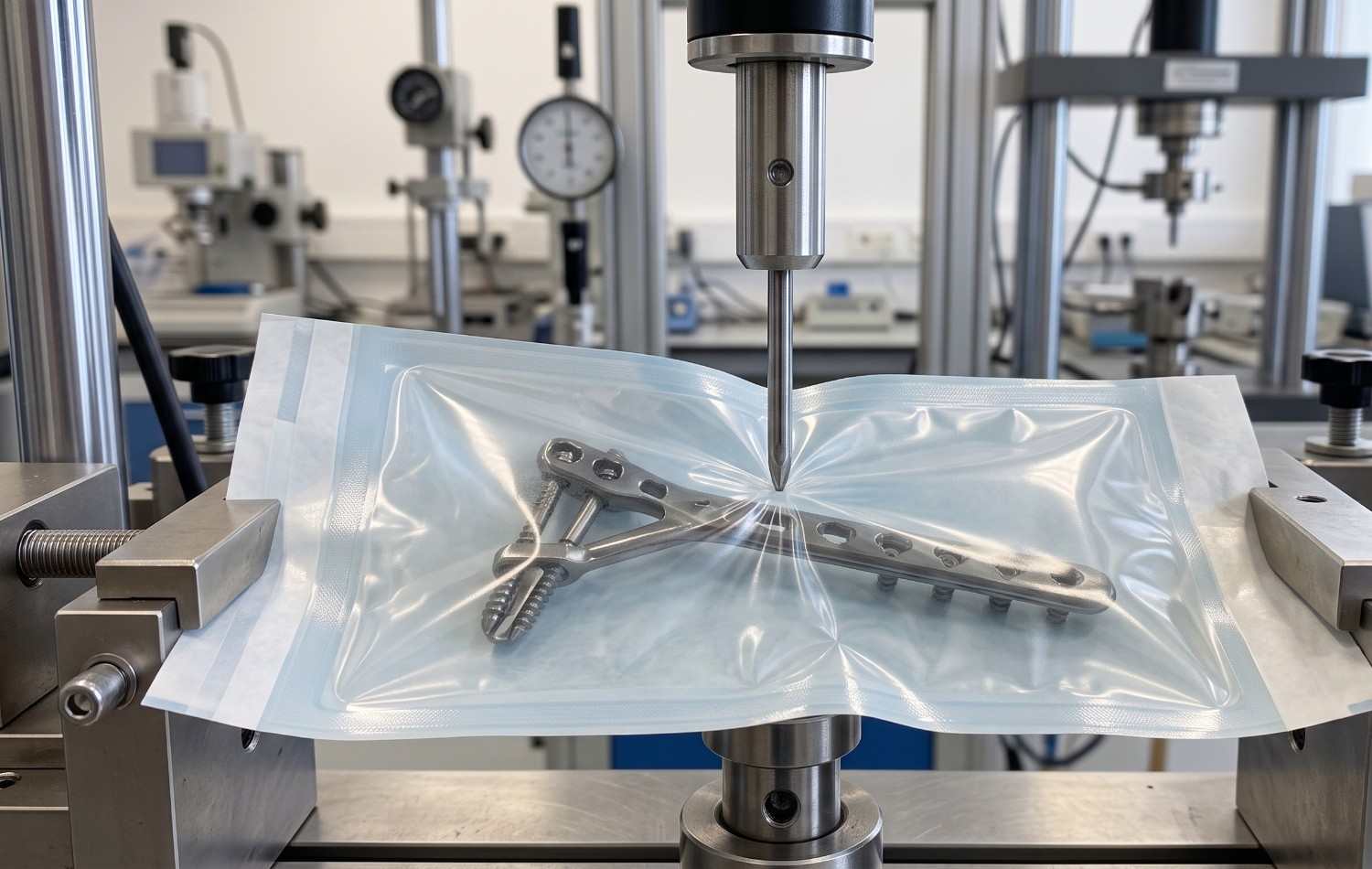
The importance of mechanical integrity is also highlighted by Tolas Healthcare Packaging, which has developed specialized pouches that provide puncture resistant solutions for trays and larger medical kits. Their focus is on creating a package that remains durable even after undergoing aggressive sterilization cycles like gamma irradiation or high heat autoclaving. These processes can often make plastics more brittle, but Tolas uses proprietary film blends that maintain their flexibility and strength. This ensure that the pouch can withstand the physical rigors of the hospital environment, where packages are often stacked or stored in ways that put pressure on the seals and the film surface.
The regulatory requirements for physical testing are becoming more stringent as well:
- Regulatory Requirement (ISO 11607): Manufacturers must prove that medical device packaging can withstand anticipated distribution and shipping stresses.
- Standardized Testing Methods: Verification involves drop tests, vibration tables, and puncture resistance testing using standardized probes or needles.
- Early Data Collection: Testing packaging early in the design process enables more robust package engineering and reduces the risk of failure during final validation.
- Long-Term Durability: Accelerated aging studies confirm that puncture resistance does not significantly degrade across the typical 3- to 5-year medical device shelf life.
Market Demands and Tailored Manufacturing
Industry statistics indicate that the demand for medical device pouches is growing at a rate of approximately 5 percent annually through 2026. Much of this growth is coming from the emerging markets where healthcare infrastructure is expanding rapidly. In these regions, the distribution chain can be particularly harsh, involving long distances and variable storage conditions. In such environments, the value of high quality, puncture resistant packaging cannot be overstated. It is the primary line of defense that keeps the patient safe from contaminated medical instruments.
Spectrum Plastics is another company that has focused on converted sterile pouches and header bags that are customized for specific sterilization requirements. Their approach involves working closely with device manufacturers to select the right combination of materials based on the weight and geometry of the product. By providing customized solutions rather than off the shelf options, they can optimize the medical pouch puncture resistance for every unique application. This tailored approach is becoming the standard for high value medical devices that require the absolute highest level of protection.
Emerging Technologies and Sustainable Design
Looking forward, we can expect to see further innovations in self healing films and active monitoring systems. Some researchers are exploring the use of shape memory polymers that can close small punctures automatically, although these technologies are still in the early stages of development. More practically, the integration of smart sensors into the pouch could alert hospital staff if a package has been subjected to a physical impact that exceeds a certain threshold. This would provide an additional layer of security beyond the physical barrier of the film.
Pharma Advancement believes that the shift toward mono material packaging is also shaping the future of pouch design. While multi material laminates are currently the standard for high performance, there is a strong push to move toward structures that are easier to recycle. Achieving high levels of medical pouch puncture resistance in a mono material structure requires advanced extrusion techniques and the use of specialized additives that enhance the strength of the base resin. As these technologies mature, we will see a new generation of pouches that are both incredibly tough and environmentally responsible.
References
- “Explore the Global Mono-PE Medical Device Pouches Market” – Future Market Insights
- “How to Select the Right Medical Pouch Packaging” – Amcor
- “Pouch Provides Puncture-Resistant Packaging for Trays” – Tolas Healthcare Packaging
- “Medical Packaging Bags & Pouches | Tear Notch Bags” – Spectrum Plastics
- “Medical & Pharmaceutical Packaging | Healthcare News 2025” – Amcor
- “ISO 11607: Medical Device Packaging Validation Guide” – MDX CRO
- “Pharmaceutical Packaging Materials and Medication Safety” – MDPI
