






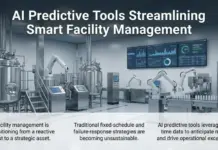












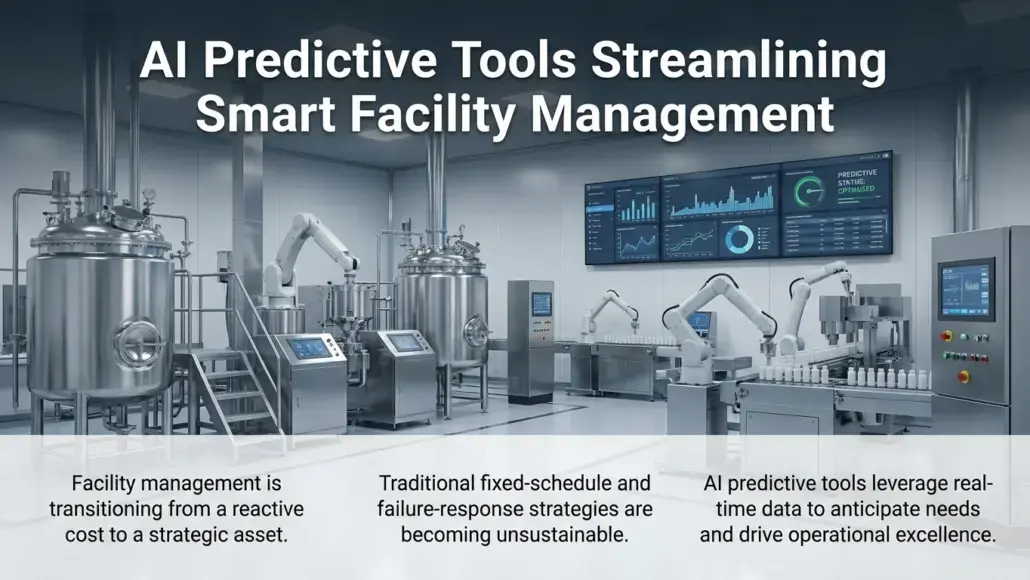
The pharmaceutical manufacturing sector is transitioning toward a predictive operational model where facility management is no longer a reactive overhead but a strategic asset. Traditional maintenance strategies often rely on fixed schedules or respond to failures after they occur, which is increasingly unsustainable in an era of high precision drug production. Smart facility management using AI predictive tools offers a path to operational excellence by leveraging real time data to anticipate maintenance needs before they escalate into production halts. Pharma Advancement notes that the global market for smart building technologies in the life sciences sector is projected to reach significant heights by 2030, driven by the need for regulatory compliance and cost efficiency.
In 2024, many leading pharmaceutical companies began integrating Internet of Things sensors and machine learning algorithms to monitor the health of critical infrastructure. These systems track vibration, thermal changes, and pressure differentials in real time, providing a granular view of facility performance that was previously unattainable. For a industry where a single hour of unplanned downtime can cost hundreds of thousands of dollars, the ability to predict a failure weeks in advance is a massive competitive advantage. Executives are now prioritizing these investments to ensure that their supply chains remain resilient in the face of global demand fluctuations.
The Shift to Predictive Maintenance in Pharma
The core of smart facility management lies in moving away from preventive maintenance toward predictive analytics. While preventive maintenance follows a time based schedule, predictive maintenance uses actual equipment condition to determine when service is required. This reduces unnecessary intervention, which itself can introduce risks in sterile environments. By analyzing historical performance data, AI models can identify the specific signatures of impending failure in components like HVAC motors, centrifuges, and refrigeration units.
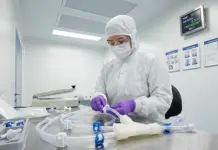
These systems are particularly effective in monitoring cleanroom environments. Maintaining ISO 5 and ISO 7 standards requires constant control over air quality, humidity, and temperature. A failure in the filtration system could lead to batch contamination and millions of dollars in losses. Predictive tools can detect a drop in filter efficiency long before it reaches a critical threshold, allowing for a controlled replacement during scheduled downtime. Industry studies show that companies implementing these tools see a reduction in maintenance costs by 25 to 30 percent.
Furthermore, the data collected by these systems is becoming essential for regulatory audits. The FDA and other global regulators require extensive documentation of environmental conditions during production. AI driven platforms can automate this reporting, ensuring that all data is captured accurately and is readily available for inspection. This reduces the administrative burden on facility managers and minimizes the risk of compliance failures that could lead to warning letters or production shutdowns.
Energy Optimization and Sustainability
Sustainability has become a top priority for pharmaceutical executives, and the facility is the primary driver of a company’s carbon footprint. Pharma plants are energy intensive, often consuming ten times more energy per square foot than typical office buildings due to the requirements of cleanrooms and continuous manufacturing processes. Smart facility management using AI predictive tools plays a crucial role in optimizing energy usage without compromising product quality.
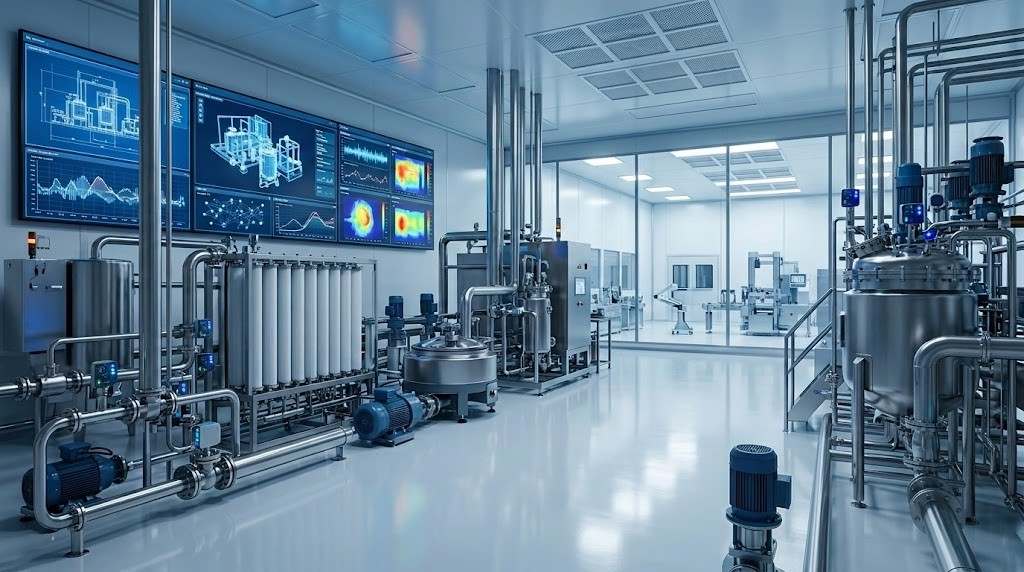
AI algorithms can analyze external weather patterns, energy prices, and production schedules to adjust HVAC settings dynamically. For instance, if a cleanroom is not in use, the system can reduce the air exchange rate while still maintaining the required pressure differential. This intelligent modulation can lead to energy savings of up to 20 percent. In a large scale facility, these savings contribute significantly to both the bottom line and corporate sustainability goals.
Beyond HVAC, these tools also manage water purification and waste treatment systems. Pharmaceutical grade water is a critical and expensive resource. Predictive models can optimize the regeneration cycles of deionization systems and the operation of reverse osmosis units, reducing water waste and the energy needed for heating and pumping. As water scarcity becomes a global concern, the ability to manage this resource with high precision is becoming a key metric for operational success.
Enhancing Operational Resilience through Digital Twins
A significant development in smart facility management is the use of digital twins, which are virtual replicas of physical facilities. By feeding real time sensor data into these models, facility managers can run simulations to predict how changes in one part of the plant will affect the rest of the system. For example, a manager could simulate the impact of increasing production speed on the cooling capacity of the facility, ensuring that there are no hidden bottlenecks.
Digital twins also assist in disaster recovery and business continuity planning. In the event of an equipment failure, the digital twin can help identify the fastest way to reconfigure the facility to maintain production. This level of agility is essential for companies that produce life saving medications where any delay in supply could have serious consequences for patients. The integration of AI allows these simulations to become increasingly accurate, learning from every operational event to provide better guidance over time.The operational stability provided by smart technologies is a critical prerequisite for AI enhanced resource allocation in health systems to function effectively across clinical environments.
For B2B investors and analysts, a company’s ability to demonstrate this level of operational resilience is a strong indicator of long term stability. The adoption of digital twin technology is not just about maintenance; it is about creating a flexible, data driven organization that can adapt to a rapidly changing market. As the technology matures, we expect to see it become a standard requirement for all new pharmaceutical manufacturing projects.
Strategic Implementation for Facility Executives
Implementing smart facility management requires a strategic approach that goes beyond simply installing sensors. It involves a fundamental shift in how facility teams operate. Data silos must be broken down so that information from the production floor, the utility plant, and the supply chain can be integrated into a single view. This requires close collaboration between IT and facilities departments, as well as a clear focus on data security.
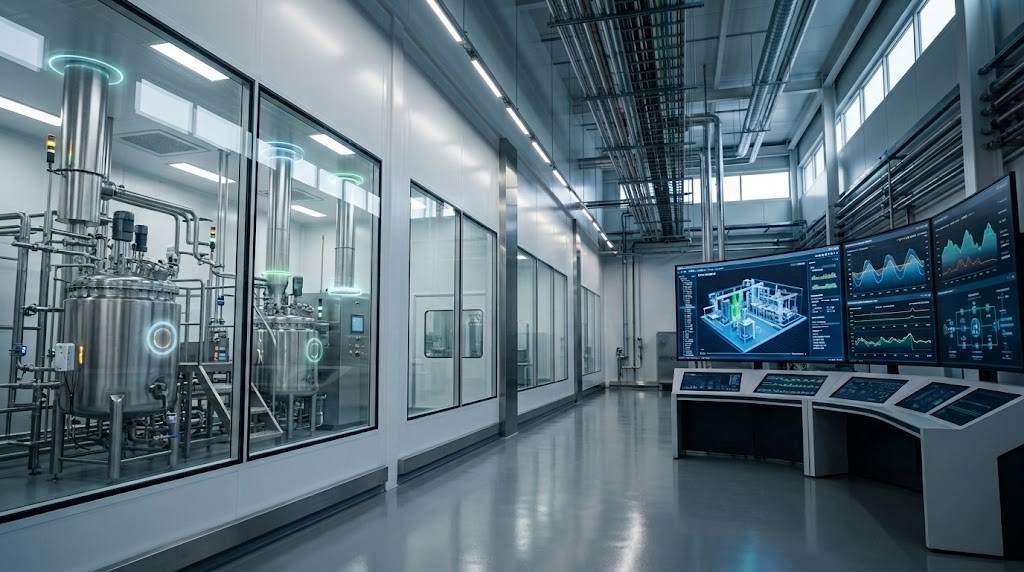
Cybersecurity is a major concern when connecting facility infrastructure to AI systems. A breach in a facility management system could lead to unauthorized changes in environmental conditions, potentially ruining batches of drugs. Therefore, any smart facility project must include robust security protocols from the outset. This includes encryption, multi factor authentication, and regular vulnerability assessments. Executives should prioritize vendors who have a strong track record in both industrial automation and cybersecurity.
The talent gap is another challenge that organizations must address. Facility managers now need to be comfortable working with data analytics and AI driven dashboards. Companies are increasingly investing in training programs to help their existing staff transition to these new ways of working. In the long run, the use of predictive tools will free up facility teams from repetitive manual checks, allowing them to focus on high value activities like strategic planning and process improvement.
Transforming Pharma Manufacturing Through Smart Facility Management
The shift toward predictive, AI-driven operations in pharmaceutical and life sciences manufacturing is being aggressively supported by global industrial technology leaders rolling out tailored smart facility solutions. Johnson Controls recently expanded its AI-powered OpenBlue platform, bringing agentic AI workflows to life sciences facilities to automate predictive maintenance and precisely control indoor cleanroom conditions.
Siemens continues to innovate in specialized environments, recently introducing advancements to its Smart Lab Ecosystem to establish turnkey, intelligent laboratories optimized for safety and efficiency. On the hardware and power distribution front, Schneider Electric launched software-defined switchgear paired with its EcoCare Services to deliver condition-based predictive maintenance and real-time operational resilience. Focusing on the production floor, Rockwell Automation is partnering with PBS Biotech to scale robust automation platforms for cell therapy manufacturing, minimizing unplanned downtime as processes move toward commercialization. Meanwhile, on the data integration and supply chain side, SAP updated its Business AI suite to include advanced, AI-assisted error analysis for the SAP Information Collaboration Hub for Life Sciences, helping facility and supply chain managers predict and mitigate disruptions before they impact the delivery of high-precision therapeutics.
The Future of the Autonomous Pharma Facility
Looking ahead, the goal is the creation of a fully autonomous facility where AI predictive tools not only identify issues but also initiate the corrective actions. For example, if a system detects an impending failure in a secondary pump, it could automatically switch to a backup and place a work order for the repair without human intervention. This level of automation would represent the pinnacle of operational efficiency, virtually eliminating unplanned downtime.
As AI models become more sophisticated, they will also be able to provide deeper insights into the relationship between facility conditions and product quality. This could lead to a new standard of ‘real time release’, where drugs can be approved for distribution based on continuous monitoring of the manufacturing environment rather than waiting for lab tests. This would significantly reduce the inventory holding costs and accelerate the delivery of medications to market.
Pharma Advancement observes that the transition to smart facility management using AI predictive tools is an ongoing journey rather than a single event. It requires a long term commitment to innovation and a willingness to embrace new technologies. For pharmaceutical companies that successfully navigate this transition, the rewards will be a more efficient, resilient, and sustainable operation that is well positioned for the challenges of the 21st century.
References
- Schneider Electric
- Deloitte
- Siemens
- GE Digital
- Dassault Systemes
- Cisco
- Rockwell Automation
- Johnson Controls
- Siemens
- Schneider Electric
- Rockwell Automation
- SAP
