











Overcoming Commercial Scale 3D Drug Manufacturing Challenges
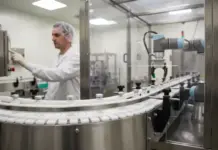
The promise of personalized medicine has long been tethered to the capabilities of the research laboratory, but in 2026, the industry is confronting the...
Ensuring GMP-Compliant 3D Printing in Pharma Manufacturing
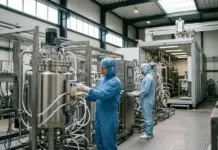
As the pharmaceutical industry moves closer to the widespread adoption of additive manufacturing, the focus has shifted from the laboratory bench to the regulatory...
AI-driven 3D Printing Accelerating Drug Development Pace
The landscape of pharmaceutical research and development is undergoing a seismic shift in 2026 as the synergy between artificial intelligence and additive manufacturing matures....
3D Printing in Personalized Medicine Transforming Pharma
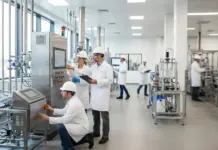
The convergence of additive manufacturing and clinical pharmacology has reached a pivotal milestone in 2026, fundamentally altering the way healthcare providers approach patient-specific therapy....
Oral GLP-1 Drugs Reshaping Metabolic Disease Therapy
The pharmaceutical landscape is currently witnessing one of its most significant breakthroughs in decades with the emergence of powerful new treatments for metabolic diseases....
GLP-1 Drugs Expanding Beyond Weight Loss in Clinical Care
The narrative surrounding glucagon-like peptide-1 receptor agonists, popularly known as GLP-1 drugs, has undergone a radical transformation. What began as a specialized class for...
CDMOs Boosting GLP-1 Manufacturing Capacity to Meet Demand
The pharmaceutical landscape is currently witnessing a paradigm shift unlike anything seen in decades. The meteoric rise of glucagon-like peptide-1 (GLP-1) receptor agonists has...
Subscribe Our Newsletter
White Papers
The Future of Digital Health
The pharmaceutical industry is acutely aware that the future of health and care, particularly in the United States, are trending toward a digital revolution....
Five Best Practices to Deliver Exceptional Multichannel Experiences
A one-size-fits-all customer journey no longer works. In the age of the consumer, the quality of the interaction is paramount. In this paper, we...
The Impact and Use of Social Media in Pharmacovigilance
Social media presents new channels and methods for biopharmaceutical companies to move away from traditional pharmacovigilance (PV) systems and safety reporting methods towards more...