









The pharmaceutical industry faces a perennial challenge: maintaining the chemical and physical integrity of active molecules from the moment of manufacture until they reach the patient. Many modern therapeutic agents, particularly those derived from biological sources or complex organic syntheses, are inherently unstable, sensitive to fluctuations in temperature, light, moisture, and pH. The development of novel formulation strategies enhancing drug stability is therefore not merely a technical necessity but a critical component of ensuring patient safety and treatment efficacy. Without these advanced strategies, many life-saving medications would lose their potency or, worse, degrade into toxic byproducts before they could ever be administered. Historically, drug stability was managed through simple adjustments like refrigeration or airtight packaging. However, as molecules have become more complex, these external measures are often insufficient. The focus has shifted toward internal stabilization modifying the environment of the drug molecule at the molecular level. This involves a deep understanding of the degradation pathways, such as oxidation, hydrolysis, and photolysis, and the implementation of specific drug formulation techniques designed to interrupt these processes. By creating a protective microenvironment around the active pharmaceutical ingredient (API), formulators can significantly extend a product’s shelf life and ensure it remains robust across various global supply chains.
The Evolution of Excipient Innovation in Stability Management
At the heart of any stable pharmaceutical product lies its excipients the inactive substances that serve as the vehicle for the drug. Traditionally viewed as inert fillers, modern excipient innovation has transformed these components into active participants in stability optimization. Modern excipients are now engineered to provide specific protective functions, such as scavenging free radicals to prevent oxidation or providing a buffer against pH shifts that could trigger hydrolysis. In many cases, the choice of excipient can make the difference between a product that is stable for six months and one that remains viable for three years. For example, the use of specialized polymers in solid dispersions can prevent the crystallization of amorphous drugs. Amorphous forms are often more soluble and bioavailable, but they are also thermodynamically unstable and prone to returning to a crystalline state, which renders them less effective. By using advanced polymeric carriers, formulators can “lock” the drug in its amorphous state, maintaining both its solubility and its stability over time. This synergy between the API and its carrier is a prime example of how pharmaceutical formulation is evolving to meet the demands of increasingly delicate and potent molecules. Furthermore, the development of “smart” excipients that respond to environmental changes is on the rise, providing a dynamic layer of protection that adjusts as the drug moves through different storage conditions.
Advanced Drug Formulation Techniques for Solid and Liquid Dosage Forms
The physical state of a medication whether it is a solid tablet, a liquid injection, or a topical cream dictates the specific stability challenges it will face. In solid dosage forms, the primary concern is often moisture-induced degradation. Novel formulation strategies enhancing drug stability in solids often involve moisture-protective coatings or the inclusion of internal desiccants. Furthermore, the process of granulation and compression must be carefully managed to avoid mechanical stress that could destabilize the API. Advanced techniques like melt extrusion and spray drying are increasingly used to create homogeneous mixtures that provide uniform protection for every drug particle. Liquid formulations, on the other hand, are particularly susceptible to hydrolysis and microbial growth. Stability optimization in liquids often requires the use of non-aqueous solvents or the development of lyophilized (freeze-dried) powders that are reconstituted just before use. Lyophilization is perhaps one of the most effective ways to enhance drug shelf life for unstable proteins and vaccines. By removing water under a vacuum at low temperatures, the drug is preserved in a “glassy” state where chemical reactions are virtually halted. This technique has been instrumental in the global distribution of modern vaccines, allowing them to remain stable even in regions where the cold chain may be unreliable. The precision required in these processes cannot be overstated, as even a small error in the freezing or drying cycle can lead to irreversible damage to the drug’s structure.
Stability Optimization Through Molecular Shielding and Microencapsulation
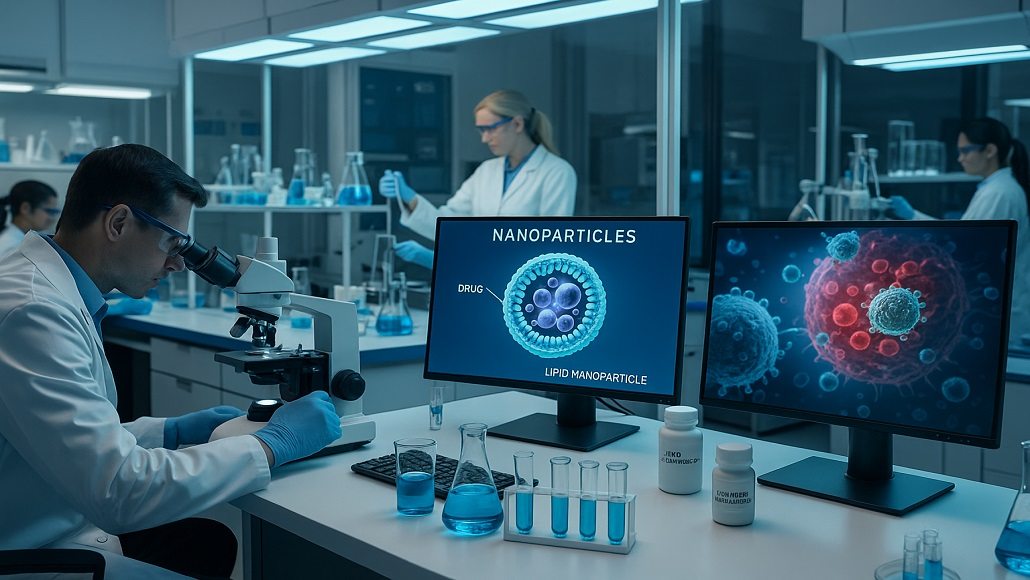
A cutting-edge frontier in stability management is the use of microencapsulation and molecular shielding. By wrapping the drug molecule in a microscopic shell made of lipids, polymers, or minerals formulators can shield it from the external environment. This is particularly useful for drugs that are sensitive to the acidic environment of the stomach or for those that are easily oxidized by exposure to air. These micro-containers not only protect the drug during storage but can also be designed to release the API only when it reaches a specific environment, such as the alkaline environment of the small intestine. Furthermore, the integration of nanotechnology into formulation strategies has allowed for the creation of “nanoshields.” These are even smaller than microcapsules and can be designed to interact with the drug at a near-atomic level. For instance, certain nanoparticles can be used to stabilize enzymes that would otherwise denature within minutes of exposure to room temperature. This level of precision in pharmaceutical formulation ensures that even the most fragile molecules can be delivered with their full therapeutic potential intact, opening the door for new types of therapies that were previously thought impossible to stabilize. The ability to engineer these shields to be biocompatible and biodegradable is also a major focus, ensuring that once the drug is delivered, the protective carrier is safely eliminated from the body without any adverse effects.
Impact on Global Health and Drug Shelf Life
The implications of these stability-enhancing strategies extend far beyond the laboratory. In a globalized world, where medications may be manufactured in one continent and consumed in another, the ability to maintain stability without constant refrigeration is a massive logistical advantage. Extending the drug shelf life reduces waste, lowers costs for healthcare systems, and ensures that patients in remote or resource-limited areas have access to the same quality of care as those in major metropolitan centers. This is particularly vital for essential medicines such as insulin, antibiotics, and vaccines. As we continue to innovate, the focus will likely shift toward “predictive stability,” where computer modeling and artificial intelligence are used to predict how a drug will behave over years based on just a few weeks of data. This will accelerate the development of new formulation strategies and allow for even more customized stability solutions. The goal remains clear to ensure that every dose of medication is as safe and effective as the day it was produced, regardless of where in the world it is needed. Through continuous improvement in formulation science, we are building a more resilient and reliable pharmaceutical future for everyone. This resilience is the bedrock of public health, providing a buffer against supply chain disruptions and environmental crises that might otherwise leave vulnerable populations without the treatments they need.
The Economic and Ethical Dimensions of Product Longevity
Beyond the clinical benefits, there is a significant economic argument for focusing on stability. Product recalls due to stability failures are incredibly costly for pharmaceutical companies and damaging to their reputation. By investing in novel formulation strategies, companies can mitigate these risks and ensure a more stable return on their research and development investments. Ethically, there is a responsibility to ensure that the medications patients rely on are of the highest quality. A drug that loses its potency is not just a commercial failure; it is a betrayal of the patient’s trust. Therefore, the drive for stability is as much an ethical imperative as it is a scientific one. The development of stabilization technologies that are affordable and scalable is also crucial for addressing health disparities on a global scale. If we can create high-stability formulations that don’t require expensive cold-chain logistics, we can dramatically lower the barriers to entry for life-saving treatments in the global south. This democratization of medicine is one of the most exciting potential outcomes of current trends in formulation science.
Future Trends: Beyond Conventional Stabilization
Looking ahead, we are seeing the rise of “intelligent packaging” that works in tandem with the drug’s formulation to maintain stability. Imagine a bottle that can sense when humidity levels are too high and activate a internal drying mechanism, or a label that changes color if the product has been exposed to temperatures that could compromise its integrity. These advancements, combined with the molecular-level strategies we’ve discussed, will create a multi-layered defense against drug degradation. We are also exploring the use of natural stabilizers derived from extremophiles organisms that live in extreme heat or cold to find new ways to protect delicate molecules. By learning from nature’s own methods of preservation, we can develop even more robust and sustainable formulation strategies. The future of drug stability is not just about keeping things the same; it’s about evolving our methods to meet the challenges of a rapidly changing world.
