



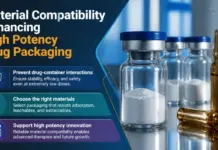










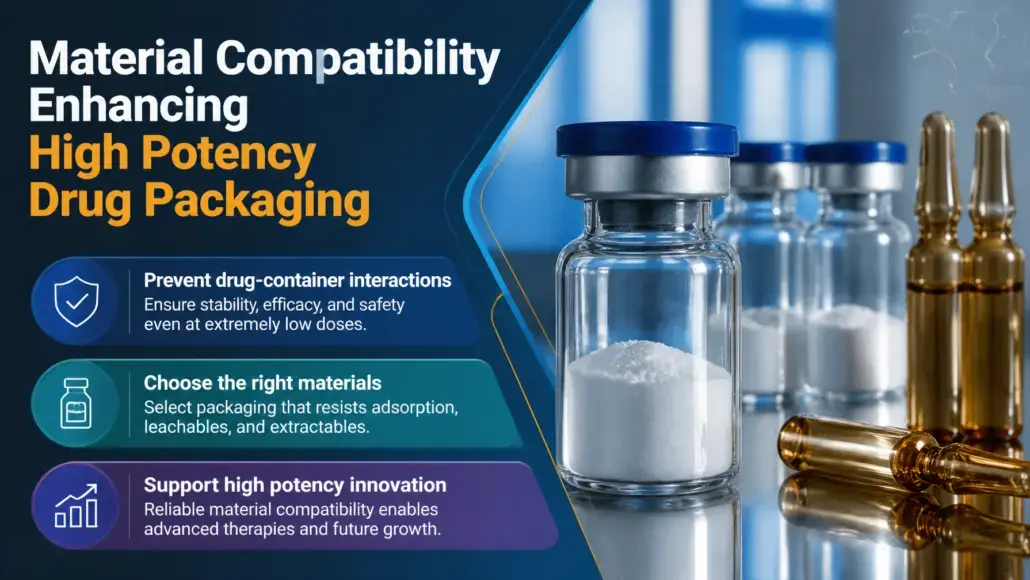
The rise of highly potent active pharmaceutical ingredients, commonly referred to as HPAPIs, has fundamentally changed the requirements for primary packaging. These compounds are effective at extremely low doses, meaning that even a minor interaction between the drug and its container can have a significant impact on efficacy or safety.
As pharmaceutical companies expand their drug delivery systems capacity throughout 2026, Pharma Advancement observes that the focus has shifted toward high potency drug packaging compatibility as a critical pillar of product development. Ensuring that the containment system does not leach chemicals into the drug or absorb active components is no longer an optional study but a central requirement for regulatory approval.
Material Compatibility and Sensitivity in Biologics
Compatibility challenges are particularly acute when dealing with biologics and specialized oncology treatments. Many of these formulations are highly sensitive to metal ions, oxygen, and moisture. Traditional glass containers, while excellent for many drugs, can sometimes leach alkali or silica, which may lead to the formation of precipitates or the degradation of the active ingredient. This has led to the development of specialized coated glass and advanced polymers that offer a more inert surface. By selecting the right materials, manufacturers can avoid these interactions and ensure that the drug remains stable for its entire intended shelf life.
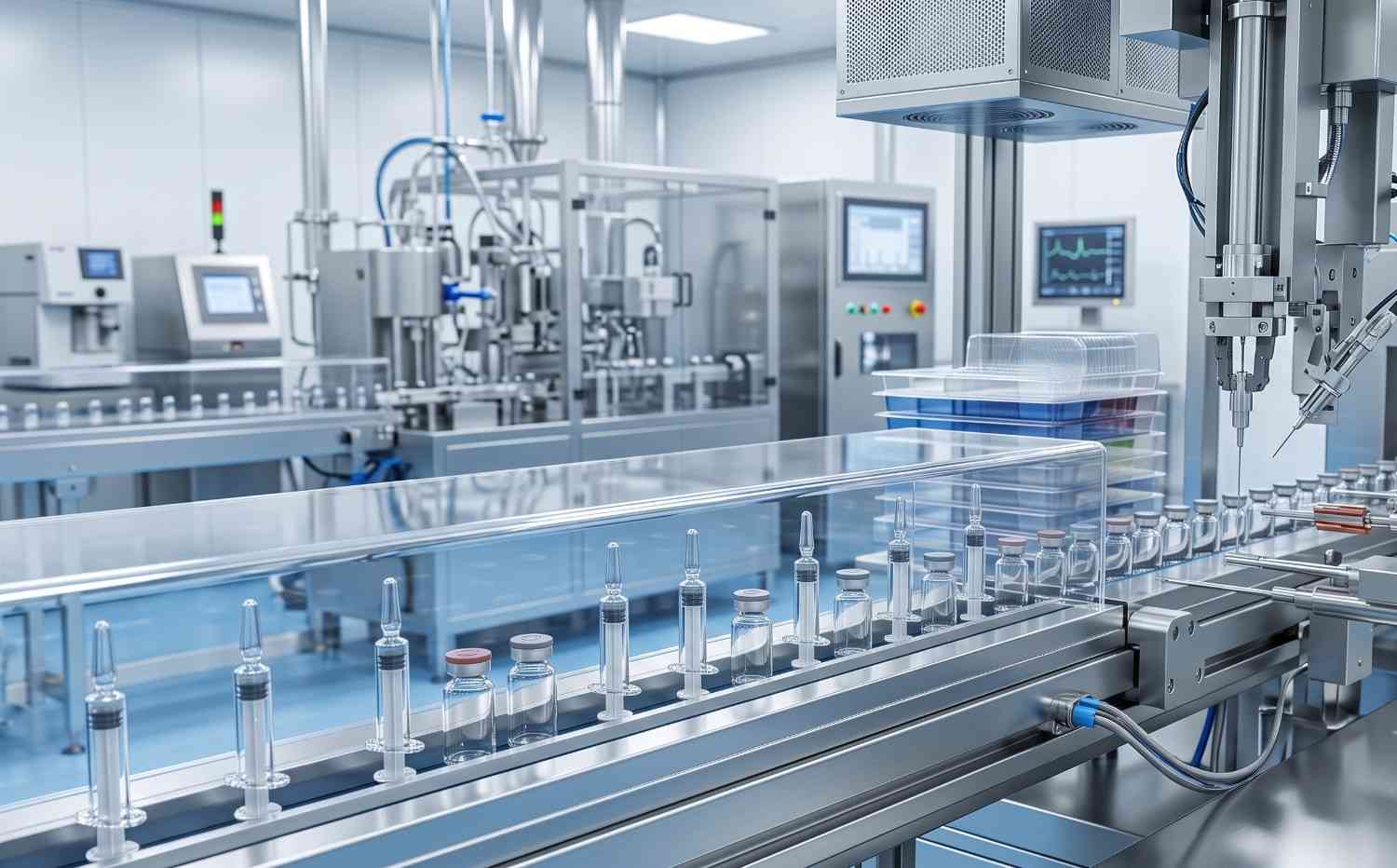
Recent market data highlights the scale of this challenge. The medical packaging industry is projected to grow from 31.97 billion USD in 2025 to over 60 billion USD by 2035, with a significant portion of this growth driven by the demand for high performance containment for potent drugs.
Companies like Stevanato Group have been at the forefront of this trend, reporting 7 percent revenue growth in fiscal year 2025 as they deliver integrated solutions for pharma and biotech partners. In October 2025, Stevanato Group announced a major expansion of their drug delivery systems capacity, providing more than 2,500 square meters of advanced manufacturing space specifically designed to serve the needs of global biotech firms.
Innovations in Pre-Filled Syringes and Containment Components
The transition to pre filled syringes has been one of the most significant developments in the handling of high potency drugs:
-
Exposure & contamination reduction: Minimizes transfer steps, substantially lowering accidental exposure risks for healthcare professionals and contamination hazards for the drug product.
-
Continuous contact challenges: Introduces critical material compatibility concerns because the drug formulation remains in prolonged, direct contact with the syringe plunger, barrel, and needle adhesive.
-
Rigorous compatibility testing: Necessitates comprehensive evaluation of high-potency drug compatibility across every individual contact component to guarantee stability and patient safety.
Stevanato Group’s collaboration with Transcoject to provide validated Luer Lock pre filled syringes by 2025 is a clear example of the industry’s focus on providing safe and effective delivery systems for sensitive compounds.
Another key player in this space is West Pharmaceutical Services, which has developed specialized elastomer components designed to minimize leaching and absorption. Their Daikyo Flurotec film technology provides a barrier that prevents the drug from interacting with the rubber stopper, which is a common point of failure for high potency drugs stored in vials. By using these advanced materials, manufacturers can ensure that the integrity of the formulation is maintained from the factory to the patient. West has also emphasized the importance of high quality primary packaging in their 2025 technical presentations, noting that the container is often the most important part of the drug delivery system.
The role of material science extends to the plastics used in secondary and tertiary packaging as well. While the primary container has the most direct impact, the entire system must work together to protect the drug from light and environmental fluctuations. For those interested in the broader context of shelf life, optimizing aseptic packaging to increase drug shelf life provides essential insights into how barrier properties are managed across different packaging layers. This holistic approach ensures that the high potency drug remains protected throughout the entire distribution chain, including during long term storage in varying climates.
Recent research published in 2025 in journals such as MDPI examines the properties of common packaging materials including glass, plastics, and metals and their implications for drug safety. The review emphasizes that there is no one size fits all solution. A material that is compatible with one high potency drug might be completely unsuitable for another. This makes custom testing protocols a vital part of the development process. Manufacturers must perform extractable and leachable studies under conditions that simulate the actual use and storage of the drug to identify any potential risks.
Sustainability Demands and Regulatory Evolution
Sustainability is also becoming a factor in the selection of materials for high potency drugs. While patient safety is always the top priority, there is a growing push to find materials that are easier to recycle or have a lower carbon footprint. This is a difficult challenge, as the inertness and barrier properties required for high potency drug packaging compatibility are often best achieved using complex multi material structures. However, companies like Gerresheimer and Schott Pharma are actively exploring more sustainable options, such as using recycled glass or developing mono material polymer containers that meet medical grade standards.
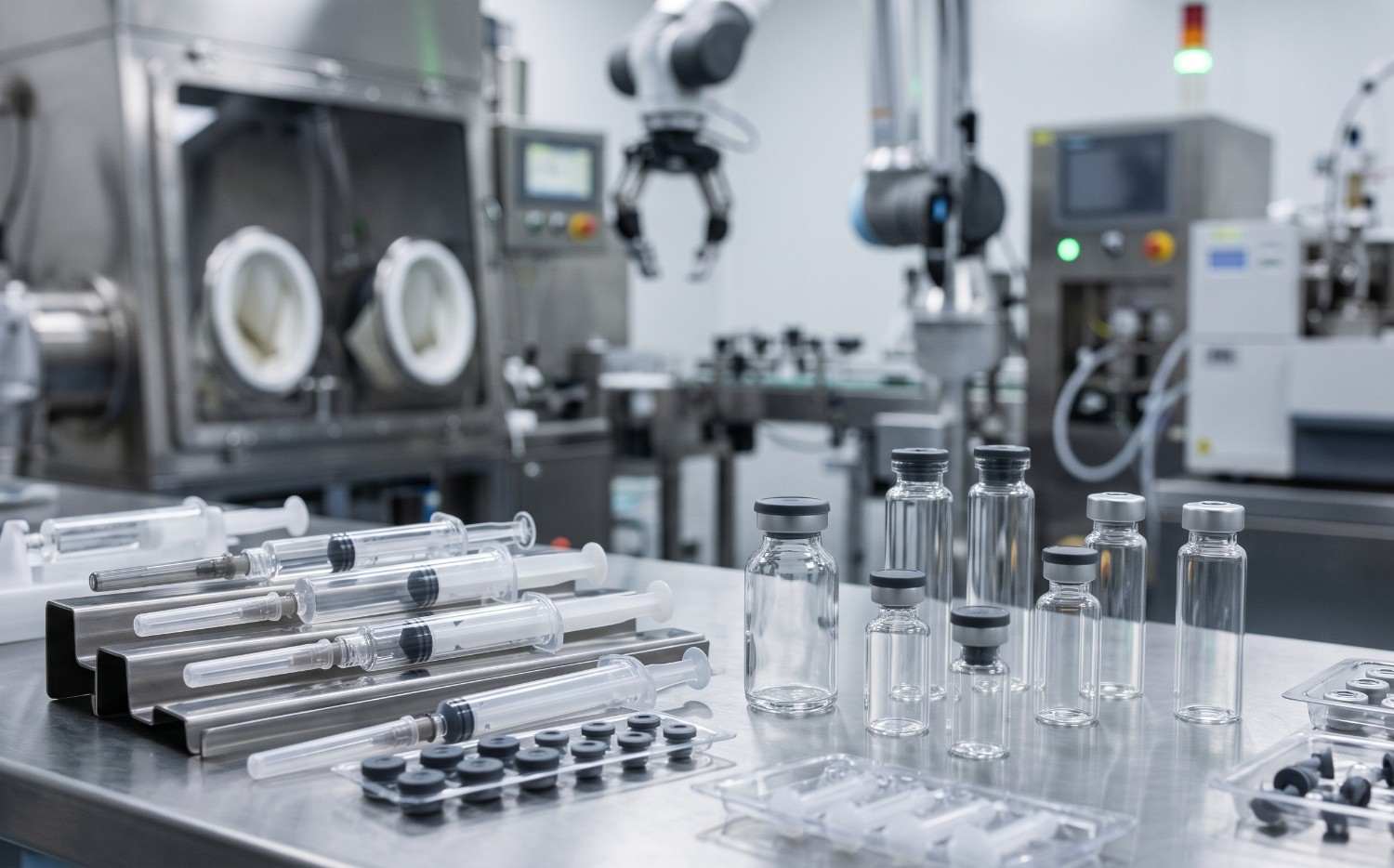
The regulatory environment is also evolving to address the unique risks associated with HPAPIs. The FDA and other global agencies are increasingly requiring more detailed data on how the packaging interacts with the drug product. This includes not just chemical compatibility, but also physical integrity and the risk of the drug being absorbed into the packaging surface. The use of advanced analytical techniques, such as mass spectrometry and electron microscopy, is now common for identifying trace amounts of leached materials that were previously undetectable.
Looking ahead, Pharma Advancement believes that we can expect to see more use of active packaging technologies that can monitor the state of the drug in real time. For instance, some companies are experimenting with labels that change color if the drug has been exposed to temperatures that could compromise its stability. While these technologies add cost, the value they provide in ensuring the safety of high potency treatments is significant. The future of the industry lies in these smart, integrated containment systems that provide absolute certainty for both the manufacturer and the patient.
References
- “Stevanato Group Expands Drug Delivery Systems Capacity” – Stevanato Group
- “Stevanato Group Collaborates with Transcoject” – Stevanato Group
- “Pharmaceutical Packaging Materials and Medication Safety” – MDPI
- “Medical Packaging Market Size, Share & Trends 2035” – Market Research Future
- “Stevanato Group Delivers 7% Revenue Growth for FY 2025” – Stevanato Group
- “Explore the Global Mono-PE Medical Device Pouches Market” – Future Market Insights
- “Amcor to showcase responsible and patient-centric packaging” – Amcor
