









One of the most devastating outcomes in pharmaceutical development is when a drug candidate, after years of research and millions of dollars in investment, fails in late-stage clinical trials due to unforeseen safety concerns. Even worse is when a safety risk only becomes apparent after a drug has been approved and prescribed to thousands of patients. The ability to identify these risks at the very beginning of the development process is the holy grail of drug safety. Pharma Advancement notes that the industry is undergoing a paradigm shift as AI helps predict drug safety risks earlier than ever before. By utilizing advanced machine learning models to analyze the molecular structure of a drug, its interactions with biological systems, and historical clinical data, researchers are now able to flag potential toxicities long before a drug ever reaches a human participant, significantly improving patient safety and the efficiency of the drug development pipeline.
The Limitations of Traditional Toxicology
Traditionally, drug safety testing has relied on a combination of laboratory in vitro assays and animal studies. While these methods are essential, they have significant limitations. Animal models, for instance, do not always perfectly mimic human biology, meaning that a drug that appears safe in a mouse or a dog could still be toxic in a human. Furthermore, these physical tests are time-consuming, expensive, and often fail to detect rare or delayed side effects. AI helps predict drug safety risks earlier by moving the primary screening process into the digital realm—a process known as in silico toxicology.
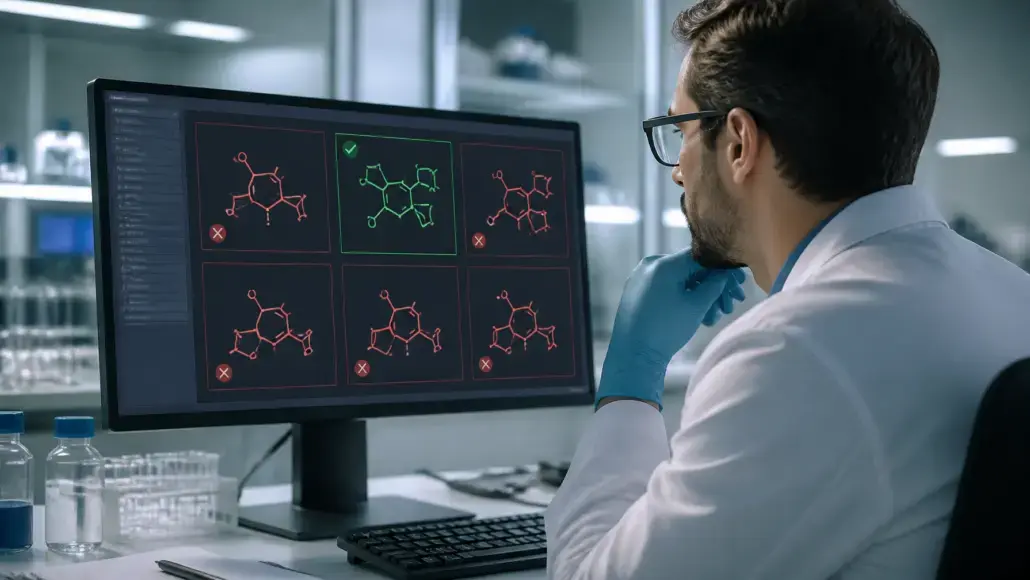
In silico models can simulate the interaction between a drug and thousands of different proteins and enzymes in the human body. By doing so, AI helps predict drug safety risks earlier by identifying off-target effects—instances where a drug binds to a protein it wasn’t intended to, potentially causing adverse reactions. For example, a drug designed for a lung condition might also inadvertently interact with a protein in the heart, leading to cardiovascular risks. AI models can detect these potential interactions in seconds, allowing researchers to modify the drug’s structure or discard the candidate before moving into more expensive and risky stages of development.
Machine Learning and the Prediction of Organ Toxicity
One of the most promising areas where AI helps predict drug safety risks earlier is in the prediction of specific organ toxicities, such as liver or kidney damage, which are common reasons for drug failure. Machine learning algorithms, particularly deep neural networks, can be trained on vast databases of known toxins and their effects on human cells. By comparing a new drug candidate’s molecular features with this data, the AI can predict the likelihood that the drug will be hepatotoxic (harmful to the liver) or nephrotoxic (harmful to the kidneys) with high accuracy.
These models are not just looking at the final outcome; they are identifying the specific biological pathways that lead to toxicity. AI helps predict drug safety risks earlier by pinpointing the cellular mechanisms—such as oxidative stress or mitochondrial dysfunction—that a drug might trigger. This mechanistic insight allows scientists to design safer molecules from the start, rather than trying to fix a flawed one later. By integrating these predictive tools into the early discovery phase, pharma companies can ensure that only the safest candidates progress through the pipeline, ultimately reducing the number of safety-related failures in clinical trials.
Enhancing Clinical Trial Safety Through Precision
Once a drug moves into human trials, the stakes for safety become even higher. AI helps predict drug safety risks earlier in the clinical phase by helping to identify patients who are at an increased risk of adverse events. By analyzing a participant’s genetic profile, their existing health conditions, and their other medications, AI can predict how they will react to the experimental drug. This allows for a more personalized approach to trial safety, where high-risk individuals can be excluded or monitored more closely.
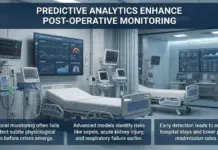
Furthermore, AI helps predict drug safety risks earlier by providing real-time monitoring of trial participants. Wearable devices and remote monitoring tools generate a continuous stream of physiological data, such as heart rate, blood pressure, and sleep patterns. AI algorithms can analyze this data in real-time to detect subtle changes that might indicate a developing safety issue before the patient even reports a symptom. This early warning system allows trial investigators to intervene more quickly, potentially preventing a minor side effect from becoming a serious medical event. The ability to catch safety signals early is a vital component of modern, patient-centric clinical research.
The Role of Natural Language Processing in Pharmacovigilance
Even after a drug is approved, the work of safety monitoring, also known as pharmacovigilance, continues. Traditionally, this involved the manual review of adverse event reports submitted by doctors and patients. However, the volume of reports is now so large that human review is no longer efficient. AI helps predict drug safety risks earlier by using Natural Language Processing (NLP) to scan through millions of reports, clinical notes, and even social media posts to identify emerging safety signals.
NLP can identify clusters of reports that share similar symptoms or patterns, even if the reports are written in different languages or use non-technical terminology. By automating the initial screening process, AI helps predict drug safety risks earlier by flagging potential issues for human experts to investigate in depth. This significantly reduces the time it takes to detect a rare side effect that might only manifest in one out of every 100,000 patients. Faster detection leads to quicker regulatory action, such as label updates or prescribing restrictions, ensuring that the public is protected from newly discovered risks as quickly as possible.
Data Integration and the Future of Safety Science
The success of AI in this field is driven by the integration of diverse datasets. To build truly predictive models, AI helps predict drug safety risks earlier by combining molecular data with real-world evidence, clinical trial results, and even environmental data. This holistic view allows researchers to see how a drug’s safety profile is influenced by a multitude of factors, from a patient’s diet to their exposure to pollution. As our understanding of human biology and our computational power both continue to expand, the accuracy of these predictive models will only improve.
We are also moving toward the use of virtual patients or digital twins for safety testing. In the future, a new drug candidate could be tested on thousands of virtual models representing the entire diversity of the human population before a single drop of the drug is given to a human. AI helps predict drug safety risks earlier by allowing for this massive, risk-free simulation, identifying potential issues across every possible demographic and genetic profile. This represents the ultimate transformation of drug safety from a reactive to a purely predictive science.
Ethical Considerations and the Human-AI Partnership
As AI helps predict drug safety risks earlier, it is essential to maintain the highest ethical standards. The data used to train these models must be representative of all ethnic and socioeconomic groups to avoid bias in safety predictions. Furthermore, while AI provides powerful insights, the final responsibility for assessing a drug’s safety and making the decision to move forward remains with human experts. AI helps predict drug safety risks earlier by serving as a sophisticated decision-support tool, augmenting the expertise of toxicologists and clinicians rather than replacing them.
Transparency and explainability are also key. Regulators and patients need to understand why an AI model flagged a drug as a safety risk. By building explainable AI systems, the industry can ensure that safety decisions are grounded in biological reality and can be clearly communicated to all stakeholders. This transparency is vital for building and maintaining the trust that is the foundation of the pharmaceutical industry’s mission.
Navigating New Standards for Patient Safety
In conclusion, the integration of artificial intelligence into drug safety science marks a historic shift in how we develop and monitor medications. By turning the challenge of safety into a predictive, data-driven discipline, AI helps predict drug safety risks earlier at every stage of the lifecycle. This leads to safer clinical trials, faster regulatory decisions, and ultimately, better protected patients. While the transition involves technical and ethical challenges, the potential to prevent adverse drug reactions and improve human health is immense.
As technology continues to evolve, Pharma Advancement believes that the safety-first approach powered by AI will become the global standard for the pharmaceutical industry. AI helps predict drug safety risks earlier by providing the intelligence needed to navigate the complexities of human biology and the risks of medical innovation. We are entering an era where the development of a new medicine is not just a quest for efficacy, but a guarantee of safety, ensuring that every treatment we bring to the world is as safe as it is transformative. The future of medicine is safe, smart, and profoundly human-centric, thanks to the power of artificial intelligence.
