



















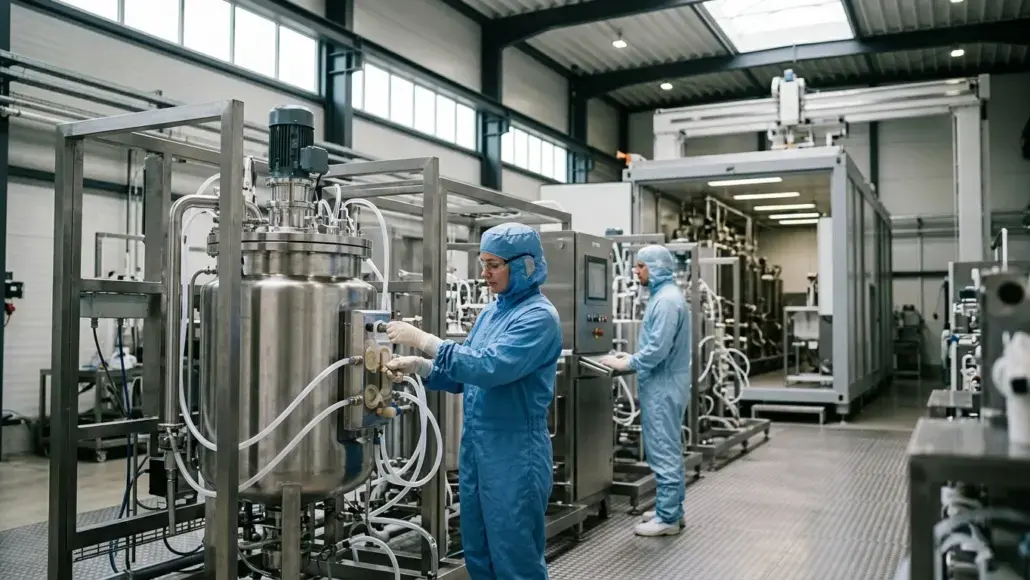
In the rapidly evolving world of biotechnology, the ability to scale production quickly is no longer just a competitive advantage it is a necessity. The emergence of personalized medicine, cell and gene therapies, and the global need for rapid vaccine deployment have strained traditional pharmaceutical infrastructure to its limits. Traditional “stick-built” facilities, which can take several years to design and construct, are often too slow to keep pace with the speed of scientific innovation. This has led to a paradigm shift toward modular biopharma facilities. These innovative structures are designed, fabricated, and tested in controlled factory environments before being transported to their final site for assembly. By decoupling the construction process from site preparation, modular biopharma facilities are significantly accelerating capacity growth and providing the agility needed to meet modern healthcare demands.
The Strategic Advantage of Speed and Flexibility
The primary driver for the adoption of modular biopharma facilities is the significant reduction in time-to-market. In a traditional construction project, the process is linear: the site must be prepared, the foundation poured, and the building shell erected before internal cleanroom construction can even begin. In contrast, modular construction allows for parallel processing. While site work is underway at the final location, the specialized manufacturing modules are being built simultaneously in a dedicated facility. This overlap can reduce project timelines by as much as 30% to 50%. For a biopharmaceutical company, this means getting life-saving therapies to patients months, or even years, sooner.
Beyond speed, modularity offers unparalleled flexibility. The pharmaceutical market is notoriously volatile a drug that looks promising in Phase II clinical trials may fail in Phase III, or a sudden surge in demand may require an immediate expansion of production capacity. Modular biopharma facilities are designed with a “plug-and-play” mindset. They can be easily expanded by adding more modules, or even repurposed for a different product line with minimal disruption to ongoing operations. This “right-sized” approach to infrastructure allows companies to invest in capacity incrementally, reducing the financial risk associated with building large, static facilities based on uncertain long-term forecasts.
Precision Engineering and Quality Control in the Factory
One of the most significant benefits of building modular biopharma facilities in a factory setting is the high level of quality control that can be achieved. Construction sites are inherently chaotic environments, subject to weather delays, varying labor quality, and the challenges of maintaining clean conditions during build-out. A modular fabrication facility, on the other hand, is a controlled environment. Every weld, every joint, and every installation is performed by specialized technicians using standardized processes. This leads to a level of precision that is difficult to replicate in the field.
Furthermore, the commissioning and qualification process a critical and often time-consuming step in biopharma can begin long before the modules arrive at the site. Factory Acceptance Testing (FAT) allows for the early identification and resolution of any technical issues in a controlled setting. When the modules finally arrive on-site, the installation process is more akin to assembly than construction. This “pre-validated” nature of modular biopharma facilities streamlines the final Site Acceptance Testing (SAT) and validation phases, further accelerating the path to GMP readiness. The result is a facility that is not only built faster but is often of higher quality and more reliable than its traditional counterparts.
Global Consistency and Decentralized Manufacturing
As biopharmaceutical companies expand their reach into emerging markets, maintaining global consistency in manufacturing is a significant challenge. Building a facility in a region with limited specialized construction expertise can lead to delays and quality discrepancies. Modular biopharma facilities provide a solution to this problem by offering a standardized, “copy-paste” approach to infrastructure. A company can design a standard manufacturing module in its headquarters and have identical units fabricated and shipped to various locations around the world. This ensures that a drug produced in Singapore is manufactured in an environment identical to one in Boston, facilitating regulatory approval and ensuring product consistency.
This modular approach also supports the trend toward decentralized manufacturing. Rather than relying on a few massive, centralized plants, companies are increasingly looking to build smaller, regional facilities closer to patient populations. This is particularly important for therapies with short shelf lives, such as autologous cell therapies. Modular biopharma facilities allow companies to deploy localized manufacturing hubs quickly and efficiently, even in areas where traditional construction would be cost-prohibitive or technically challenging. This shift toward a distributed manufacturing network is a key strategy for increasing the resilience of the global pharmaceutical supply chain.
Sustainability and the Environmental Impact of Modularity
In addition to economic and operational benefits, modular biopharma facilities offer a more sustainable approach to construction. Traditional building projects generate a significant amount of waste, much of which ends up in landfills. In a modular factory, material usage is optimized, and waste is minimized through precise cutting and the reuse of offcuts. Furthermore, the reduced time on-site means less disruption to the local environment, fewer truck trips, and lower noise and dust pollution.
The modules themselves are often designed with energy efficiency in mind. Advanced insulation, integrated HVAC systems, and the use of sustainable materials can significantly reduce the carbon footprint of the facility over its lifecycle. Moreover, because modular biopharma facilities are inherently relocatable and repurposable, the “embodied carbon” of the structure is preserved. If a facility is no longer needed at one location, it can be dismantled and moved elsewhere, rather than being demolished. This circular approach to infrastructure is increasingly important as the pharmaceutical industry strives to meet ambitious sustainability goals.
Overcoming Challenges and Future Directions
While the benefits of modular biopharma facilities are clear, the transition away from traditional construction is not without its challenges. It requires a different mindset from the very beginning of the project. Design must be completed and locked in much earlier than in a stick-built project, as changes are more difficult to implement once fabrication has begun in the factory. There are also logistical challenges associated with transporting large modules, sometimes across international borders, which requires careful planning and coordination.
However, as the industry gains more experience with modularity, these hurdles are being overcome. The rise of digital twins and Building Information Modeling (BIM) allows for even greater coordination between design, fabrication, and site teams. We are also seeing the emergence of “hybrid” approaches, where a traditional building shell is used to house modular cleanroom units, combining the durability of traditional construction with the speed and flexibility of modularity. Looking ahead, we can expect modular biopharma facilities to become the default choice for a wide range of applications, from small-scale clinical trial suites to large-scale commercial production plants.
Conclusion: A New Era for Pharma Infrastructure
The shift toward modular biopharma facilities represents a fundamental change in how the pharmaceutical industry thinks about its physical assets. By prioritizing speed, flexibility, and quality, modularity provides the infrastructure backbone needed to support the next generation of medical breakthroughs. As the global demand for biopharmaceuticals continues to grow, the ability to rapidly deploy and scale manufacturing capacity will be the defining factor in which companies succeed and which patients receive the treatments they need. Modular construction is no longer an experimental alternative it is the engine accelerating capacity growth and reshaping the future of biopharmaceutical manufacturing.
