





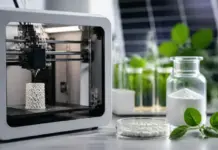
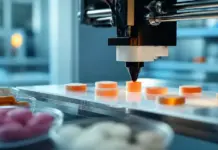
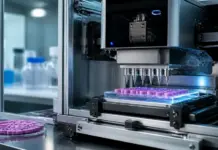
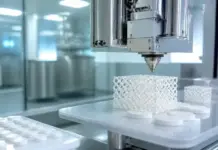
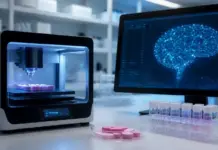




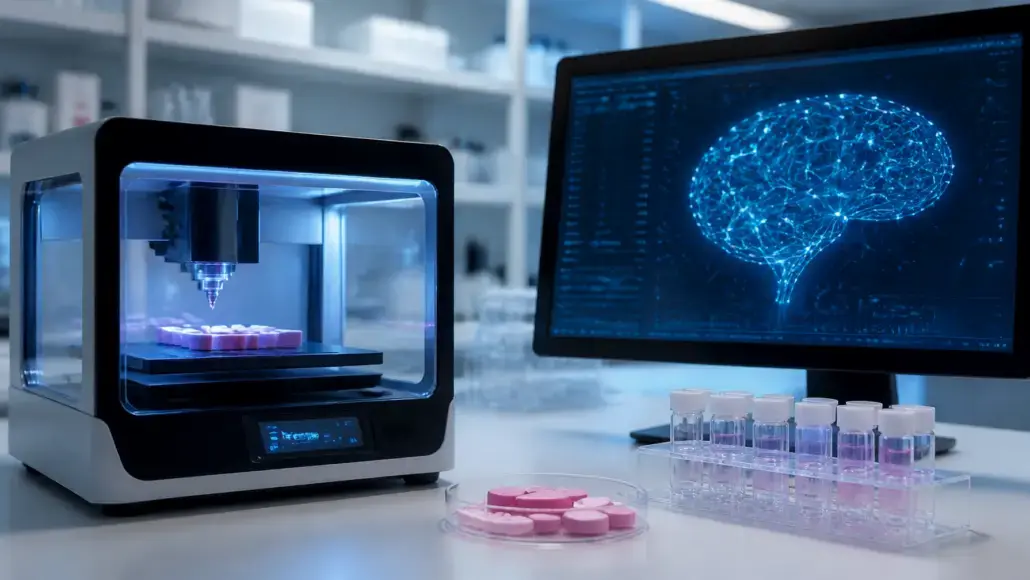
The landscape of pharmaceutical research and development is undergoing a seismic shift in 2026 as the synergy between artificial intelligence and additive manufacturing matures. Pharma Advancement notes that the integration of AI-driven 3D printing in pharma has emerged as a transformative force, capable of resolving the long-standing bottlenecks in formulation development. Traditionally, creating a stable and effective drug formulation required years of iterative trial-and-error, often involving thousands of physical experiments to determine the ideal combination of active ingredients and excipients. Today, machine learning algorithms and predictive modeling have drastically compressed this timeline, allowing researchers to simulate drug-polymer interactions and predict the success of a 3D-printed dosage form before a single milligram of material is extruded. This digital-first approach is redefining the boundaries of pharmaceutical innovation, turning complex chemical challenges into solvable computational problems.
AI Optimizes Pharmaceutical 3D Printing Formulations
The primary advantage of combining AI-driven 3D printing lies in the optimization of the complex parameters inherent to additive manufacturing. Pharmaceutical 3D printing, particularly techniques like fused deposition modeling or semi-solid extrusion, depends heavily on the rheological properties of the material and the thermal stability of the drug. AI-driven platforms can now analyze vast datasets of material properties to identify the most compatible carriers for a specific active pharmaceutical ingredient. By applying active learning techniques, these systems can autonomously suggest new formulations based on previous successes and failures, effectively guiding scientists through the vast chemical space of potential drug delivery systems. This level of pharmaceutical R&D efficiency is unprecedented, turning what was once a laborious manual process into a highly automated and intelligent workflow that leverages the power of big data.
Generative Design Enables Advanced Drug Delivery Systems
In 2026, the use of generative design is further pushing the boundaries of what is possible with AI-driven 3D printing. Instead of relying on traditional tablet shapes, AI algorithms can engineer intricate internal architectures that dictate the precise release kinetics of a drug. These complex geometries, which were previously impossible to design manually, are optimized to ensure that the drug is delivered to the target site at the optimal rate. This is particularly crucial for poorly soluble drugs, where the surface-area-to-volume ratio plays a critical role in bioavailability. By leveraging additive manufacturing to realize these AI-optimized designs, pharmaceutical manufacturers are achieving higher levels of drug efficacy and safety, ultimately improving patient outcomes through smarter drug delivery solutions. The ability to print effectiveness into the very structure of the pill is a hallmark of this new era of drug design.
AI Enhances Quality Control and Manufacturing Validation
Furthermore, the implementation of AI-driven 3D printing is revolutionizing quality control and validation within the production environment. Machine learning models integrated into the printing hardware can monitor the fabrication process in real-time, detecting micro-anomalies that might lead to batch failure. This predictive maintenance and in-line monitoring reduce waste and ensure that every printed unit adheres to the strict standards required for pharmaceutical manufacturing. The ability of AI to learn from these real-time data streams means that the manufacturing process is constantly improving, with the system adjusting printing parameters on the fly to compensate for environmental variables like humidity or temperature fluctuations. This dynamic optimization is a key driver of pharma innovation, ensuring that 3D-printed drugs are produced with a level of consistency that rivals traditional mass-production methods. The result is a manufacturing system that is not only faster but fundamentally more reliable.
AI and 3D Printing Transform Clinical Trial Flexibility
The impact of AI-driven 3D printing in pharma sector also extends to the clinical trial phase, where customized dosage forms can be rapidly developed for small patient cohorts. This agility allows for more granular testing of drug effects, as researchers can easily adjust the dose or release profile for individual participants. The data generated from these trials can then be fed back into the AI models, creating a continuous feedback loop that refines the formulation development process even further. This iterative approach not only accelerates the path to regulatory approval but also ensures that the final product is better tailored to the needs of the target population. Additive manufacturing acts as the physical bridge that brings these digital insights to life, making the concept of personalized drug design a reality for patients worldwide. This responsiveness to clinical data is what sets the modern R&D process apart from its predecessors.
AI and 3D Printing Drive Pharmaceutical Manufacturing Efficiency
As we look toward the end of 2026, the convergence of AI-driven 3D printing is setting a new standard for pharmaceutical manufacturing efficiency. Companies that have embraced this digital-physical integration are seeing significant reductions in their R&D costs and time-to-market for new therapies. The ability to quickly pivot and adapt formulations based on AI insights is providing a competitive edge in a rapidly evolving market. Moreover, this technology is fostering a culture of innovation where researchers are encouraged to explore unconventional drug delivery methods, knowing that AI can help navigate the complexities of formulation design. The future of medicine is being written in the code of AI and the layers of 3D printing, promising a more efficient and effective pharmaceutical industry for all. The economic impact of these technologies is already being felt, as the cost of developing new, high-precision therapies begins to decrease, making them accessible to a broader range of patients.
Digital Twins Enable Predictive Pharmaceutical Manufacturing
The use of Digital Twins in the AI-driven 3D printing workflow has become a standard practice for forward-thinking manufacturers. A digital twin is a virtual replica of the physical printing process that allows scientists to run thousands of virtual prints before committing to a physical run. By simulating how a specific drug formulation will behave under different printing conditions—such as varying nozzle speeds or cooling rates—researchers can identify potential failures before they happen. This predictive power is essential for maintaining the high standards of pharmaceutical manufacturing, as it reduces the reliance on expensive and time-consuming laboratory experiments. In 2026, the digital twin is the foundational tool for any new pharmaceutical R&D project, providing a safe and efficient space for experimentation and optimization.
AI Supports Drug Repurposing and New Therapeutic Applications
Moreover, the synergy between AI-driven 3D printing is facilitating the discovery of new therapeutic applications for existing drugs. By analyzing the structural data of known compounds, AI can suggest modifications to the 3D-printed dosage form that could enhance the drug’s performance for a different indication. This repositioning strategy, supported by the rapid prototyping capabilities of additive manufacturing, is opening up new revenue streams for pharmaceutical companies while providing patients with novel treatment options for rare or difficult-to-treat diseases. The role of healthcare technology in these breakthroughs cannot be overstated, as it provides the analytical and physical tools necessary to unlock the full potential of the global pharmacopeia. The ability to rapidly adapt existing therapies to meet new clinical needs is a vital component of a resilient and responsive healthcare system.
Smart Drug Systems Advance Personalized Medicine
In the context of personalized medicine, AI-driven 3D printing are enabling the creation of smart drug systems that can be programmed to release their payload in response to specific biological cues. For example, AI can design a tablet that releases its active ingredient only when the patient’s internal biomarkers reach a certain threshold. Additive manufacturing is the only technology capable of producing the complex, multi-material structures required for such sophisticated delivery mechanisms. This level of precision ensures that patients receive the right amount of medication exactly when they need it, maximizing therapeutic benefit while minimizing the risk of adverse reactions. This proactive approach to treatment is a cornerstone of the 2026 healthcare landscape, where the focus is increasingly on prevention and precision.
Cross-Disciplinary Collaboration Accelerates Pharma Innovation
The collaborative nature of AI-driven 3D printing is also breaking down the traditional silos within the pharmaceutical industry. Data scientists, chemical engineers, and clinical researchers are now working together in integrated teams, using shared AI platforms to drive innovation. this cross-disciplinary approach is fostering a new generation of pharma innovation, where the physical and digital aspects of medicine are treated as a single, cohesive unit. As we move further into 2026, the success of a pharmaceutical company will be measured by its ability to effectively integrate these technologies into its core operations, ensuring that it can deliver the next generation of life-saving therapies to patients with unprecedented speed and precision. The digital transformation of pharma is thus not just about technology; it is about a fundamental shift in how we think about the design and delivery of medicine.
Predictive Modeling and the Future of Formulation
The application of machine learning in AI-driven 3D printing has moved beyond simple data analysis to become a predictive tool for the entire drug development lifecycle. By utilizing deep learning networks, scientists can now predict the long-term stability of 3D-printed drugs under various storage conditions. This foresight is critical for pharmaceutical manufacturers, as it allows them to identify potential degradation issues early in the formulation development process. The integration of these predictive models ensures that additive manufacturing is used only for formulations that are both therapeutically effective and commercially viable, reducing the risk of late-stage failures that are so common in traditional pharmaceutical R&D. This strategic use of data is what makes the modern pharmaceutical industry more efficient and sustainable.
Future of Sustainable Pharma through AI-Driven 3D Printing
Moreover, the use of AI-driven 3D printing to optimize environmental sustainability is a growing trend in 2026. Machine learning algorithms are being used to identify the most energy-efficient printing paths and to minimize the waste of expensive active ingredients. This focus on green pharma is not only better for the planet but also helps companies meet their corporate ESG goals. Pharma Advancement believes that by leveraging additive manufacturing for more precise and localized production, the industry is significantly reducing its carbon footprint and supporting a more sustainable future for healthcare. The marriage of high-tech innovation and environmental responsibility is a powerful example of how the pharmaceutical industry is evolving to meet the challenges of the 21st century.
