












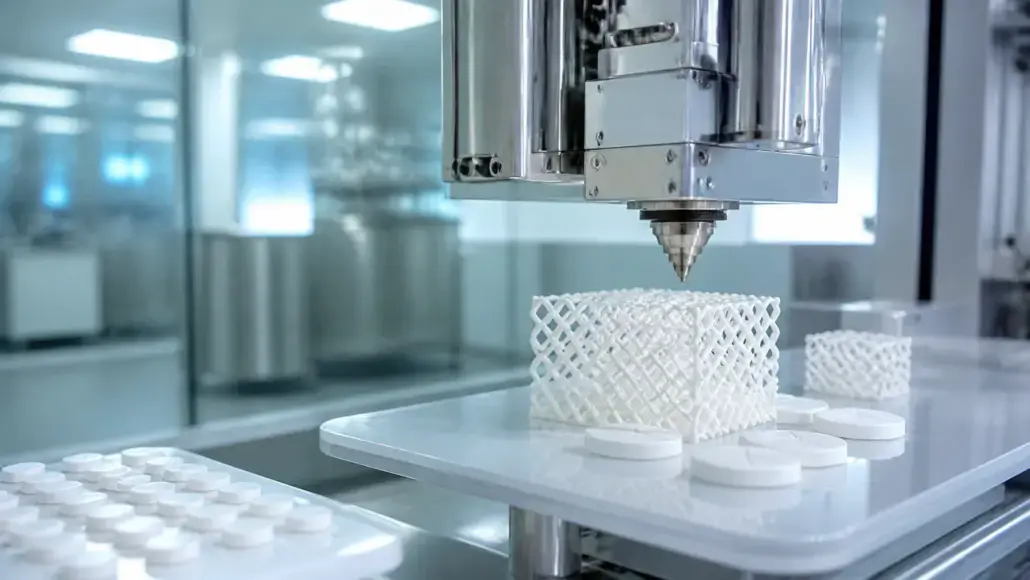
As the pharmaceutical industry moves closer to the widespread adoption of additive manufacturing, the focus has shifted from the laboratory bench to the regulatory rigor of the production floor. In 2026, Pharma Advancement notes that the transition toward GMP-compliant 3D printing has become the defining challenge for manufacturers seeking to integrate these technologies into their supply chains. Current Good Manufacturing Practice (cGMP) standards are the bedrock of pharmaceutical quality assurance, ensuring that products are consistently produced and controlled to the highest quality standards. For 3D printing, this means moving beyond simple prototyping to a fully validated, robust, and reproducible manufacturing process that satisfies the stringent requirements of health authorities like the FDA and EMA. The implementation of these standards is not just a regulatory hurdle but a critical step in building patient and provider trust in customized therapeutics.
Equipment and Software Validation for GMP Compliance
One of the most critical aspects of achieving GMP-compliant 3D printing is the validation of the equipment and the software that drives it. Unlike traditional tablet presses, 3D printers rely on complex digital files and intricate mechanical movements to build dosage forms layer by layer. Manufacturers must demonstrate that the printer consistently produces the intended product within predefined specifications. This involves rigorous Installation Qualification (IQ), Operational Qualification (OQ), and Performance Qualification (PQ) protocols. Furthermore, the software used to manage the printing process must be compliant with regulations such as 21 CFR Part 11, ensuring data integrity, traceability, and the prevention of unauthorized changes to drug formulations. In 2026, this Computer System Validation (CSV) is a fundamental part of the pharmaceutical manufacturing process, ensuring that the “digital pill” is as secure as its physical counterpart.
Material Control and Traceability in 3D-Printed Drug Manufacturing
In 2026, pharmaceutical manufacturing has also placed a heightened emphasis on material control and traceability. Every raw material, from the active pharmaceutical ingredient to the polymeric excipients used as bio-inks or filaments, must be characterized and tracked throughout its lifecycle. In the context of GMP-compliant 3D printing, this includes the monitoring of material degradation during the printing process, particularly when high temperatures or UV light are involved. Manufacturers must implement robust quality assurance checks to ensure that the chemical stability of the drug is maintained from the moment it enters the printer to the final delivery of the finished dosage form. This level of oversight is essential for maintaining regulatory compliance and ensuring that personalized medications are both safe and effective for the patient. The ability to provide a complete audit trail for every single unit produced is a hallmark of this new manufacturing paradigm.
Cleanroom Standards and Cleaning Validation
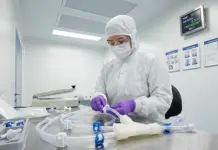
The physical environment of the printing facility is another cornerstone of GMP-compliant 3D printing. Cleanroom standards must be maintained to prevent cross-contamination, a risk that is particularly acute in decentralized or point-of-care manufacturing sites. Manufacturers are increasingly utilizing closed-loop systems and modular cleanrooms to house their 3D printing hardware, providing a controlled atmosphere that meets pharma production standards. Cleaning validation also poses unique challenges in additive manufacturing, as the complex internal components of a printer can be difficult to sanitize between batches. Developing standardized cleaning protocols that are both effective and verifiable is a key component of pharmaceutical manufacturing innovation in 2026, enabling the flexible production of multiple drug products on the same equipment. This operational agility is critical for meeting the demands of a personalized medicine market while maintaining the highest levels of safety.
Real-Time Quality Testing Through Process Analytical Technology
Regulatory compliance for 3D-printed drugs also extends to the finished product’s quality testing. Traditional batch testing methods are often incompatible with the small-scale or individual production runs characteristic of personalized medicine. As a result, manufacturers are turning to Process Analytical Technology (PAT) to monitor quality in real-time. By integrating sensors and imaging systems directly into the printer, they can perform non-destructive testing on every unit produced. This “real-time release” capability is a significant advancement in pharmaceutical quality assurance, allowing for the immediate distribution of medications while maintaining the highest level of safety. GMP-compliant 3D printing is thus not just about following rules; it is about leveraging advanced technology to create a more efficient and responsive manufacturing ecosystem that prioritizes patient needs over industrial convenience.
Regulatory Collaboration Accelerates Pharmaceutical 3D Printing
As we look at the broader implications for the industry, the shift toward GMP-compliant 3D printing is fostering a new level of collaboration between technology providers and pharmaceutical companies. Regulatory bodies are also playing an active role, providing updated guidance documents and participating in pilot programs to refine the standards for additive manufacturing. This proactive engagement is helping to clarify the path forward for manufacturers, reducing the uncertainty that has previously slowed the adoption of these technologies. In 2026, those who have mastered the intricacies of GMP compliance are the ones leading the charge in pharmaceutical innovation, setting the stage for a future where customized, high-quality medications are the norm rather than the exception. The maturation of these standards is the key to unlocking the full potential of personalized medicine on a global scale.
Process Analytical Technology Enables Quality by Design
The role of Process Analytical Technology (PAT) in achieving GMP-compliant 3D printing cannot be overstated. By using spectroscopic techniques such as Near-Infrared (NIR) or Raman spectroscopy, manufacturers can verify the drug content and distribution within a 3D-printed tablet as it is being built. This continuous monitoring ensures that any deviation from the validated process is detected and corrected immediately, preventing the production of sub-standard units. In 2026, PAT is no longer an optional add-on but an integral part of the 3D-printing hardware, providing the data necessary for real-time quality assurance. This shift from “quality by testing” to “quality by design” is a fundamental principle of cGMP that is perfectly suited to the capabilities of additive manufacturing.
Data Integrity and Cybersecurity in Digital Drug Manufacturing
Data integrity and cybersecurity are also paramount in the realm of GMP-compliant 3D printing. As drug formulations are increasingly stored as digital files, the risk of data breaches or intellectual property theft becomes a significant concern for pharmaceutical manufacturing companies. Implementing robust encryption, multi-factor authentication, and blockchain-based audit trails is essential for protecting the integrity of the manufacturing process. Health authorities in 2026 require manufacturers to demonstrate that their digital supply chains are as secure as their physical ones, ensuring that every 3D-printed dose is produced exactly as intended by the prescribing clinician. This focus on digital safety is a critical component of modern regulatory compliance and is a key driver of innovation in the healthcare technology sector.
Workforce Training for GMP-Compliant 3D Printing
Moreover, the training of personnel is a vital element of maintaining GMP-compliant 3D printing standards. The operation of sophisticated 3D-printing equipment requires a unique blend of skills that includes expertise in pharmacy, engineering, and data science. Manufacturers are investing heavily in training programs to ensure that their staff are capable of managing the complexities of additive manufacturing while adhering to strict cGMP guidelines. In 2026, the “3D Printing Operator” has become a recognized profession within the pharmaceutical industry, playing a central role in the production of high-quality, customized drugs. This human element is essential for ensuring that the technological advancements in 3D printing are translated into safe and effective treatments for patients.
Modular Facilities Enable Decentralized Pharmaceutical Manufacturing
The evolution of GMP-compliant 3D printing is also driving changes in the design of pharmaceutical facilities. Traditional large-scale manufacturing plants are being supplemented by smaller, modular production units that can be deployed closer to the patient. these “mini-factories” are designed to meet full cGMP standards in a compact footprint, allowing for the safe and efficient production of personalized medicines in hospitals and regional centers. This shift toward decentralized manufacturing is a key part of the industry’s response to the demands of personalized medicine, ensuring that every patient has access to the highest quality care regardless of their location. The ability to maintain rigorous quality standards in these diverse settings is the ultimate proof of the success of GMP-compliant 3D printing in 2026.
Validation and Data Integrity in Additive Manufacturing
The core of GMP-Compliant 3D Printing lies in the ability to prove that the process is under control at all times. This requires a comprehensive validation strategy that encompasses everything from the design of the digital model to the final post-processing steps. Manufacturers must ensure that the digital-to-physical translation is accurate, meaning that the dimensions, weight, and internal structure of the printed tablet match the intended design exactly. This level of precision is achieved through rigorous calibration and the use of high-resolution sensors that provide constant feedback to the printer’s control system. By documenting these processes meticulously, companies can satisfy the transparency requirements of regulatory compliance audits and demonstrate their commitment to patient safety.
Data Integrity Supports Continuous Manufacturing Improvement
Furthermore, data integrity has become a focal point for pharmaceutical manufacturing in 2026. As 3D printing becomes more decentralized, the risk of data corruption or unauthorized access to drug formulations increases. Pharma Advancement highlights that implementing secure, encrypted networks and robust audit trails is essential for maintaining GMP-compliant 3D printing standards. Every modification to a printing protocol must be recorded, including who made the change and why. This level of traceability not only ensures the safety of the final product but also provides a wealth of data that can be used to further optimize the manufacturing process, driving continuous improvement and innovation across the entire pharmaceutical production line. This data-driven approach to validation is what makes 3D printing a truly modern manufacturing technology.
