










The convergence of additive manufacturing and clinical pharmacology has reached a pivotal milestone in 2026, fundamentally altering the way healthcare providers approach patient-specific therapy. As we navigate this new era, 3D printing in personalized medicine is no longer a peripheral concept confined to high-end research laboratories. It has become a central pillar of pharmaceutical innovation. The ability to fabricate oral dosage forms that are precisely tailored to the unique physiological requirements of an individual—considering their age, weight, and metabolic profile—represents one of the most significant shifts in medicine since the advent of genomic sequencing. Pharma Advancement notes that by leveraging additive manufacturing, the industry is moving away from the one-size-fits-all paradigm toward a model of precision medicine that prioritizes patient outcomes through customization. This technological leap is not merely about production. It is about the intelligent design of therapeutic interventions that match the biological complexity of every human being.
Point-of-Care Manufacturing Enables Customized Drug Dosages
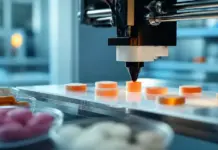
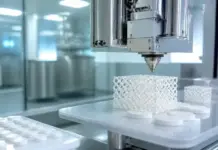
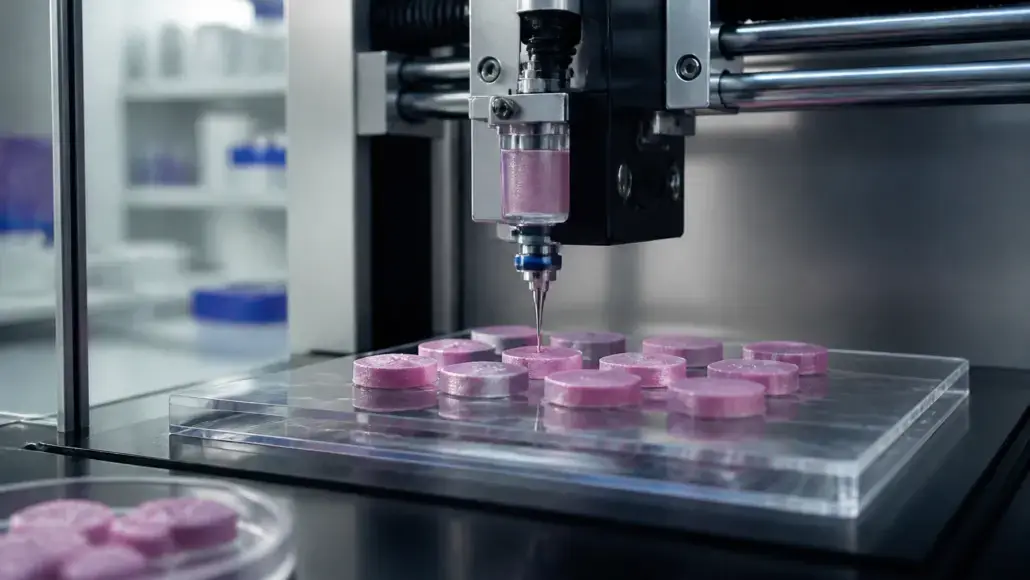
In 2026, the clinical landscape is witnessing a surge in the deployment of point-of-care 3D printing systems within hospital pharmacies and specialized clinics. This shift allows for the immediate production of medications that meet exact dosage requirements, which is particularly beneficial for pediatric and geriatric populations who often require dosages not readily available in mass-produced formats. The precision offered by 3D printing in personalized medicine ensures that active pharmaceutical ingredients are distributed within a tablet in ways that traditional compression methods cannot achieve. This level of control enables the creation of complex release profiles, allowing for the integration of multiple drugs into a single “polypill.” Such pharmaceutical innovation not only simplifies treatment regimens but also significantly improves patient compliance, as the burden of managing multiple medications is reduced to a single daily dose. This consolidation of therapy is proving to be a life-saving advancement for patients with multi-morbidities who previously struggled with pill fatigue and dosing errors.
Additive Manufacturing Accelerates Precision Drug Development
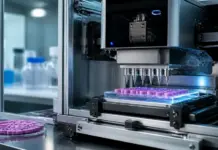
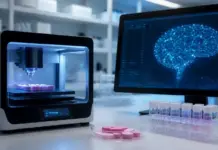
Beyond the logistical advantages of point-of-care manufacturing, the integration of 3D printing in personalized medicine into the drug development lifecycle has accelerated the pace of precision medicine. Research institutions are now using advanced printing techniques to create tissue-mimicking structures for drug testing, which provides a more accurate representation of human biological responses compared to traditional animal models. This application of additive manufacturing reduces the time and cost associated with drug design and development, allowing for faster transition from the bench to the bedside. Furthermore, the ability to customize the shape, size, and texture of drugs facilitates better swallowability, a critical factor in patient adherence. By addressing these tactile and physiological nuances, 3D printing is enhancing the therapeutic experience and ensuring that the pharmacological benefits are fully realized by the patient. The humanization of medicine is thus being achieved through a highly technical but deeply empathetic medium.
Regulatory Advances Support 3D-Printed Therapeutics
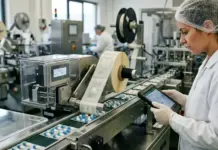
The regulatory environment in 2026 has also adapted to these technological advancements, providing clearer pathways for the validation of 3D-printed therapeutics. Health authorities are working closely with technology providers to establish robust quality assurance protocols that ensure every printed unit meets the necessary safety and efficacy standards. This regulatory clarity is driving further investment in pharmaceutical innovation, as companies can now confidently scale their additive manufacturing capabilities. The shift toward customized drugs is also being supported by digital health platforms that link patient diagnostic data directly to the printing hardware, creating a seamless workflow from diagnosis to dispensing. This holistic approach to healthcare technology is what defines the current state of 3D printing in personalized medicine, making it an indispensable tool for modern clinicians. The data-driven nature of this process ensures that every decision is backed by real-time patient metrics, bridging the gap between clinical intent and therapeutic reality.
3D Printing Promotes Sustainable Pharmaceutical Manufacturing
As we look toward the future, the sustainability benefits of this technology are becoming increasingly apparent. Traditional pharmaceutical manufacturing often results in significant chemical waste due to large-batch processing and the need for extensive storage and transport. In contrast, 3D printing in personalized medicine promotes a more decentralized and resource-efficient production model. By producing drugs on-demand and on-site, the industry can minimize the environmental footprint of its supply chain. This move toward green pharma aligns with broader ESG goals while simultaneously reducing costs for healthcare systems. The synergy between precision medicine and additive manufacturing is creating a more resilient, responsive, and patient-centric pharmaceutical ecosystem that is better equipped to handle the complexities of modern disease management. The environmental stewardship demonstrated by this transition is a testament to the industry’s commitment to long-term global health.
Decentralized Production Expands Access to Personalized Therapies
The socio-economic implications of widespread 3D printing in personalized medicine are equally profound. By democratizing access to tailored therapies, this technology is helping to bridge the gap in healthcare quality across different regions. Rural clinics and remote healthcare facilities can now provide the same level of precision dosing as major urban medical centers, provided they have the necessary printing hardware and digital prescriptions. This decentralization of pharmaceutical manufacturing is empowering local pharmacists to take a more active role in the formulation process, acting as the final link in the personalized medicine chain. As 3D Printing in Personalized Medicine continues to evolve throughout 2026, its role as a catalyst for pharmaceutical innovation remains undisputed, promising a future where every patient receives a treatment plan as unique as their own DNA. The economic shift toward value-based care is further supported by these advancements, as the focus moves from volume-based drug sales to outcome-based patient recovery.
Smart Tablets Enable Controlled and Timed Drug Release
The technical sophistication of 3D printing in personalized medicine has reached a level where the internal architecture of a tablet can be programmed to release medication at specific intervals throughout the day. This capability is essential for managing chronic conditions that require steady-state plasma concentrations, such as hypertension or diabetes. Through the use of varying polymer matrices and complex geometric designs, pharmaceutical scientists can now engineer dosage forms that provide an immediate burst of medication followed by a sustained release, all within a single 3D-printed unit. This level of pharmaceutical innovation is virtually impossible to replicate using conventional tablet pressing techniques, highlighting the unique value proposition of additive manufacturing in the quest for precision medicine. These “smart” tablets are capable of mimicking the rhythmic needs of the human body, providing a degree of therapeutic synchronicity that was previously the stuff of science fiction.
Advanced Materials Open New Drug Delivery Opportunities
Moreover, the versatility of 3D printing in personalized medicine extends to the use of novel materials that were previously incompatible with pharmaceutical production. The development of bio-ink and biocompatible polymers has opened new avenues for drug delivery, including the creation of implantable devices that release medication locally over extended periods. These advancements in healthcare technology are transforming how we treat localized diseases, such as certain types of cancer or inflammatory conditions, by minimizing systemic side effects and maximizing the concentration of the drug at the site of action. The continuous refinement of these materials ensures that customized drugs are not only effective but also safer for long-term use, further cementing the role of 3D printing in the pharmaceutical landscape of 2026. This material revolution is the backbone of the next generation of precision therapeutics, where the container and the content are designed as a single, harmonious system.
3D-Printed Medicines Address Pediatric Dosing Challenges
In the realm of pediatric medicine, 3D printing in personalized medicine is solving the long-standing problem of “pill splitting” and inaccurate liquid dosing. Children are not simply “small adults,” and their metabolic rates can vary significantly. 3D printing allows for the creation of chewable, flavored “printlets” that contain the exact milligram dose required for a specific child’s weight and age. This not only ensures safety but also makes the experience of taking medication less traumatic for the child and more manageable for the parents. The ability to integrate familiar shapes and colors into these customized drugs is a brilliant example of how pharmaceutical innovation can be humanized to meet the psychological needs of patients. By removing the fear and uncertainty associated with traditional medications, 3D printing is fostering a healthier relationship between patients and their treatments.
AI and 3D Printing Create Adaptive Personalized Therapies
The integration of artificial intelligence into the 3D printing in personalized medicine workflow is the final piece of the puzzle in 2026. AI algorithms are used to analyze patient genomic data, lifestyle factors, and real-time biometric feedback to suggest the optimal drug formulation. Once the formulation is decided, the instructions are sent to the 3D printer, which executes the build with microscopic precision. This closed-loop system ensures that the medication is constantly adapted to the patient’s changing health status, providing a level of responsiveness that was never before possible. The marriage of AI and additive manufacturing is the ultimate expression of healthcare technology, creating a system that is both highly efficient and deeply personal. It is this synergy that will continue to drive the evolution of medicine for decades to come, ensuring that personalized therapy becomes the standard of care rather than a luxury.
Advancing Precision Medicine Through Additive Manufacturing
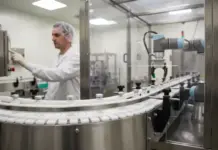
The deep integration of 3D printing in personalized medicine into the clinical workflow has necessitated a significant change in the training and role of the modern pharmacist. In 2026, pharmacists are no longer merely dispensers of mass-produced pills; they have become “pharmaceutical engineers” who oversee the local production of customized drugs. This evolution requires a mastery of digital design software, an understanding of polymer science, and a rigorous commitment to quality assurance within a decentralized manufacturing environment. The empowerment of the pharmacist as a local innovator is one of the most exciting aspects of this technological shift, as it places the expert closer to the patient, ensuring that every 3D-printed dose is perfectly suited to the clinical context.
Data-Driven 3D Printing Strengthens Clinical Research
Furthermore, the data generated during the 3D printing in personalized medicine process is proving to be an invaluable resource for long-term clinical research. Every printed unit is a data point that can be tracked through the patient’s electronic health record, allowing researchers to correlate specific release profiles and dosage forms with actual health outcomes. This real-world evidence is helping to refine the algorithms that drive precision medicine, creating a virtuous cycle of improvement that benefits the entire medical community. Pharma Advancement believes that the transparency and traceability offered by additive manufacturing are thus not just regulatory requirements but are the engines of future pharmaceutical innovation. As we collect more data on how customized drugs behave in diverse populations, our ability to predict and prevent disease will only continue to grow.
