























AI Summary
The administrative burden associated with managing a modern clinical trial is immense. From the initial regulatory filings to the final analysis of thousands of patient records every step of the process is traditionally heavy with manual tasks. However the rise of clinical trial automation is fundamentally changing the way these studies are managed. Pharma Advancement notes that by replacing repetitive and error prone manual processes with intelligent automated systems pharmaceutical companies are able to reduce complexity and focus their human expertise on high level scientific and strategic challenges. This transformation is essential for managing the increasing volume of data generated in contemporary research and for maintaining the rigorous quality standards required by global regulators.
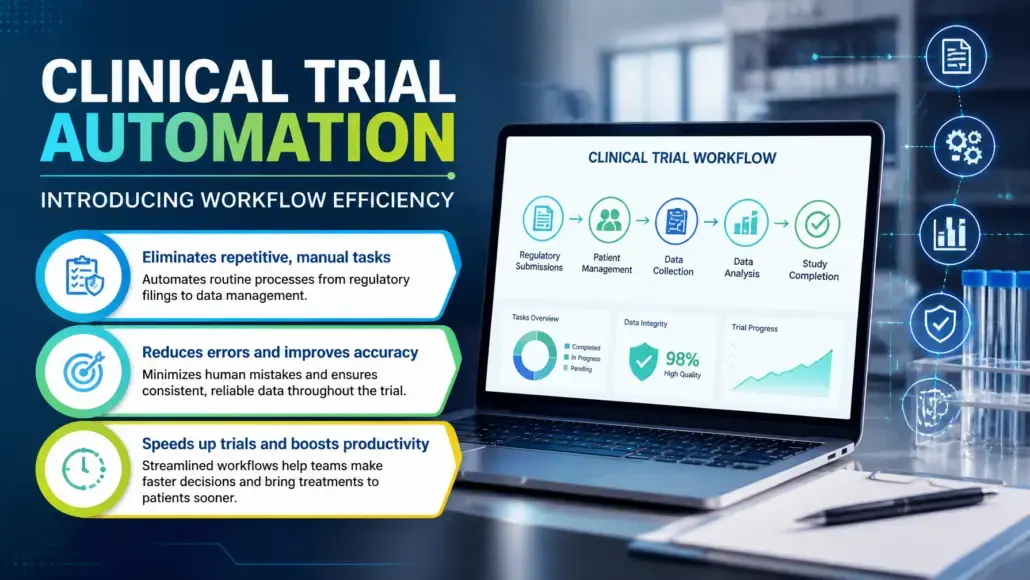
The core of this efficiency gain lies in the automation of data entry and management tasks. In the past site coordinators would spend hours transcribing data from medical records into electronic case report forms. This process was not only slow but also a significant source of errors that could lead to costly delays during the data cleaning phase. Through clinical trial automation systems can now pull data directly from electronic health records and diagnostic equipment. This real time data integration ensures that the information is accurate and consistent across all platforms. By eliminating the middleman in data capture researchers can achieve a level of data integrity that was previously unattainable.
Enhancing Documentation and Participant Engagement
Communication and document management are other areas where automation is making a profound impact. A typical global trial involves hundreds of investigators and thousands of documents that must be tracked and updated regularly. Managing this through emails and spreadsheets is a recipe for confusion and non compliance. The implementation of clinical trial automation tools allows for the creation of centralized portals where all trial documents are stored and tracked. Automated alerts can notify study teams when a document is expiring or when a specific regulatory filing is due. This ensures that the trial always remains in a state of audit readiness and reduces the risk of administrative oversights that could derail a study.
Patient engagement and monitoring have also been revolutionized by automated technologies. Traditional patient diaries and questionnaires are often incomplete or filled out at the last minute which compromises the quality of the data. Through clinical trial automation sponsors can use mobile applications that send automated reminders to participants to complete their daily tasks. These apps can also capture physiological data from wearable devices and transmit it directly to the study database. This continuous monitoring provides a much more detailed and accurate picture of patient health and drug efficacy while significantly reducing the burden on the participants themselves.
Streamlining Regulatory Compliance and Quality Control
Ensuring compliance with diverse global regulations is one of the most complex aspects of clinical trial management. Each country has its own set of requirements for reporting adverse events and managing trial supplies. Clinical trial automation helps simplify this process by using intelligent systems to track and manage these requirements. For example automated safety reporting systems can ensure that all serious adverse events are reported to the relevant authorities within the required timeframes without the need for manual intervention. This level of automation reduces the risk of costly fines and regulatory delays that can occur due to reporting errors.

Quality control is another area where automation provides significant benefits. Manual auditing of clinical data is a time consuming and expensive process that often only catches a fraction of the potential errors. By leveraging clinical trial automation researchers can implement automated data checks that run continuously throughout the life of the study. These systems can identify outliers and logical inconsistencies and missing data points in real time. This allows for immediate correction at the source rather than waiting for a final audit at the end of the trial. The result is a cleaner dataset and a more efficient path to final analysis and submission.
The management of trial supplies is a critical logistical challenge that is well suited for automation. Ensuring that every site has the right amount of drug and diagnostic equipment at the right time requires precise coordination. Through clinical trial automation companies can use automated inventory management systems that track supply levels in real time and trigger reorders when stock levels fall below a certain threshold. This prevents site outages and reduces the waste associated with overstocking expensive investigational products. The visibility provided by these systems allows for a more efficient and cost effective supply chain.
Optimizing Human Capital and Strategic Decision Making
The ultimate goal of clinical trial automation is not to replace human workers but to empower them. By automating routine and administrative tasks companies can free up their most talented researchers and clinicians to focus on the science of drug development. Instead of spending their days chasing missing documents or correcting data entry errors these professionals can spend their time analyzing the results of the study and making strategic decisions about the future of the project. This shift in focus is essential for accelerating the development of innovative therapies and for improving the overall productivity of the pharmaceutical industry.

Furthermore the insights generated by automated systems provide a more solid foundation for decision making. Automated reporting tools can provide study managers with real time dashboards that show the status of enrollment and data quality and site performance at a glance. This level of visibility allows for more proactive management and faster response to emerging challenges. By having access to accurate and up to date information leadership can make informed decisions that keep the trial on track and within budget. The synergy between human intelligence and automated efficiency is the key to managing the complexities of modern clinical research.
The Evolution Toward Intelligent Clinical Operations
In conclusion the adoption of clinical trial automation is a vital step in the evolution of pharmaceutical research. By reducing complexity and improving the speed and quality of data management these technologies are making clinical trials more efficient and reliable. As the industry continues to face new challenges from increasingly complex therapies to changing regulatory landscapes the role of automation will only become more important. The future of clinical research is one where technology and human expertise work together to bring new treatments to patients faster and more effectively than ever before. The path to innovation is clear and it is driven by the power of automation.
Pharma Advancement believes that the ongoing integration of automated systems will lead to a more standardized and transparent research ecosystem. This will not only improve the internal operations of pharmaceutical companies but also build greater trust with regulators and the public. As we embrace clinical trial automation we are setting the stage for a new era of excellence in clinical research where the focus is always on the patient and the pursuit of better health outcomes. The transformation is already underway and its impact will be felt across the entire healthcare landscape.
