







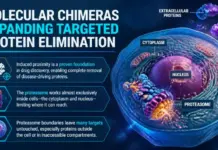








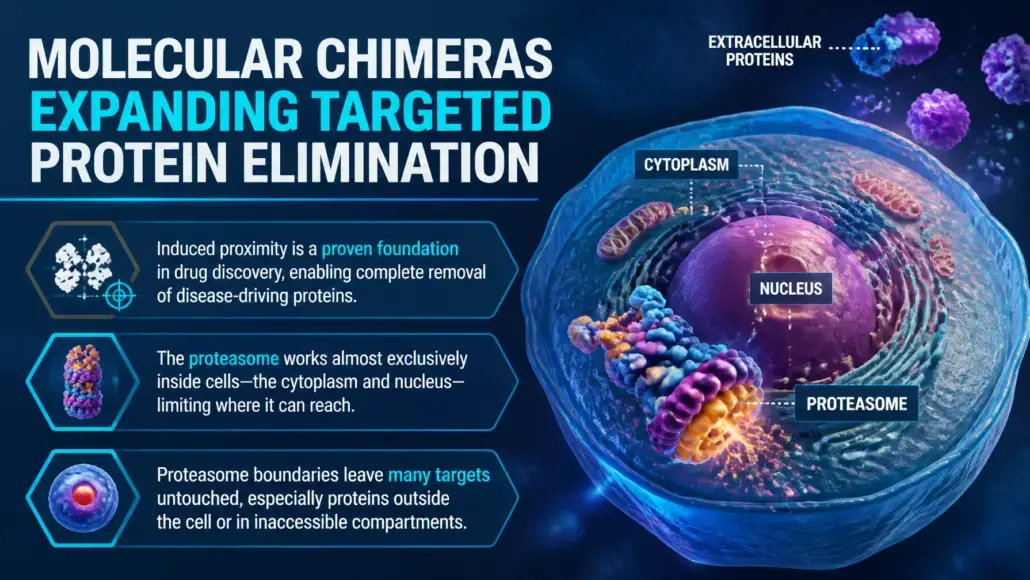
The clinical validation of the ubiquitin-proteasome system established induced proximity as a foundational mechanism in therapeutic discovery. By harnessing intracellular ligases to destroy cytosolic oncoproteins, first-generation degraders proved that disease-driving proteins could be eliminated entirely rather than transiently inhibited. Yet the proteasome possesses biological boundaries that constrain its therapeutic scope. It operates almost exclusively within the cytoplasm and nucleus, leaving approximately forty percent of the human proteome out of reach.
Pathogenic drivers such as circulating cytokines, extracellular growth factors, cell-surface immune checkpoint receptors, and insoluble macromolecular aggregates cannot enter the narrow barrel of the 26S proteasome. For biopharmaceutical pipelines seeking comprehensive disease intervention, relying solely on proteasomal degradation leaves major disease mechanisms unaddressed.
To conquer these therapeutic blind spots, pharmaceutical chemistry is engineering next-generation molecular chimeras that engage alternative cellular clearance pathways. Pharma Advancement notes that by rerouting target proteins toward lysosomal digestion, autophagic engulfment, and enzymatic RNA cleavage, expanding targeted protein elimination is establishing a broader multi-pathway pharmacology that addresses pathological proteins across every cellular compartment.
Mobilizing Lysosomal Pathways via LYTAC Architectures
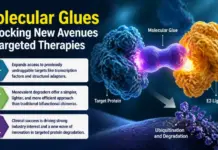
Lysosome-targeting molecular chimeras, known as LYTACs, represent the primary technological vehicle for destroying extracellular and membrane-associated targets. A typical LYTAC molecule is a bifunctional chimera that connects a target-binding element to an engineered ligand that recognizes a cell-surface lysosome-shuttling receptor.
The most widely exploited shuttling receptors include the cation-independent mannose-6-phosphate receptor, which is expressed broadly across mammalian tissues, and the asialoglycoprotein receptor, which is expressed selectively on hepatocytes. When a LYTAC binds simultaneously to a circulating pathogenic protein and a shuttling receptor, it initiates clathrin-coated endocytosis.
The resulting endosome matures and fuses with an acidic lysosome, where non-specific proteases degrade the target protein into constituent amino acids. The shuttling receptor evades degradation through specialized sorting signals, recycling back to the plasma membrane to capture and clear additional target molecules.
This lysosomal clearance mechanism provides distinct functional advantages for drug developers:
- It degrades extracellular and cell-surface targets that represent critical drivers in autoimmune diseases, fibrosis, and oncology.
- Tissue-selective shuttling receptors, such as the liver-specific asialoglycoprotein receptor, allow targeted hepatic clearance while sparing systemic tissues.
- Catalytic receptor recycling allows prolonged pharmacodynamic target clearance from systemic circulation, even when administered at moderate therapeutic doses.
- Membrane-bound oncoproteins, including EGFR, HER2, and PD-L1, can be eliminated completely from cancer cell surfaces, preventing receptor dimerization and downstream pathway activation.
Engineering effective LYTACs requires precise control over ligand valency and linker geometry. Early constructs utilized bulky, heterogeneous glycopeptide polymers bearing multiple mannose-6-phosphonate groups. While these polymers bound CI-M6PR with high avidity, their manufacturing complexity and immunogenic liabilities hindered clinical translation.
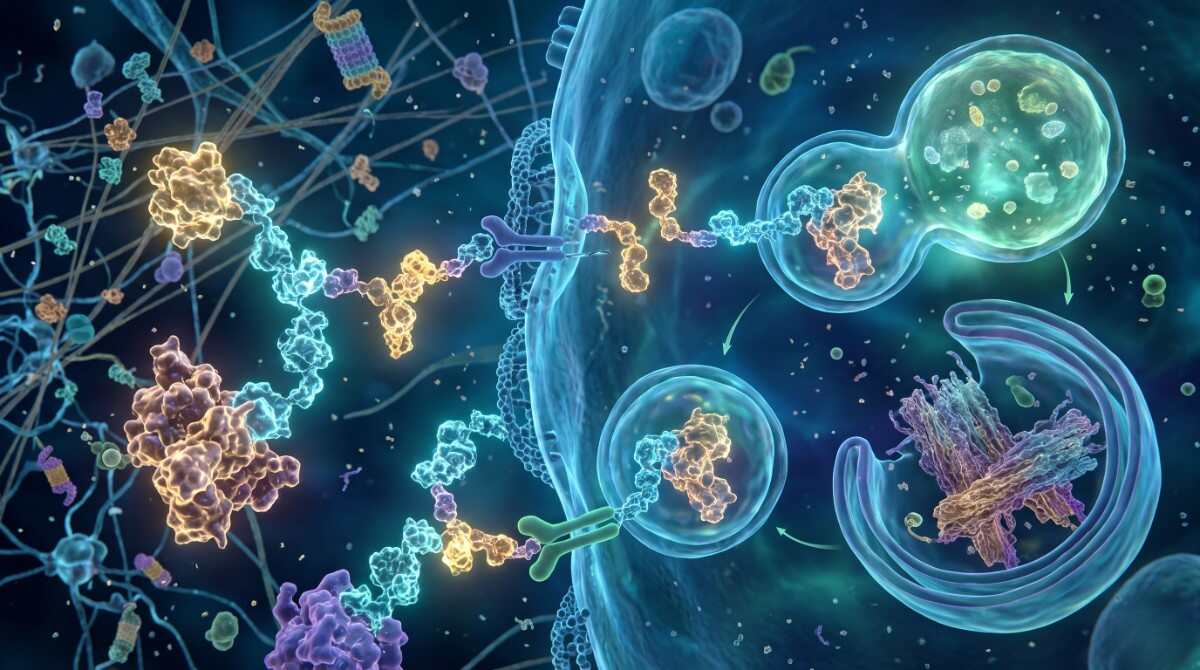
Modern discovery teams are transitioning toward synthetic, chemically defined tri-antennary N-acetylgalactosamine (GalNAc) clusters and small-molecule ASGPR ligands. These homogeneous designs exhibit sub-nanomolar receptor affinity while supporting reproducible, scalable solid-phase synthesis. Furthermore, tuning the stoichiometric ratio of target-binding arms to receptor-recruiting motifs prevents premature receptor saturation, optimizing lysosomal internalization rates across hepatic and peripheral tissues.
Autophagic Clearance of Insoluble Aggregates
While LYTACs handle extracellular and membrane-bound targets, intracellular macromolecular aggregates present an entirely different clearance challenge. Neurodegenerative conditions, including Alzheimer’s disease, Parkinson’s disease, and Huntington’s disease, are characterized by the accumulation of misfolded, oligomeric protein fibrils. Because these aggregate structures exceed the physical pore size of the 26S proteasome barrel, classical proteasomal degraders are physically incapable of destroying them.
To address this challenge, researchers have designed autophagy-targeting molecular chimeras, known as AUTACs, and autophagosome-tethering compounds, known as ATTECs:
- AUTAC molecules feature a target-binding ligand coupled to a guanine-derived tag that mimics endogenous S-guanylation, a post-translational modification that triggers selective autophagy.
- ATTECs function through monovalent or bivalent architectures that bind both the target aggregate and LC3, a core structural protein embedded within nascent autophagosomal membranes.
- Tethering the aggregate directly to LC3 forces the growing autophagosome to engulf the target structure, forming an autophagolysosome where acidic hydrolases digest the aggregate.
- This macroautophagic mechanism operates independently of target solubility or size, allowing the clearance of mature protein plaques, neurofibrillary tangles, and damaged cellular organelles.
Global Biopharmaceutical Deployments and Pipeline Progress
Global pharmaceutical enterprises are actively investing in non-proteasomal degradation platforms, securing collaborative agreements and advancing early-stage candidates toward clinical entry.
Eli Lilly and Company entered into strategic collaborative alliances to advance lysosomal targeting molecular chimeras directed against high-value extracellular and membrane-bound targets. In 2025 and 2026, Eli Lilly expanded its discovery portfolio to evaluate liver-targeted LYTAC molecules designed to clear atherogenic lipoproteins and circulating inflammatory mediators. By focusing on tissue-selective clearance receptors, Eli Lilly aims to develop therapies for cardiovascular and metabolic disorders that eliminate pathogenic circulating proteins more effectively than conventional monoclonal antibodies.
Roche, through its Genentech research organization, is pioneering multi-specific antibody-based clearing agents that engage endocytic receptor networks. Genentech scientists published research demonstrating that bispecific endocytosis-inducing antibodies can selectively drive tumor-associated membrane receptors into lysosomes for degradation. In 2025, Roche accelerated internal discovery programs focused on clearing toxic extracellular amyloid and tau aggregates in neurodegenerative diseases, highlighting the potential of non-proteasomal clearance across the blood-brain barrier.
Amgen expanded its multi-specific drug discovery platform by exploring proximity-induced degradation across cell-surface receptors. Amgen researchers are integrating proprietary antibody scaffolds with endocytic shuttling ligands, aiming to degrade oncogenic growth factor receptors that have acquired resistance to small-molecule kinase inhibitors.
Bristol Myers Squibb reinforced its targeted degradation portfolio by allocating discovery resources toward autophagic and lysosomal clearance platforms. By pairing its deep expertise in cereblon chemistry with emerging autophagosome-tethering technologies, Bristol Myers Squibb is establishing a multi-modal proximity pharmacology pipeline capable of degrading targets regardless of cellular localization.
Sanofi expanded its chemical biology infrastructure to investigate ribonuclease-targeting chimeras, known as RIBOTACs. These chimeric molecules recruit latent cellular ribonucleases to specific disease-associated messenger RNA molecules, degrading the transcript before pathological proteins are translated. Sanofi is exploring RIBOTAC platforms across oncology and rare genetic disorders where targeting protein structures directly has proven chemically unfeasible.
Deubiquitinase Chimeras and Protein Stabilization
The expansion of proximity pharmacology has also inspired mechanisms that reverse target elimination. In certain genetic diseases, pathology arises not from an excess of a toxic protein, but from the premature degradation of a functional protein. In conditions such as cystic fibrosis, the DeltaF508 mutant cystic fibrosis transmembrane conductance regulator retains partial ion transport activity but is prematurely tagged with ubiquitin and destroyed by cellular quality-control machinery.
Deubiquitinase-targeting molecular chimeras, known as DUBTACs, reverse this destructive cascade:
- DUBTACs are heterobifunctional molecules that recruit a deubiquitinating enzyme, such as OTUB1, to a specific mutant protein.
- Proximity-induced deubiquitination removes ubiquitin chains from the target before the proteasome can recognize it.
- Removing the degradation tag stabilizes the protein, allowing it to traffic correctly to the cell surface and restore physiological function.
- This stabilization paradigm provides a targeted alternative to gene therapy for loss-of-function genetic mutations.
Strategic Outlook for Multi-Pathway Degradation
The emergence of non-proteasomal chimeras represents the maturation of proximity-induced therapeutics from a single-pathway tool into a universal pharmacology platform. By harnessing the lysosome, the autophagosome, and endogenous ribonucleases, pharmaceutical developers are no longer confined by the physical constraints of the 26S proteasome.
Regulatory agencies are adapting review protocols to accommodate these hybrid molecular designs. Because molecular chimeras often incorporate protein-binding domains, glycan tags, and synthetic linker components, characterization requires comprehensive pharmacokinetic modeling that accounts for both endocytic internalization rates and target turnover kinetics. Standardizing these analytical frameworks is expediting investigational new drug filings, providing biopharma sponsors with predictable development pathways.
The convergence of intracellular proteasomal mechanisms, lysosomal trafficking, and non-classical degraders marks an expansive paradigm shift in modern pharmacology. As these platforms achieve clinical validation across diverse therapeutic indications, protein degraders are transforming pipeline strategies across global biopharmaceutical enterprises.
As biophysical screening, protein engineering, and chemical synthesis continue to integrate, expanding targeted protein elimination will unlock treatment possibilities across oncology, neurodegeneration, metabolic disorders, and rare diseases, cementing proximity pharmacology as a defining pillar of biopharmaceutical medicine.
References
- “Eli Lilly and Company Pipeline Progress and Global Research Updates” – Eli Lilly and Company
- “Roche Pipeline Review Demonstrating Scientific Innovation in Molecular Modalities” – Roche
- “Amgen Strategic Research Alliances and Multi-Specific Platform Advancements” – Amgen
- “Bristol Myers Squibb Research and Development Portfolio Updates” – Bristol Myers Squibb
- “Targeted Protein Degradation Market Size, Share, and Growth Analysis Report 2025-2035” – Research Nester
