




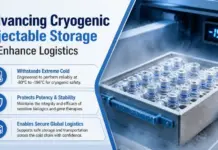
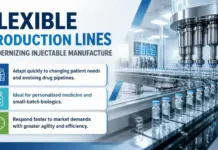





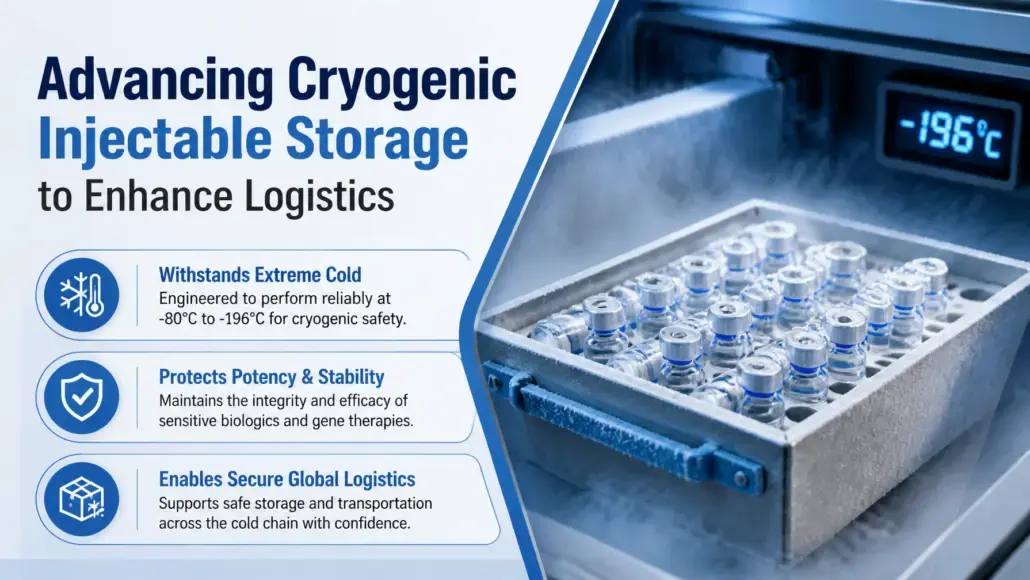
The revolution in genomic medicine has brought with it a set of unprecedented logistical challenges. Medications such as mRNA vaccines and cell and gene therapies often require storage at temperatures as low as -80 degrees Celsius or even -196 degrees Celsius in the vapor phase of liquid nitrogen. Maintaining the stability and potency of these high-value products depends heavily on cryogenic injectable storage materials. The primary container must not only withstand these extreme temperatures but also protect the delicate biological cargo from chemical interactions and physical damage.
At these deep-cold levels, the physical properties of glass and plastic change significantly. Materials that are durable at room temperature can become brittle and prone to failure when subjected to the thermal stress of rapid freezing and thawing. Furthermore, the interaction between the drug product and the container surface can lead to issues such as delamination or the shedding of microscopic flakes. Ensuring the integrity of the cold chain is therefore as much a challenge of material science as it is one of refrigeration and logistics.
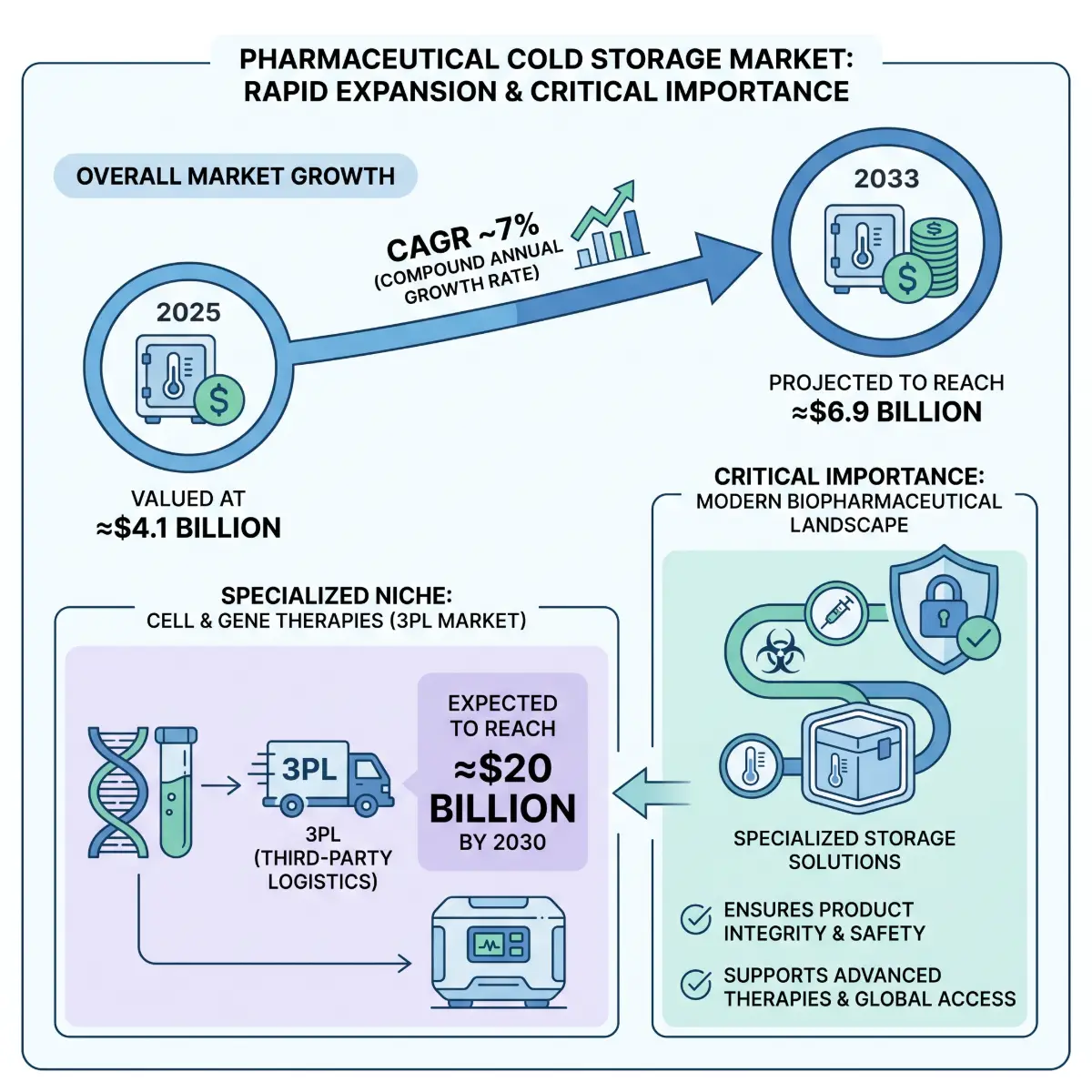
The market for pharmaceutical cold storage is expanding rapidly to meet these needs. The industry was valued at approximately 4.1 billion dollars in 2025 and is projected to reach 6.9 billion dollars by 2033. This represents a compound annual growth rate of nearly 7 percent. More specifically, the third-party logistics market for cell and gene therapies is expected to reach 20 billion dollars by 2030. These figures reflect the critical importance of specialized storage solutions in the modern biopharmaceutical landscape.
Innovations in Glass for Deep Cold Storage
Type I borosilicate glass has long been the standard for pharmaceutical containers due to its high chemical resistance and thermal stability. However, traditional borosilicate glass can sometimes experience delamination when exposed to the repeated freeze-thaw cycles required for cryogenic storage. This process leads to the formation of lamellae, which are thin, glass-like flakes that can contaminate the drug product. To prevent this, glass manufacturers are developing new formulations and surface treatments.
- SCHOTT Pharma’s EVERIC Freeze Vials: Engineered specifically for mRNA and gene therapies, these vials withstand temperatures down to -80°C and use an optimized base geometry to prevent glass breakage during freezing, thereby minimizing product loss and protecting patient safety.
- Corning’s Velocity and Valor Glass Systems: Utilizing chemically strengthened alkaline-earth aluminosilicate glass, these vials resist physical damage, eliminate delamination, increase filling line efficiency by up to 50%, and reduce manufacturing carbon footprints by 30% to advance cryogenic performance and sustainability.
Polymer Alternatives and Hybrid Solutions
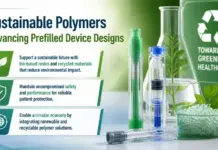
While glass remains dominant, advanced polymers are gaining ground in the cryogenic injectable storage market. Cyclo-olefin polymers and copolymers offer several advantages, including high impact resistance and low protein adsorption. Unlike glass, these polymers do not delaminate and are much less likely to break when dropped or subjected to thermal shock. This makes them an attractive option for the most sensitive and expensive biological products.
One of the challenges with polymer containers is their gas permeability, which can be higher than that of glass. To address this, manufacturers are developing hybrid solutions that combine the benefits of both materials. For example, some containers feature a polymer exterior for strength and a thin glass-like coating on the interior for superior barrier properties. These innovations are essential for protecting drug products that are sensitive to oxygen or moisture during long-term storage.
Bormioli Pharma has expanded its Type I glass vial capacity in North America while also advancing its EcoPositive range of sustainable materials. The company aims for 45 percent of its products to be made from sustainable materials. This initiative shows that the industry is looking for ways to integrate sustainable polymer solutions for prefilled devices into the cold chain, balancing the need for high performance with environmental responsibility.
Logistics and Chain of Custody Monitoring
The material performance of the container is only one part of the cryogenic injectable storage equation. The entire logistics system must be designed to maintain the required temperature from the manufacturing site to the point of care. This requires the use of vacuum-insulated dry shippers and specialized transport containers that can maintain a stable environment for several days.
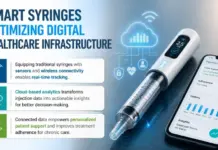
Internet of Things technology is increasingly being used to monitor the condition of these shipments in real time. Sensors can track not only the temperature but also shock, vibration, and orientation. If a shipment is mishandled or the temperature begins to rise, the system can alert the logistics provider immediately. This level of transparency is vital for the vein-to-vein logistics required for personalized cell therapies, where a single shipment can represent a life-saving treatment for a specific patient.
Cryoport has recently refocused its strategy on providing comprehensive cryogenic supply chain platforms with advanced IoT monitoring. In March 2025, the company divested its courier unit to the DHL Group to concentrate on its core technology and service offerings. This move highlights the industry trend toward specialized, technology-driven solutions for the most challenging logistical tasks.
Regulatory Compliance and Quality Standards
Maintaining quality standards for cryogenic injectable storage is a complex regulatory task. The FDA and other global regulators have placed increased emphasis on the monitoring of visible and sub-visible particulates in injectable drugs. USP <790> and <1790> provide detailed guidelines for the inspection of these products, while USP <1660> focuses on the chemical durability of glass containers.
- FDA Delamination Warnings and Material Compatibility: Following updated January 2025 FDA surveillance findings on glass delamination risks, drug manufacturers must execute rigorous risk assessments, shelf-life stability studies, and extreme-temperature container closure integrity testing to ensure storage materials remain compatible and prevent contaminant ingress.
- Thermo Fisher’s Cell Therapy Standardization: Through its Gibco brand and the late-2024 launch of CTS Detachable Dynabeads for closed GMP workflows, Thermo Fisher Scientific provides an end-to-end ecosystem of reagents and cryopreservation media designed to standardize cell therapy manufacturing, minimize batch variability, and enhance patient outcomes.
Technical Challenges in Cryovial Design
The design of the cryovial itself is a masterpiece of precision engineering. The seal between the vial and the cap must remain airtight at temperatures where most materials shrink and lose their elasticity. Manufacturers often use specialized gaskets or double-threaded designs to ensure a secure closure. Furthermore, the vials must be designed to fit into standard storage racks and automated handling systems to ensure efficient processing in the laboratory or pharmacy.

Another challenge is the labeling of these containers. Standard adhesives can fail at cryogenic temperatures, leading to the loss of critical information. Specialized labels and inks have been developed that can withstand the cold and remain legible after months or years of storage. Some companies are even integrating NFC tags or QR codes into the vial itself to provide a digital link to the product information and dose history.
Pharma Advancement observes that the field of cryogenic storage is constantly evolving as new drug types and delivery methods emerge. The development of AI-optimized lipid nanoparticle formulations may eventually reduce the dependency on deep-cold storage for some mRNA products. However, for the foreseeable future, the reliance on high-performance materials and a robust cold chain will remain a cornerstone of the biopharmaceutical industry. As we move toward 2030, the ability to store and transport life-saving medicines at extreme temperatures will be a defining capability of the global healthcare system.
References
- “Pharmaceutical Cold Storage Market Growth Analysis” – Grand View Research
- “Cell and Gene Therapy Logistics Market Outlook” – Grand View Research
- “Cryoshippers for CGT Market Trends” – SNS Insider
- “SCHOTT Pharma EVERIC Freeze Vial Launch” – SCHOTT Pharma
- “Corning Valor Glass Performance Report” – Corning
- “Cryoport Strategic Refocus and Divestiture” – Cryoport
- “Thermo Fisher Scientific Cell Therapy Workflow Expansion” – Thermo Fisher Scientific
- “Bormioli Pharma Sustainable Materials Initiative” – Bormioli Pharma
- “FDA Glass Delamination Surveillance Update” – U.S. Food and Drug Administration
- “USP 790 Visible Particulate Inspection Standards” – United States Pharmacopeia
