


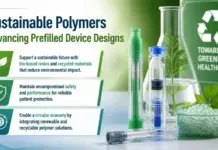



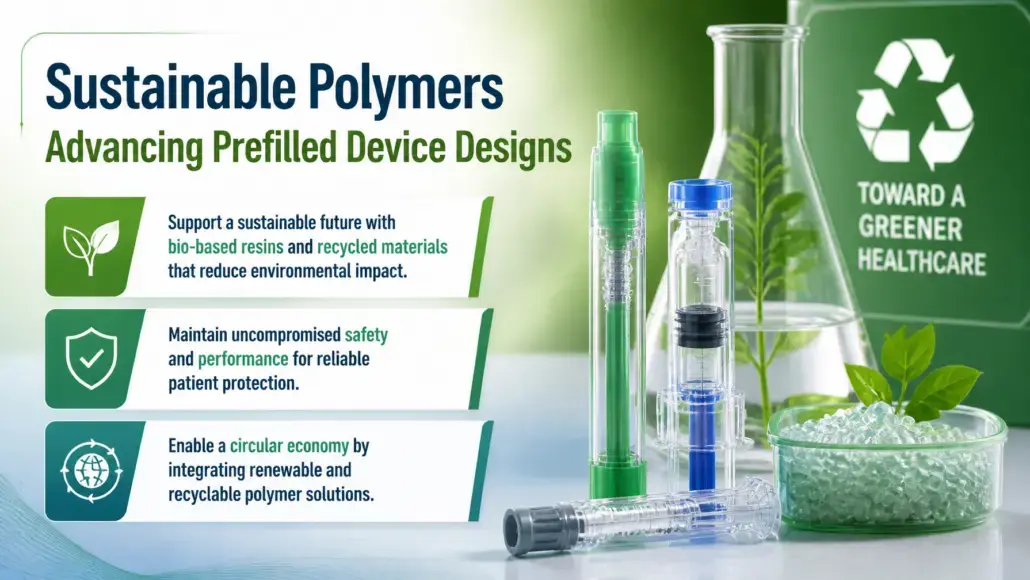
The healthcare industry is facing a significant sustainability challenge as it strives to balance patient safety with environmental responsibility. Medical plastic waste remains a major concern, with billions of pounds of healthcare plastics produced globally each year. In response, a transition toward sustainable polymers is gaining momentum among pharmaceutical manufacturers and medical device companies. Pharma Advancement notes that this shift involves the adoption of bio-based resins and chemically recycled materials that can meet the rigorous quality standards required for primary drug packaging.
Traditional polymers used in prefilled syringes, such as polypropylene and cyclo-olefin copolymers, offer excellent performance but are largely derived from fossil fuels. As companies set ambitious carbon-neutrality targets, they are looking for ways to reduce their Scope 3 emissions by sourcing more sustainable raw materials. However, the path to a circular economy in the medical sector is complicated by strict regulatory requirements regarding the use of recycled content in direct contact with medicinal products.
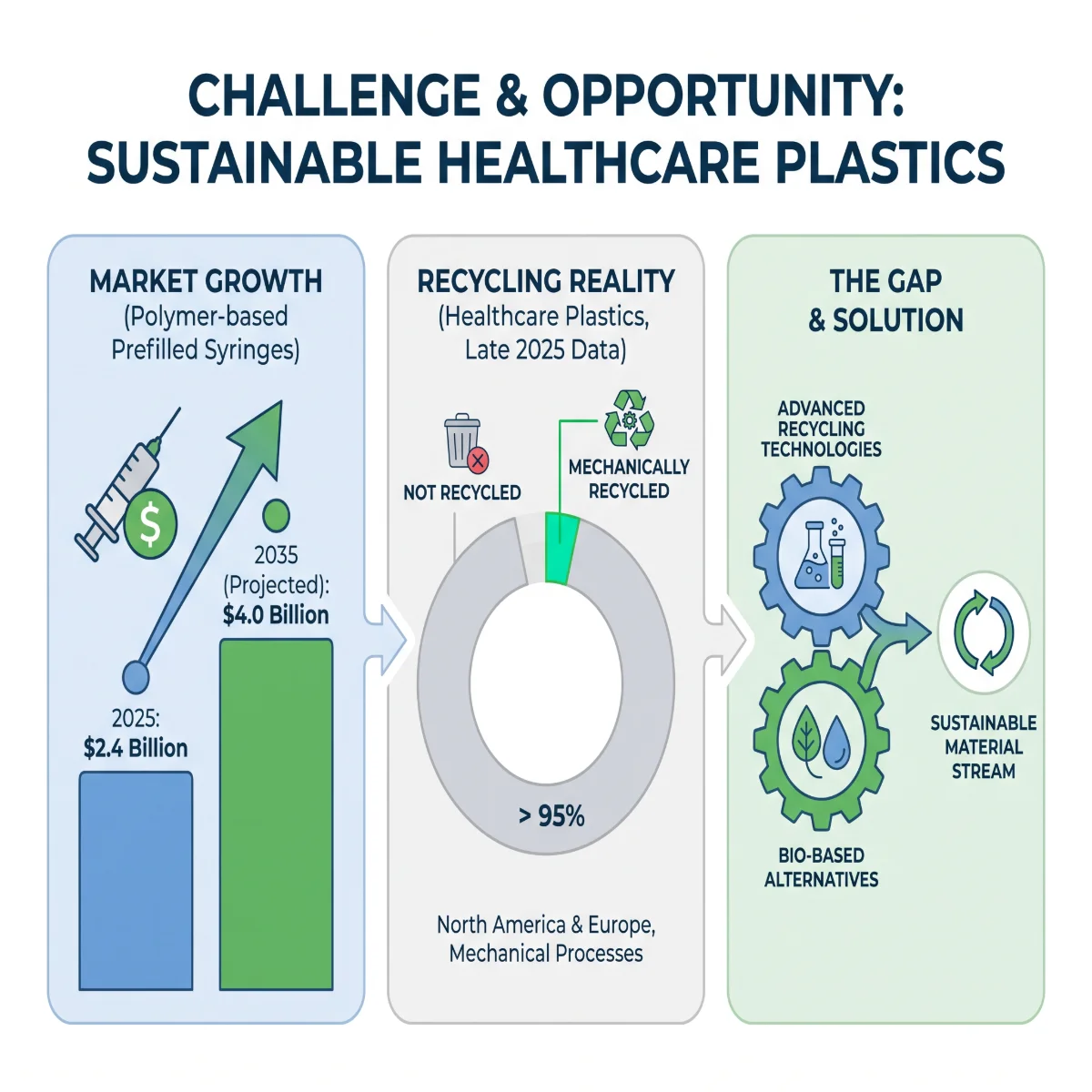
Market data illustrates the scale of both the challenge and the opportunity. The polymer-based prefilled syringe market is projected to grow from 2.4 billion dollars in 2025 to 4.0 billion dollars by 2035. At the same time, reports from late 2025 indicate that less than 5 percent of healthcare plastics are currently recycled through mechanical processes in North America and Europe. This gap highlights the need for advanced recycling technologies and bio-based alternatives that can provide a more sustainable material stream for the industry.
The Rise of Bio Based and Circular Resins
Bio-based polymers are derived from renewable sources such as plant biomass rather than crude oil. These materials can be identical in chemical structure to their fossil-based counterparts, allowing them to be used in existing manufacturing processes without significant modification. The global installed capacity for bio-based polymers reached approximately 5.1 million tonnes in 2025, and production is expected to nearly double by 2030. This growth is a clear indicator of the increasing demand for sustainable polymers across multiple industrial sectors.
Advanced chemical recycling is another key piece of the sustainability puzzle. Unlike mechanical recycling, which can degrade the properties of the plastic, chemical recycling breaks the polymer down into its original monomers. These monomers can then be purified and used to create new, high-quality resins that are indistinguishable from virgin material. This process is particularly valuable for the medical industry because it can produce resins that are safe for use in “contact-sensitive” applications where traditional recycled content would be prohibited.
SABIC has achieved a major milestone in 2025 by creating circular polymers from the advanced recycling of used medical plastics. The company now markets a range of certified circular and bio-based resins under its TRUCIRCULAR portfolio. These materials are being positioned for use in syringes, pen injectors, and blow-fill-seal applications. By providing a pathway for the recycling of regulated medical waste back into the medical supply chain, SABIC is helping to close the loop on healthcare plastics.
Navigating the Regulatory Landscape for Polymers
The adoption of sustainable polymers in the pharmaceutical sector is heavily influenced by evolving regulations:
- EU Packaging Regulations and Medical Exemptions: The EU Packaging and Packaging Waste Regulation mandates that all packaging be recyclable by design by 2030, but it explicitly exempts packaging in direct contact with medicinal products whenever using recycled content could compromise drug safety.
- Industry Shift Toward Alternative Sustainability Strategies: In response to these safety constraints, pharmaceutical manufacturers are focusing sustainability initiatives on secondary/tertiary packaging and adopting certified bio-based polymers (such as ISCC PLUS) for primary containers to lower their carbon footprint without jeopardizing patient health.
Covestro has expanded its portfolio of partially bio-based polycarbonates, with some films containing over 50 percent plant-biomass carbon content. The company is also collaborating with SABIC on coating technologies that enable the creation of mono-material packaging. These materials are much easier to recycle than the multi-material laminates that have traditionally been used in pharmaceutical secondary packaging. This focus on “design for recycling” is essential for meeting the upcoming requirements of the EU regulations.
Corporate Commitments and Manufacturing Innovations
Leading medical device companies are integrating sustainability into their long-term management visions. Becton Dickinson has been active in cardiovascular and healthcare plastics circularity initiatives, promoting the benefits of prefilled flush syringes. These devices reduce medication waste and eliminate the need for manual draw-up, which can lead to errors and excess plastic use. By emphasizing the efficiency and sustainability of their products, BD is helping hospitals reduce their overall environmental impact.
Terumo has also published its 2025 sustainability report, detailing its commitments to energy reduction and carbon neutrality. The company is focused on the concept of “Creating Shared Value,” where business growth is aligned with solving social and environmental problems. These corporate initiatives are driving investment in new manufacturing technologies that use less energy and water, further improving the sustainability of the prefilled device market.
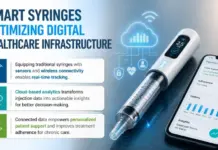
The development of sustainable polymers often involves a rethink of the entire device architecture. For example, by building digital infrastructure with smart syringes, manufacturers can track the life cycle of a device more accurately. This data can be used to optimize the supply chain and to ensure that devices are disposed of correctly at the end of their life. The integration of digital and physical sustainability is a powerful trend that is likely to grow in the coming years.
Technical Hurdles in Material Qualification
Qualification of new polymers is a process with many hurdles:
- Biocompatibility and Drug Compatibility: Qualifying a new polymer for prefilled syringes is a multi-year process requiring compliance with USP Class VI and ISO 10993 standards, along with minimal extractables and leachables to protect sensitive formulations, especially biologics, from instability or degradation.
- Sterilization Resilience and Mechanical Performance: Engineering teams and polymer scientists must ensure sustainable polymers resist yellowing, brittleness, and loss of mechanical integrity across gamma, e-beam, or steam sterilization while preserving consistent lubrication profiles for reliable syringe glide force.
LyondellBasell has published its 2025 sustainability report, highlighting the scaling of its Circulen range of recycled and renewable-based polymers for healthcare. The company recently completed the shutdown of its Houston refinery operations in early 2025 as part of a target to reduce its annual emissions. By shifting its focus toward production of sustainable polymers, the company is positioning itself as a key supplier for the next generation of healthcare products.
The Future of Circularity in Medical Devices
As we move closer to 2030, the emphasis on life cycle assessment and transparent reporting will only increase. Companies will be expected to provide detailed data on the environmental impact of their products, from raw material extraction to end-of-life disposal. Tools such as the EcoVadis and CDP reporting platforms are already becoming standard for companies that want to substantiate their sustainability claims.
The future of sustainable polymers will likely involve a combination of bio-based resins, advanced recycling, and smarter device design. Smaller, lighter devices that use less material can significantly reduce the overall environmental footprint. Furthermore, the development of industrial-scale take-back programs for used medical devices could provide a reliable source of material for chemical recycling.
The transition to a sustainable healthcare system is a complex task that requires the cooperation of regulators, manufacturers, and healthcare providers. Pharma Advancement believes that by investing in new material solutions and embracing the principles of the circular economy, the industry is taking an important step toward a cleaner future. The goal is to ensure that the medicines we depend on today do not come at the expense of the world we inhabit tomorrow.
References
- “Bio-Based Polymer Production Statistics 2025” – Nova-Institut
- “Healthcare Plastics Recycling Rates and Reports” – Eunomia Research and Consulting
- “Global Pharmaceutical Packaging Market Size” – Grand View Research
- “Polymer-Based Prefilled Syringe Market Forecast” – Future Market Insights
- “SABIC TRUCIRCULAR Medical Plastic Milestone” – SABIC
- “Covestro Bio-Based Polycarbonate Portfolio Expansion” – Covestro
- “LyondellBasell 2025 Sustainability Vision Report” – LyondellBasell
- “Terumo GS26 Management Vision and Sustainability” – Terumo
- “EU Packaging and Packaging Waste Regulation Overview” – European Commission
- “Healthcare Plastics Recycling Council Annual Report” – HPRC
