




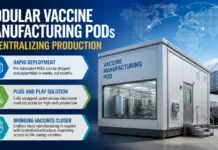







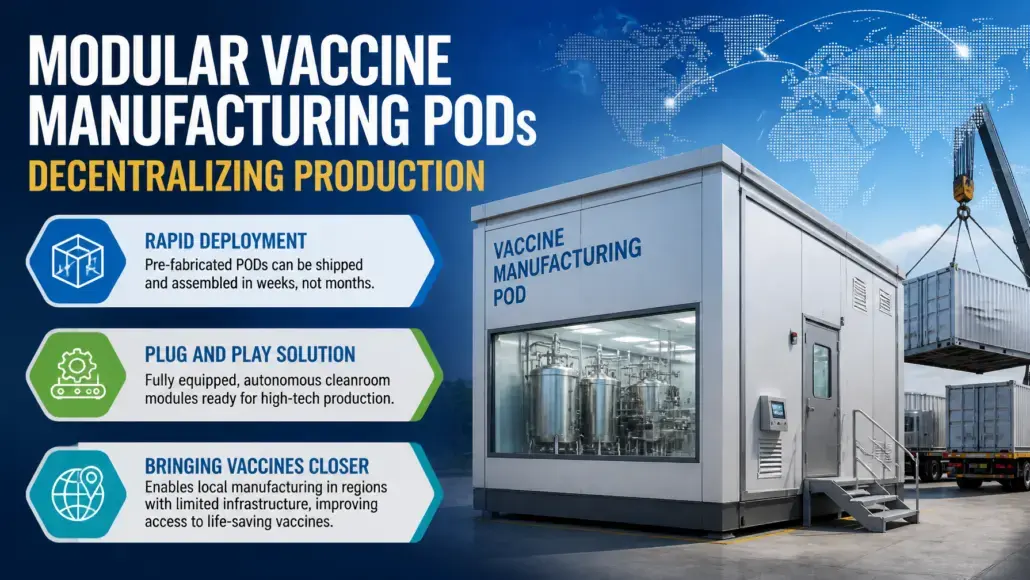
The global pharmaceutical landscape is witnessing a significant shift toward decentralized manufacturing, driven by the need for more equitable access to life saving vaccines. One of the most promising developments in this area, as observed by Pharma Advancement, is the use of modular vaccine manufacturing PODs.
These pre-fabricated, autonomous cleanroom modules are designed to be shipped and assembled in a matter of weeks, providing a plug and play solution for establishing high tech manufacturing capabilities in regions that lack traditional industrial infrastructure. This approach is not only faster and more flexible than traditional facility construction but also offers a scalable model for responding to global health crises and addressing the needs of underserved markets.
The Strategic Advantages of Plug-and-Play PODs
The traditional process of building a pharmaceutical manufacturing plant is a massive undertaking that can take several years and hundreds of millions of dollars to complete. Modular vaccine manufacturing PODs offer a streamlined alternative that significantly reduces both the cost and the timeline for facility deployment. Research has shown that modular cleanrooms can be constructed and validated in as little as three to six months, compared to the twelve to eighteen months typically required for traditional construction. This speed to market is a critical advantage for companies looking to capitalize on new opportunities or respond to urgent public health needs.
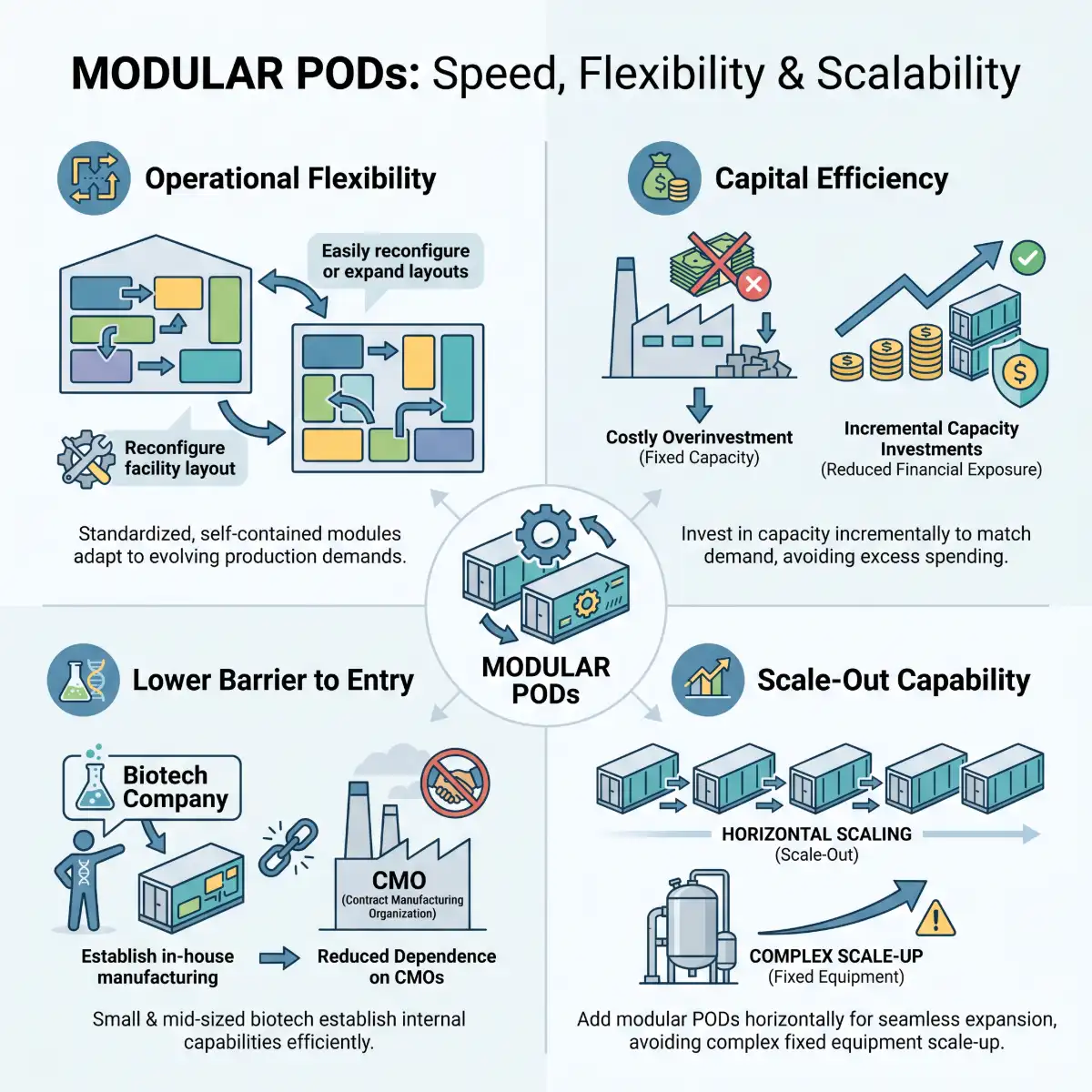
In addition to speed, modular PODs provide a high level of flexibility and scalability:
- Operational Flexibility: Standardized, self-contained modules allow facilities to easily reconfigure or expand layouts as production demands evolve.
- Capital Efficiency: Incremental capacity investments reduce financial exposure and prevent costly overinvestment.
- Lower Barrier to Entry: Small and mid-sized biotech companies can establish in-house manufacturing capabilities instead of depending entirely on contract manufacturing organizations (CMOs).
- Scale-Out Capability: Adding modular PODs enables horizontal scaling rather than requiring complex scale-up using oversized, fixed equipment.
BioNTech’s BioNTainer Project in Rwanda and Senegal
The BioNTainer project in Kigali, Rwanda, is a prime example of how modular vaccine manufacturing PODs are being operationalized on a commercial scale. The facility, which represents an investment of approximately 150 million dollars, is designed to produce mRNA based vaccines for diseases like COVID-19, malaria, and tuberculosis. The site includes multiple BioNTainers that handle every stage of the manufacturing process, from synthesis and purification to final fill finish and quality control. This comprehensive approach ensures that the vaccines produced in Rwanda meet the same high standards of quality as those manufactured in BioNTech’s European facilities.
The project also includes a strong focus on local capacity building and training. BioNTech is working closely with the African Union and the Africa Centres for Disease Control and Prevention to train local personnel in the operation and maintenance of the BioNTainer systems. This investment in human capital is essential for the long term sustainability of the project and for ensuring that the local manufacturing hub can continue to evolve and adapt to new health challenges. By combining advanced technology with local expertise, the BioNTainer project is setting a new standard for distributed vaccine manufacturing in Africa and beyond.
Resilience and Independence of Modular Cleanrooms
One of the most innovative features of modular vaccine manufacturing PODs is their ability to operate independently of local infrastructure. Each POD is equipped with its own power generation, air filtration, and water treatment systems, ensuring that production can continue even in challenging environments. This resilience is particularly important for manufacturing facilities located in regions with unreliable utilities or in areas prone to natural disasters. The self contained nature of the modules also provides a high level of containment, reducing the risk of environmental contamination and protecting both the product and the personnel.
The use of standardized modules also simplifies the regulatory and validation process:
- Streamlined Regulatory Approvals: Identical equipment and designs across all sites sharply reduce the time and effort needed to secure regulatory sign-off.
- Uniform Product Quality: Standardization guarantees consistent product efficacy and safety regardless of manufacturing location.
- Support for Distributed Manufacturing: Modular setups facilitate the global shift toward flexible, distributed production networks.
- Enhanced Global Access: Lowered barriers and standardized rollouts improve the overall affordability and accessibility of modern medicines for patients worldwide.
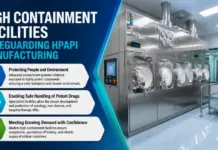
While vaccine production is the current focus, the modular cleanroom architecture is increasingly being adapted for high containment HPAPI production to handle the industry’s most potent chemical entities safely.
Cost-Efficiency and Long-Term Value
While the initial cost of a modular POD may be comparable to traditional construction on a per square foot basis, the long term value is often much higher. The reduced timeline for construction and validation means that companies can begin generating revenue much sooner, improving their overall return on investment. Furthermore, the ability to relocate or repurpose the modules as needed provides a level of asset flexibility that is not possible with traditional buildings. This adaptability is particularly valuable in the fast moving biotechnology sector, where the demand for specific products can change rapidly.
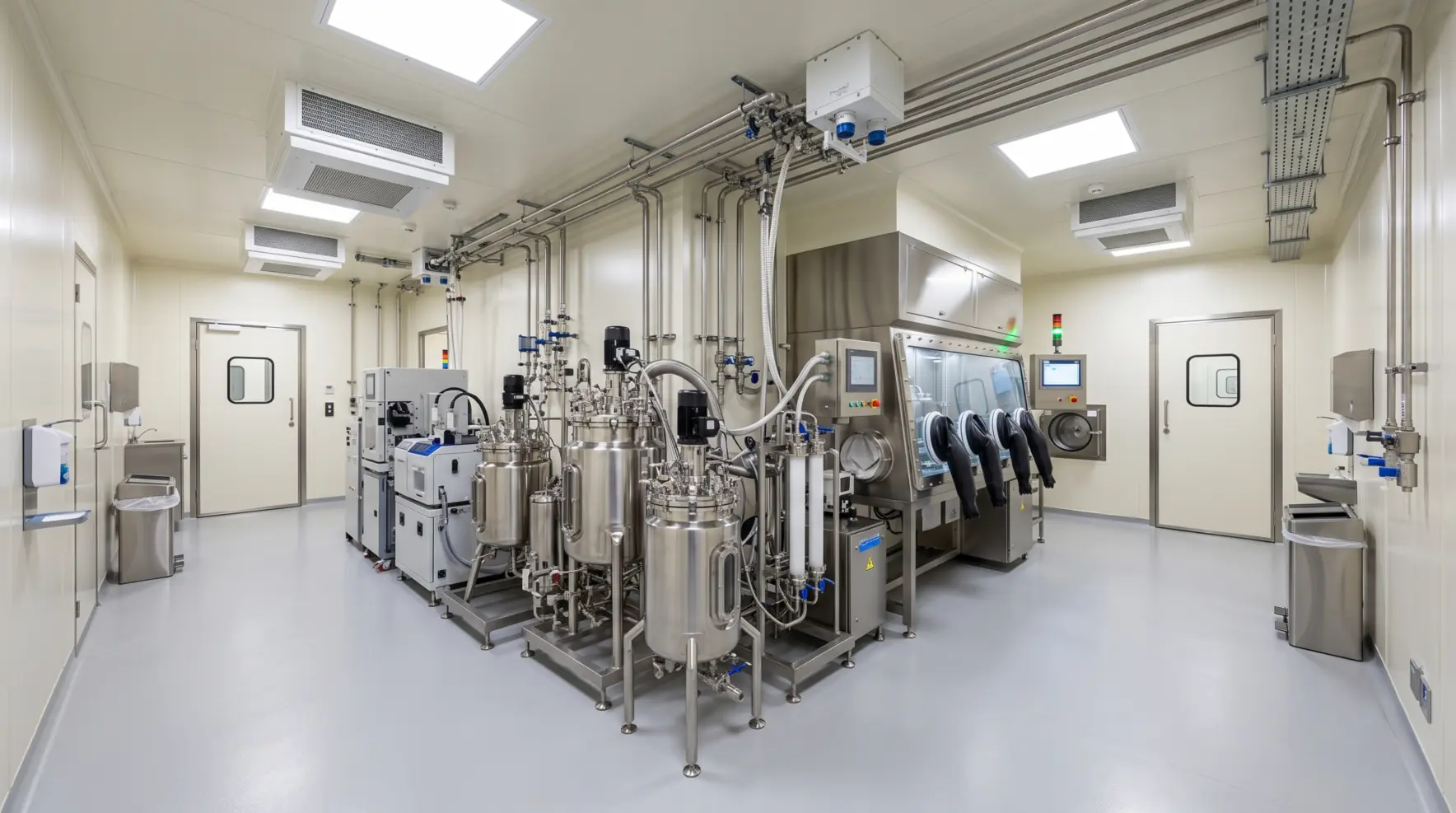
Modular vaccine manufacturing PODs also offer significant savings in operational costs. The smaller footprint and energy efficient systems reduce utility consumption, while the automated controls and reduced maintenance requirements lower labor costs. As more companies adopt modular solutions, the industry is seeing a shift toward a more efficient and sustainable manufacturing model. The investment in modular technology is a clear indication of the pharmaceutical industry’s commitment to innovation and its recognition of the need for a more agile and responsive global supply chain.
A New Standard for Global Health
The implementation of modular vaccine manufacturing PODs is a transformative development that is addressing one of the most pressing challenges in global health: the inequitable distribution of life saving vaccines. By providing a scalable, flexible, and resilient solution for local manufacturing, companies like BioNTech are proving that high tech drug production is possible in any region of the world. The success of the BioNTainer project in Africa is a powerful example of how innovation can be used to improve health outcomes and promote global health sovereignty.
As we look toward the future, Pharma Advancement is of the opinion that the role of modular manufacturing will continue to expand as more companies recognize the benefits of a distributed production model. The integration of PODs with other advanced technologies, such as digital batch records and AI driven quality control, will further enhance the efficiency and reliability of these systems. Ultimately, the shift toward modularity is about more than just technology. It represents a commitment to building a more resilient and inclusive global health system where every patient has access to the medications they need, regardless of their location. This transformation is set to redefine the future of healthcare delivery on a global scale.
References
-
BioNTech
-
Pharma Now
-
Pharma Focus Europe
-
GCON Bio
-
DesignTek Consulting
