



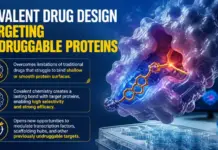

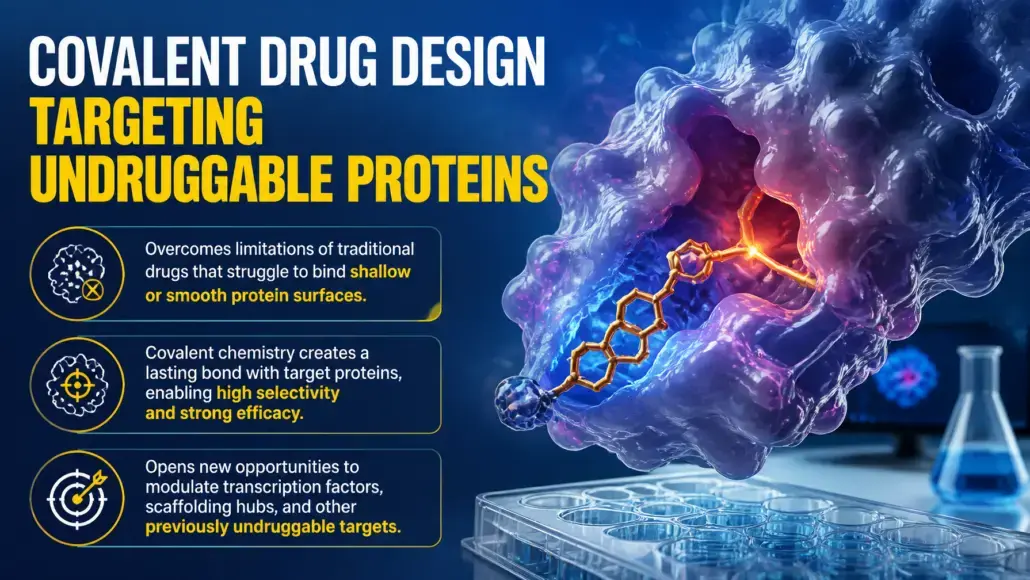
For decades, the concept of the undruggable proteome cast a long shadow over pharmaceutical research. Academic and industrial screening campaigns routinely discarded proteins lacking deep, hydrophobic catalytic clefts, concluding that shallow topologies, flexible transcription factors, and non-enzymatic scaffolding hubs could not support selective drug binding. Traditional reversible small molecules require high thermodynamic affinity to remain lodged within a target pocket, rendering smooth macromolecular surfaces virtually impervious to standard medicinal chemistry.
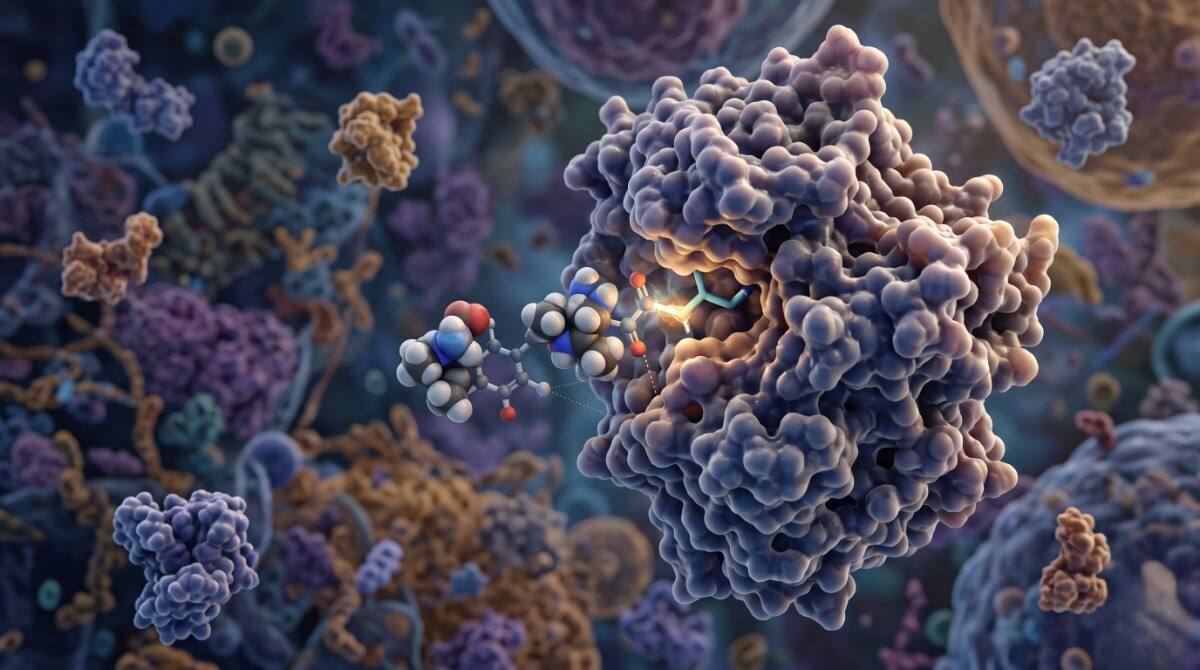
The revitalization of targeted covalent pharmacology has fundamentally dismantled this historical dogma. Rather than relying solely on non-covalent interactions such as hydrogen bonds and van der Waals forces, a targeted covalent agent pairs a low-affinity reversible recognition motif with a tuned, mildly electrophilic warhead. Once non-covalent forces guide the molecule into transient proximity with the target surface, the electrophilic warhead reacts selectively with a specific nucleophilic amino acid residue, creating an irreversible covalent chemical bond.
This bond formation permanently disables the target protein regardless of subsequent systemic drug clearance. Pharma Advancement observes that by exploiting non-catalytic allosteric pockets and transient surface crevices, covalent drugs targeting undruggable proteins has emerged as a premier drug discovery strategy, revitalizing pipelines across solid tumors, hematologic malignancies, and drug-resistant infections.
Biophysical Mechanics and Kinetic Selectivity
The clinical efficacy of modern covalent therapeutics is rooted in two-step binding kinetics. In the initial phase, the compound associates reversibly with the target protein, establishing non-covalent contacts that position the warhead in an optimal stereochemical orientation relative to the target nucleophile. In the second phase, a chemical reaction occurs between the electrophile and the nucleophilic side chain, forming a permanent covalent adduct.
Medicinal chemists evaluate this process through the kinetic parameter kinact over KI:
- KI represents the apparent non-covalent dissociation constant, reflecting the initial reversible recognition between the drug scaffold and the protein surface.
- kinact measures the maximum rate of covalent bond formation once the reversible complex has assembled.
- The ratio kinact over KI quantifies overall covalent efficiency, allowing development teams to optimize biochemical potency while keeping electrophilic reactivity modest.
- Mild electrophilic reactivity prevents indiscriminate off-target reactions with abundant cellular nucleophiles such as glutathione and human serum albumin.
This kinetic mechanism decouples pharmacodynamic suppression from circulating plasma concentrations. While reversible inhibitors must maintain high trough blood levels to prevent target dissociation, a covalent drug permanently inactivates its target. Biological activity is restored only when the cell synthesizes new protein molecules, enabling infrequent dosing regimens that reduce systemic drug exposure and minimize off-target toxicities.
Overcoming Historic KRAS Vulnerabilities
The clinical validation of targeted covalent chemistry reached a decisive turning point with the successful targeting of KRAS G12C. For more than thirty years, KRAS was widely regarded as an untouchable oncogene due to its picomolar affinity for guanosine triphosphate and an absence of accessible small-molecule binding cavities.
Structural biologists discovered a cryptic allosteric pocket beneath the switch II region that becomes exposed only when KRAS cycles into its inactive, GDP-bound conformation. Medicinal chemists designed acrylamide-based covalent inhibitors that fit into this transient pocket and react specifically with the mutant cysteine 12 residue. By covalently trapping KRAS in its inactive state, these agents shut down hyperactive downstream MAP kinase signaling without interfering with wild-type KRAS proteins.
Global pharmaceutical leaders have rapidly expanded their covalent oncology portfolios based on these structural principles:
Amgen achieved landmark regulatory approvals with sotorasib, establishing the clinical standard for covalent KRAS G12C inhibition in non-small cell lung cancer. In 2025 and 2026, Amgen reported clinical updates evaluating sotorasib in combination with pan-HER inhibitors and checkpoint immunotherapies in advanced colorectal cancer, demonstrating that covalent target trapping enhances tumor immunogenicity. Amgen is also advancing second-generation covalent molecules, including AMG 193, an investigational PRMT5 inhibitor engineered to exploit cooperative binding mechanisms in MTAP-deleted tumors.
Bristol Myers Squibb significantly strengthened its covalent oncology pipeline through the four point eight billion dollar acquisition of Mirati Therapeutics, gaining adagrasib. Bristol Myers Squibb reported Phase 3 clinical data in 2025 and 2026 showing that adagrasib-based combinations provide sustained progression-free survival in patients with KRAS G12C-mutated colorectal and pancreatic cancers. The molecule features specialized pharmacokinetic attributes, including brain penetration, addressing central nervous system metastases that frequently compromise patient survival.
AstraZeneca established a foundational precedent for covalent oncology with osimertinib, a third-generation irreversible EGFR tyrosine kinase inhibitor targeting the cysteine 797 residue in non-small cell lung cancer. Building on osimertinib, AstraZeneca expanded its covalent discovery engines in 2025 to develop irreversible inhibitors directed against mutant kinase variants that emerge during targeted cancer therapies.
Novartis expanded its chemical biology programs by deploying activity-based protein profiling platforms to discover cryptic, ligandable pockets across allosteric oncogenic targets. Novartis scientists are combining covalent warheads with allosteric modulators, preventing compensatory resistance loops in kinase and phosphatase cascades.
Roche, through its Genentech division, accelerated discovery initiatives focusing on covalent fragment-based lead generation. By screening hundreds of electrophilic small-molecule fragments against intact proteomes, Genentech researchers are mapping novel reactive hotspots on previously unliganded transcriptional regulators.
Expanding the Nucleophilic Horizon Beyond Cysteine
Historically, targeted covalent drug design focused almost exclusively on cysteine residues due to the exceptional nucleophilicity of the thiol group. However, cysteine is one of the least abundant amino acids, appearing on fewer than three percent of protein surfaces across the human proteome. Restricting covalent design to cysteine severely limits the universe of targetable disease proteins.
Pharma chemistry divisions are now expanding covalent warhead portfolios to engage alternative nucleophilic residues:
- Lysine-targeting warheads utilize specialized sulfonyl fluorides, aryl halides, and active esters to react with non-catalytic lysine residues situated near protein-protein interaction interfaces.
- Tyrosine-directed chemistry employs sulfur-fluoride exchange platforms that selectively cross-link phenolic hydroxyl groups in transient conformational states.
- Histidine and methionine residues are being engaged through tuned vinyl sulfonamides and epoxide derivatives, unlocking binding pockets that completely lack cysteine residues.
- Reversible covalent motifs, including cyanoacrylamides and boronic acids, establish transient covalent bonds that dissociate over time, offering tunable residence times without permanent protein modification.
These chemical advancements expand the scope of covalent targeting undruggable proteins across transcription factors, cytokine receptors, and epigenetic regulatory complexes that lack accessible cysteines.
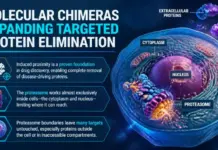
Although intracellular covalent inhibitors and proteasomal degraders successfully disable cytoplasmic proteins, a substantial fraction of pathological targets operate in the extracellular space or across circulating fluids. Expanding the clearance paradigm beyond the intracellular ubiquitin system has catalyzed the rise of molecular chimeras, including lysosomal and autophagic platforms capable of engulfing membrane receptors, cytokines, and pathogenic protein aggregates.
Chemoproteomics and Industrial Selectivity Profiling
A persistent historical concern regarding covalent therapeutics was the risk of idiosyncratic toxicity arising from non-specific off-target adduction. Early non-selective alkylating agents reacted indiscriminately with cellular macromolecules, triggering severe systemic side effects that deterred pharmaceutical developers for decades.
Contemporary covalent drug discovery relies on advanced chemoproteomics to ensure exquisite proteome-wide selectivity before clinical testing:
- Activity-based protein profiling screens candidate covalent compounds against thousands of native proteins simultaneously in living human cells, quantifying target engagement and mapping off-target binding events.
- Quantitative chemical proteomics employs isotopic labeling and high-resolution tandem mass spectrometry to measure the exact percentage of warhead adduction across the entire proteome at physiological drug concentrations.
- Automated high-throughput cysteine reactivity assays profile the intrinsic reactivity of new electrophilic warheads, ensuring that chemical leads do not react with low-affinity cellular thiols.
- Computational quantum mechanics simulations model transition state energetics, enabling chemists to design warheads that activate only upon precise electrostatic positioning within the target binding cleft.
These advanced analytical frameworks have transformed targeted covalent pharmacology into a precision discipline. By delivering irreversible target engagement with minimal off-target interaction, covalent drugs targeting undruggable proteins continues to unlock challenging therapeutic targets, reshaping clinical pipelines across global biopharmaceutical leaders.
References
- “Amgen Reports Fourth Quarter and Full Year 2025 Financial Results and Pipeline Progress” – Amgen
- “Bristol Myers Squibb Announces Regulatory and Clinical Updates for Krazati in Solid Tumors” – Bristol Myers Squibb
- “AstraZeneca Oncology Portfolio Updates and Pipeline Highlights 2025” – AstraZeneca
- “Novartis Annual Review and Scientific Pipeline Milestones” – Novartis
- “Targeted Protein Degradation Market Size, Share, and Growth Analysis Report 2025-2035” – Research Nester
