



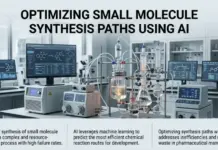





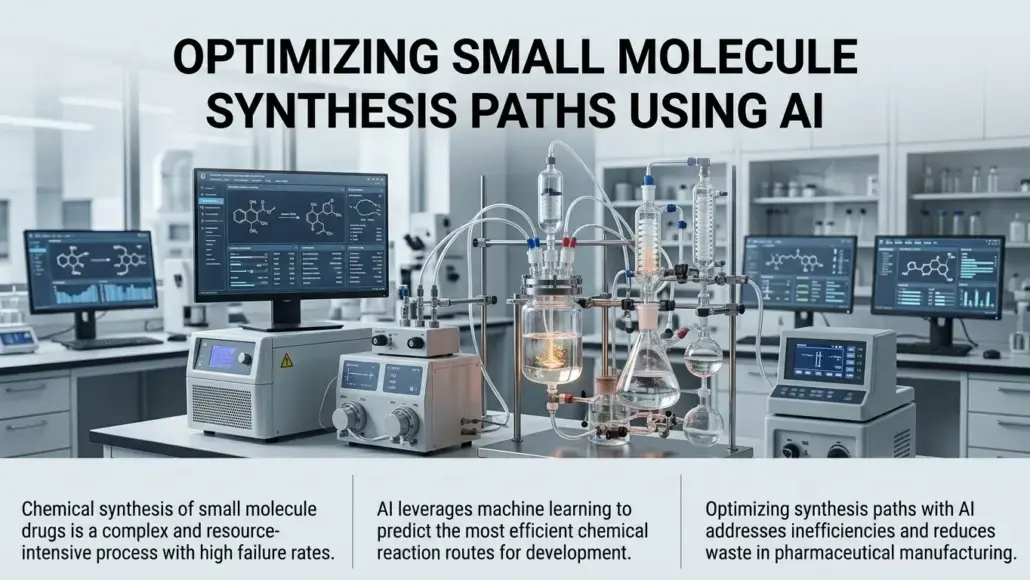
The discovery and development of small molecule drugs remain a cornerstone of the pharmaceutical industry, providing effective treatments for a wide range of diseases. However, the chemical synthesis of these molecules is often a complex and resource intensive process, characterized by high failure rates and inefficient reaction routes. AI optimizing small molecule synthesis paths is emerging as a powerful tool to address these challenges, leveraging machine learning to predict the most efficient chemical transformations. Pharma Advancement observes that by streamlining the path from discovery to production, these technologies are reducing the time and cost associated with bringing new therapies to market.
In 2024, the adoption of AI in chemical R&D accelerated, with major pharmaceutical companies reporting significant improvements in their synthesis workflows. Recent data indicates that AI driven platforms can reduce the time spent on retrosynthetic analysis by up to 80 percent, allowing chemists to focus on more complex challenges. For B2B stakeholders, the business case for these technologies is clear: faster development cycles, higher reaction yields, and a reduction in the consumption of expensive chemical reagents. As the global pharmaceutical market becomes increasingly competitive, the ability to optimize chemical synthesis is a key driver of operational efficiency and innovation.
The Power of Retrosynthetic Analysis
The primary application of machine learning in this field is retrosynthetic analysis, the process of working backward from a target molecule to identify the starting materials and chemical steps needed to produce it. Traditionally, this was a manual process that relied on the expertise and memory of a synthetic chemist. AI optimizing small molecule synthesis paths automates this by analyzing millions of published chemical reactions to suggest potential routes. These models can evaluate thousands of possibilities in a matter of seconds, identifying the most efficient paths based on factors such as cost, yield, and step count.
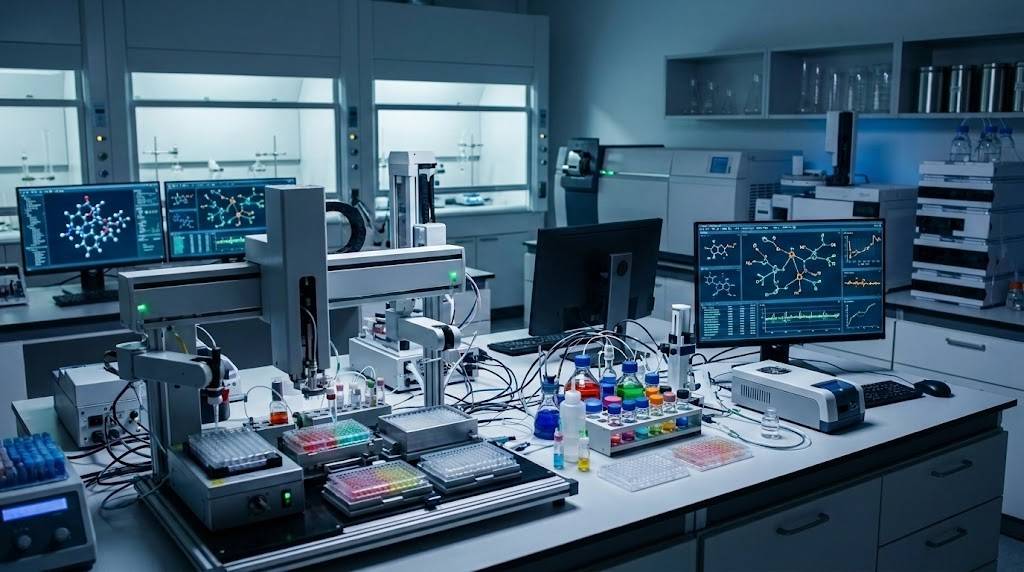
Retrosynthesis models use deep learning and graph neural networks to understand the relationship between chemical structures and reactivity. By learning from the vast body of chemical literature, these models can suggest innovative reactions that might have been overlooked by human experts. This is particularly valuable for complex molecules where the number of potential synthesis routes is astronomical. Furthermore, AI can predict the outcome of reactions with high accuracy, reducing the need for trial and error in the laboratory. Reports indicate that AI driven reaction prediction can achieve accuracies of over 90 percent for many common transformations.
The integration of these models with high throughput screening and automated laboratory hardware is creating a closed loop system for chemical discovery. In this model, the AI suggests a series of reactions, the automated hardware executes them, and the results are fed back into the model to improve future predictions. This self learning cycle dramatically increases the speed of chemical experimentation, allowing researchers to explore a wider range of chemical space and identify more potent drug candidates in less time.
Optimizing Reaction Yields and Reducing Waste
Beyond identifying synthesis routes, AI is also being used to optimize the conditions of each individual reaction. Factors such as temperature, pressure, solvent choice, and catalyst concentration can all have a significant impact on the yield and purity of the final product. AI optimizing small molecule synthesis paths can analyze experimental data to identify the optimal parameters for a specific reaction. This ‘Bayesian optimization’ approach allows chemists to achieve high yields with fewer experiments, saving both time and resources. Optimizing the chemical path is the first step toward achieving predictive waste reduction in drug production by ensuring that every reaction is as lean and efficient as possible.
The reduction of chemical waste is a major business benefit. In traditional synthesis, low yields and inefficient purification steps lead to the generation of significant quantities of chemical waste. By identifying routes with higher yields and fewer side products, AI helps manufacturers operate more sustainably. This is increasingly important as environmental regulations become stricter and the cost of waste disposal rises. Furthermore, AI can identify greener synthesis routes that use less toxic reagents or renewable starting materials, helping pharmaceutical companies meet their corporate social responsibility goals.
From an operational perspective, optimized reactions are easier to scale up from the laboratory to the production floor. AI models can predict how reaction conditions will translate to larger volumes, reducing the risk of failures during the transition to manufacturing. This is particularly vital for the production of active pharmaceutical ingredients (APIs), where even small improvements in yield can lead to millions of dollars in cost savings. For generic drug manufacturers, where margins are often thin, the ability to optimize production is a critical factor for financial success.
Accelerating the Discovery of Novel Chemical Entities
AI is also playing a key role in the discovery of novel chemical entities (NCEs) by suggesting new molecular structures that have desirable pharmacological properties. Machine learning models can be trained on datasets of known drugs and their biological targets to predict the activity of new molecules. This allows researchers to focus their synthesis efforts on the most promising candidates, reducing the number of molecules that need to be synthesized and tested. AI optimizing small molecule synthesis paths ensures that once a promising molecule is identified, the most efficient route to produce it is already known.
This predictive capability is especially valuable for targeting undruggable proteins, where traditional discovery methods have failed. AI can identify subtle interactions between small molecules and their targets, opening up new opportunities for drug development in areas like neurology and infectious diseases. As the quality and quantity of biological data continue to grow, the power of these models will only increase. We are already seeing the first AI discovered drugs entering clinical trials, a major milestone that demonstrates the potential of this technology to transform the industry.
For B2B investors and analysts, the use of AI in drug discovery and synthesis is a strong indicator of a company’s innovation potential. Companies that can leverage these tools effectively will be able to bring a steady stream of new products to market more efficiently than their competitors. The ability to manage the risks and costs of R&D through predictive analytics is a key factor for long term growth in the pharmaceutical sector.
Addressing Data Quality and Accessibility Challenges
The success of AI in small molecule synthesis depends on the availability of high quality, structured data. However, much of the data in chemistry is currently unstructured, stored in thousands of different journals and internal laboratory notebooks. For machine learning models to learn effectively, this data must be extracted, cleaned, and organized into a format that the computer can understand. This is a significant task that requires the use of advanced natural language processing and data engineering tools.
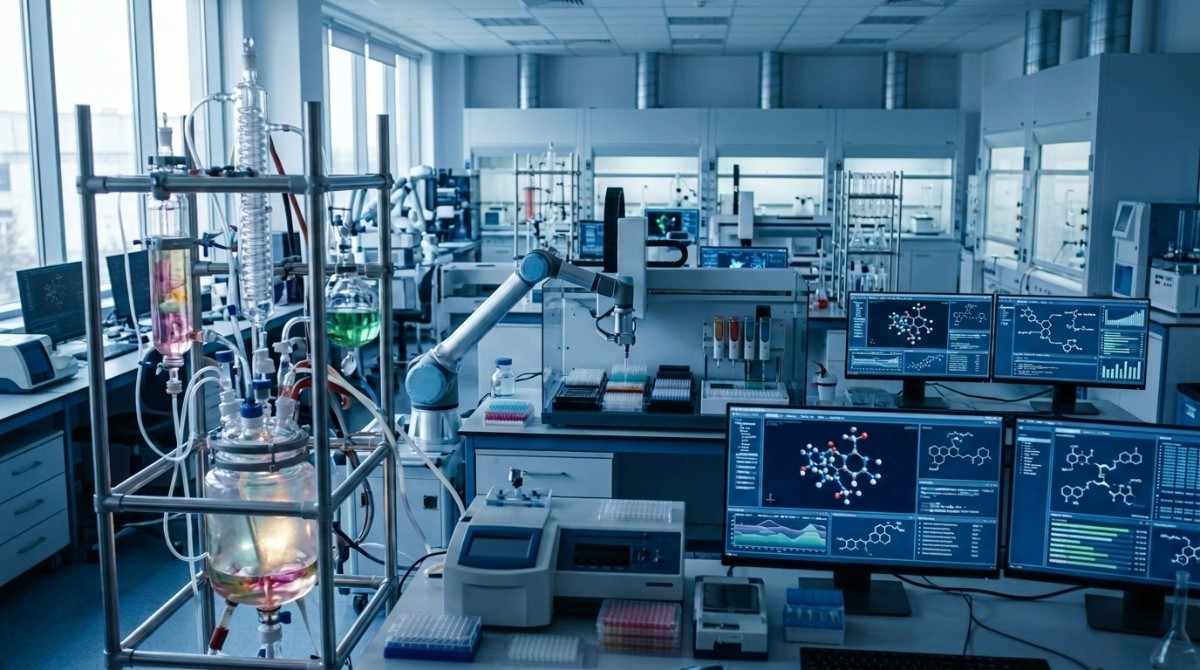
Data sharing is another hurdle. Many pharmaceutical companies are hesitant to share their internal data due to concerns about intellectual property and competitive advantage. However, the development of robust AI models requires large and diverse datasets. We are seeing the emergence of pre competitive collaborations where companies share anonymized data to build better models for the benefit of the entire industry. Furthermore, the use of federated learning allows models to be trained on data from multiple organizations without the data itself being shared.
Finally, there is the need for a change in mindset among researchers. Some chemists may view AI as a threat to their expertise or as a black box that cannot be trusted. Building trust in these tools requires transparency and clear evidence of their effectiveness. Organizations must invest in training and support to help their staff embrace these new ways of working. The goal is not to replace the chemist but to provide them with a powerful partner that can help them solve complex problems more effectively.
Scaling Small Molecule AI and Retrosynthesis
The discovery and chemical synthesis of small molecule therapies are being rapidly transformed by leading pharmaceutical and biotechnology companies utilizing AI and predictive modeling to optimize reaction paths. Gilead Sciences recently accelerated its pipeline by announcing a strategic collaboration with Genesis Therapeutics to leverage its GEMS AI platform to computationally generate and optimize novel small molecules against complex targets. In the biotech space, Recursion Pharmaceuticals fundamentally shifted the market by entering a definitive agreement to acquire Exscientia, aiming to create a global leader combining end-to-end AI and automated chemistry for small molecule creation.
Computational leader Schrödinger recently expanded its successful collaboration with Eli Lilly, utilizing its advanced AI and physics-based software platform to drive predictive small molecule drug discovery. Evotec also demonstrated the power of AI-integrated R&D by nominating a first-in-class small molecule development candidate for dermatology through an advanced discovery collaboration with Almirall. Finally, Merck KGaA continues to pioneer chemical manufacturing optimization by actively driving the deployment of its SYNTHIA™ Retrosynthesis Software, offering targeted grants to researchers to enhance synthetic planning, evaluate chemical space, and execute highly efficient reaction routes.
The Strategic Outlook for Chemical Manufacturing
The integration of AI into small molecule synthesis is a fundamental shift that will reshape the landscape of chemical manufacturing. The future belongs to the digital chemist who can seamlessly combine experimental expertise with data driven insights. For pharmaceutical companies, the move toward optimized synthesis is a strategic imperative that will drive cost reductions, accelerate innovation, and improve sustainability.
Looking forward, we can expect to see even more integration between AI, robotics, and cloud computing. The creation of autonomous laboratories where AI models direct the synthesis and testing of new molecules around the clock will significantly increase the speed of discovery. This will allow the industry to respond more rapidly to global health challenges, such as new viral outbreaks or the rise of antibiotic resistance. The journey is just beginning, and the potential for impact is immense.
Pharma Advancement believes that the transition to AI optimizing small molecule synthesis paths is a marathon rather than a sprint. It requires a long term commitment to data infrastructure, talent development, and organizational change. For companies that successfully navigate this transition, the rewards will be a more efficient and productive R&D engine that is well positioned for the challenges of the future. The era of data driven chemistry has arrived, and the possibilities for drug discovery are endless.
References
- IBM Research
- World Economic Forum
- Gilead Sciences
- Schrödinger
- Recursion Pharmaceuticals
- Evotec
- Merck KGaA
