





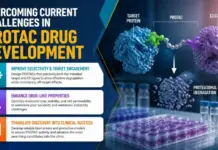
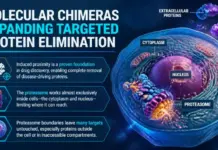









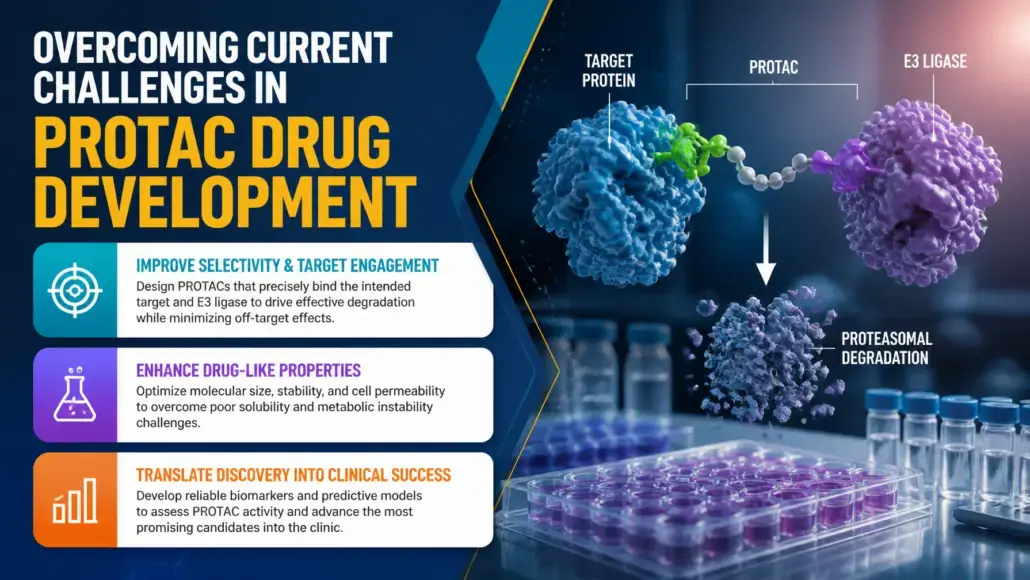
Proteolysis targeting chimeras have transitioned from an experimental chemical concept into one of the most actively funded therapeutic platforms in modern oncology. By synthesizing a heterobifunctional molecule composed of a target-binding ligand, an E3 ubiquitin ligase-recruiting element, and a specialized chemical linker, researchers can systematically direct cellular degradation machinery toward disease-causing proteins. Yet as candidates transition from early discovery into human clinical trials, development teams are confronting substantial pharmacological, biophysical, and pharmacokinetic hurdles.
The unique mechanism of induced proximity introduces non-linear behaviors that do not conform to conventional medicinal chemistry doctrines. Bifunctional degraders operate beyond the classical Lipinski Rule of 5 parameters, presenting high molecular weights, elevated lipophilicity, and poor aqueous solubility. Furthermore, the kinetics of three-body interactions create complex pharmacodynamic profiles in living systems.
Successfully navigating these engineering bottlenecks has become the central focus of biopharmaceutical chemistry divisions. Pharma Advancement observes that by replacing empirical trial-and-error with structural modeling and innovative delivery architectures, resolving PROTAC drug development challenges is establishing a rigorous roadmap for translating complex chimeric molecules into reliable commercial therapies.
The Hook Effect and Ternary Complex Optimization
A defining pharmacological challenge in bifunctional degrader design is the biphasic dose-response phenomenon known as the hook effect. Because a PROTAC molecule must simultaneously engage two independent proteins, target degradation depends entirely on forming a stable ternary complex composed of target, degrader, and E3 ligase.
At low to moderate drug concentrations, the formation of productive ternary complexes increases proportionally with dose, driving effective ubiquitination and proteasomal degradation. However, when drug concentrations rise above optimal levels, free degrader molecules independently saturate both the target protein and the E3 ligase. These unproductive binary complexes compete directly with the ternary complex, causing target degradation to plateau and then sharply decline.
Medicinal chemists evaluate ternary complex dynamics through several quantitative parameters:
- Thermodynamic cooperativity, represented by the alpha factor, measures whether the initial binding of one protein partner enhances or diminishes affinity for the second partner.
- Positive cooperativity allows the formation of stable ternary complexes even at low drug concentrations, widening the therapeutic window and mitigating the hook effect.
- Negative cooperativity impairs productive three-body assembly, requiring higher drug concentrations that rapidly trigger competitive binary inhibition.
- Ternary complex dissociation rates govern catalytic efficiency, because a degrader must dissociate rapidly after ubiquitination to engage subsequent target molecules.
To maximize positive cooperativity, drug discovery teams employ surface plasmon resonance, isothermal titration calorimetry, and cryogenic electron microscopy. These analytical tools allow chemists to map specific protein-protein contacts formed between the target and the ligase, engineering linkers that actively promote cooperative interfaces rather than serving as passive tethers.
Overcoming Beyond Rule of 5 Pharmacokinetic Liabilities
Conventional small-molecule therapeutics typically feature molecular weights below 500 Daltons and fewer than five hydrogen bond donors, characteristics that facilitate passive diffusion across intestinal membranes. Heterobifunctional degraders violate these historical rules. With molecular weights commonly ranging from 750 to 1100 Daltons and high polar surface areas, PROTAC drugs frequently suffer from low oral bioavailability, high systemic clearance, and limited tissue distribution.
Early degrader designs relied heavily on flexible polyethylene glycol or linear alkyl chains to connect binding moieties. These greasy, flexible linkers increased molecular flexibility and rotatable bond counts, severely penalizing membrane permeability.
Modern chemistry strategies have introduced rigidified linkers that constrain conformational freedom:
- Incorporating piperazine, alkyne, bicyclic, and spirocyclic motifs reduces rotatable bond counts and forces the molecule into compact, folded conformations during membrane transit.
- Intramolecular hydrogen bonding networks shield polar functional groups while passing through lipid bilayers, improving passive permeability without sacrificing target affinity.
- Lipid-based formulation systems, including self-emulsifying drug delivery systems, improve gastrointestinal solubility and maintain therapeutic systemic exposure following oral administration.
- Prodrug modifications mask polar functional groups during absorption, relying on endogenous esterases or phosphatases to release the active degrader in systemic circulation.
Global pharmaceutical pipelines reflect this structural evolution. Pfizer and Arvinas engineered vepdegestrant with a carefully optimized non-polyethylene glycol linker architecture that achieves consistent oral bioavailability in patients with advanced breast cancer, validating that beyond Rule of 5 molecules can achieve favorable human pharmacokinetics.
Mitigating E3 Ligase Exhaustion and Tumor Resistance
Acquired resistance represents another critical operational frontier in degrader development. In conventional targeted therapy, tumors often develop resistance via active-site point mutations in the target kinase. While PROTAC drugs can circumvent many target-based point mutations by virtue of event-driven pharmacology, cancer cells can evolve resistance through alterations in the degradation machinery itself.
Clinical and preclinical evaluations have documented several mechanisms of acquired degrader resistance:
- Genetic mutations, down-regulation, or epigenetic silencing of cereblon or von Hippel-Lindau, rendering cells incapable of recruiting ubiquitin machinery.
- Loss-of-function mutations in core cullin-RING ligase scaffolding components, including cullin proteins and regulatory neddylation pathways.
- Upregulation of ATP-binding cassette drug efflux pumps, which actively extrude large, hydrophobic chimeric molecules from intracellular compartments.
- Target protein hyper-expression that overwhelms available intracellular E3 ligase capacity, reducing overall degradation efficiency.
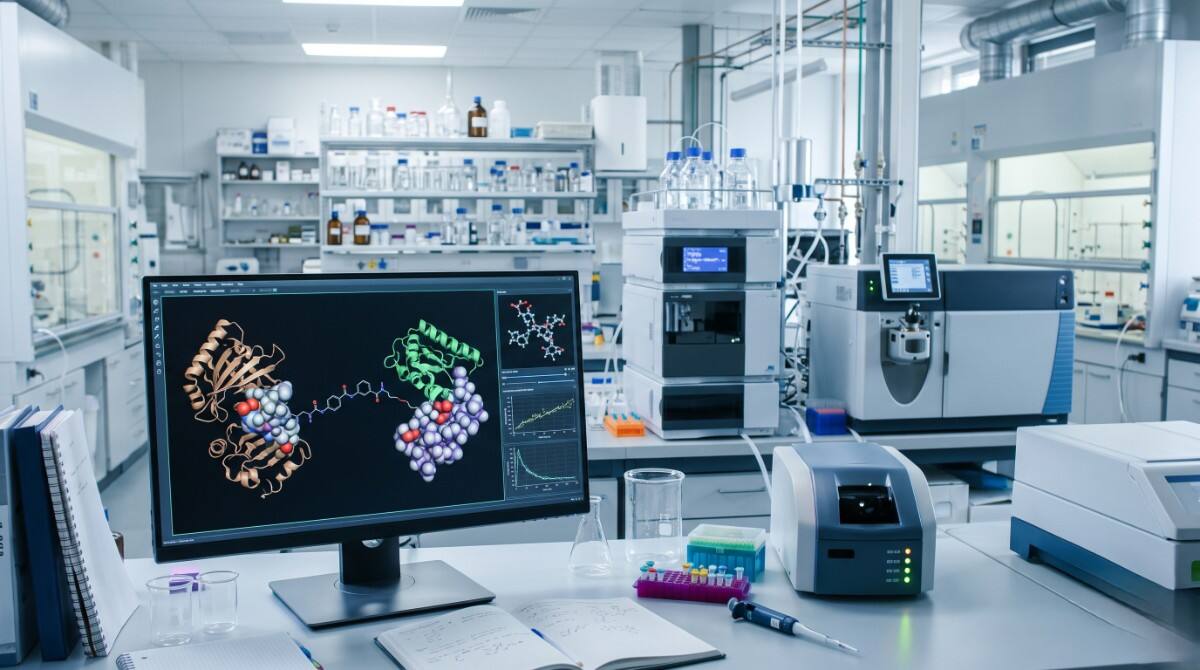
To counteract these resistance pathways, pharmaceutical research teams are diversifying their E3 ligase portfolios. Human biology contains over 600 E3 ligases, yet historical pipelines relied almost entirely on cereblon and von Hippel-Lindau. Leading biopharma companies are identifying and characterizing ligands for alternative ligases such as DCAF1, KEAP1, FEM1B, and RNF4. By developing degraders that recruit distinct ligases, oncologists can switch therapeutic agents when a tumor downregulates a specific ligase complex.
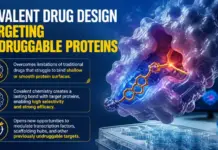
Beyond traditional non-covalent linker-target pairings, medicinal chemists are pairing degradation motifs with electrophilic warheads that lock onto poorly accessible nucleophilic residues. This hybrid chemistry directly builds upon advancements in covalent drug designs, enabling persistent target engagement even when dealing with shallow, transient binding pockets.
Targeted Delivery via Antibody-Degrader Conjugates
A promising technological innovation addressing both systemic toxicity and tissue selectivity is the development of antibody-degrader conjugates. Analogous to antibody-drug conjugates that carry cytotoxic payloads, antibody-degrader conjugates employ monoclonal antibodies to deliver a potent PROTAC molecule directly to malignant cells expressing specific surface antigens.
AstraZeneca and Sanofi have committed substantial research capital to exploring antibody-directed degrader delivery across solid tumors. By encapsulating the degrader within an antibody format, biopharma developers achieve several strategic advantages:
- The antibody vehicle confines degrader exposure strictly to antigen-positive tumor tissues, protecting healthy tissues from potential off-target or on-target toxicities.
- Hydrophilic antibody structures mask the unfavorable physicochemical properties of the hydrophobic degrader, eliminating oral formulation challenges.
- Receptor-mediated endocytosis deposits high intracellular concentrations of the degrader within target cells, driving deep target knockdown while maintaining minimal systemic free-drug levels.
- Enzymatically cleavable linkers release the active degrader only upon reaching the acidic environment of tumor lysosomes, ensuring precise spatiotemporal activation.
Manufacturing Complexity and Analytical Control
Scale-up manufacturing of heterobifunctional degraders presents distinct chemical process development challenges. A typical PROTAC drug synthesis involves twelve to twenty chemical steps, requiring coupling reactions between fragile ligand building blocks and functionalized linkers.
Commercial contract development and manufacturing organizations are investing in advanced process analytical technologies to ensure batch-to-batch reproducibility:
- High-resolution mass spectrometry and multi-dimensional liquid chromatography monitor trace impurities, including uncoupled binary fragments that could antagonize target degradation.
- Solid-state characterization protocols identify stable crystalline polymorphs, ensuring reproducible dissolution profiles in solid oral dosage forms.
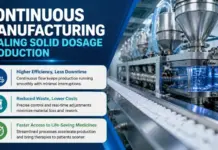
- Continuous flow chemistry platforms streamline complex coupling reactions, improving reaction yields and lowering environmental footprints for multi-kilogram manufacturing campaigns.
Pharma Advancement notes that through the integration of computational ternary modeling, rigid linker chemistry, diverse E3 ligase recruiting platforms, and targeted antibody delivery, addressing PROTAC drug development challenges is moving the targeted protein degradation field toward predictable, scalable clinical success. By addressing these foundational pharmacological and biophysical limitations, biopharmaceutical developers are ensuring that bifunctional degraders fulfill their immense therapeutic promise across modern medicine.
References
- “Arvinas and Pfizer’s Vepdegestrant Demonstrates Robust Pharmacokinetic and Clinical Profile in Phase 3 VERITAC-2 Trial” – Pfizer
- “Sanofi Research and Development Pipeline Progress in Immunology and Oncology” – Sanofi
- “AstraZeneca Advances Novel Antibody-Drug Conjugate and Targeted Degrader Technologies” – AstraZeneca
- “Bayer Presentation on Targeted Degradation Platforms at American Society of Clinical Oncology Annual Meeting” – Bayer
- “Targeted Protein Degradation Market Size, Share, and Growth Analysis Report 2025-2035” – Research Nester
