













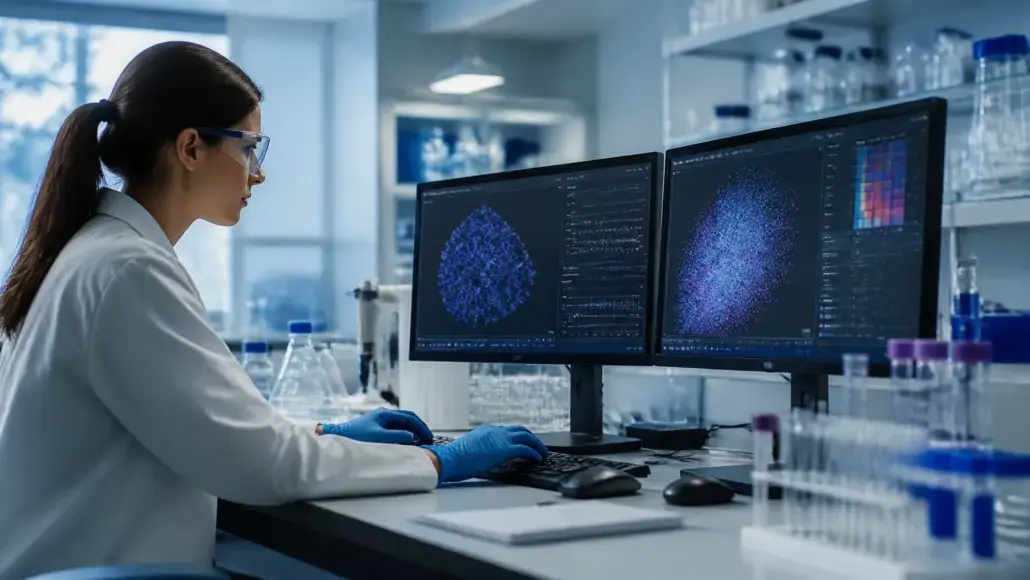
The development of biosimilars is a high-stakes race against time, regulatory scrutiny, and the looming patent cliffs of blockbuster biologics. Unlike traditional generics, proving that a biosimilar is highly similar to its reference product requires a monumental effort in analytical characterization, known as a comparability study. Historically, these studies have been labor-intensive, time-consuming, and highly susceptible to the inherent variability of living biological systems. However, the industry is now entering a new era of AI in biosimilar development. Pharma Advancement notes that by leveraging advanced analytics, machine learning, and high-performance computing, researchers can now accelerate the comparability process, identifying subtle structural and functional nuances with a level of precision and speed that was previously unimaginable.
At the heart of AI in biosimilar development is the ability to analyze the vast and complex multi-dimensional data sets generated by modern analytical tools. High-resolution mass spectrometry (LC-MS), for example, produces millions of data points for every single batch of a recombinant protein. Traditionally, deconvolving these spectra, aligning retention times, and identifying minor post-translational modifications (PTMs)—such as N-glycosylation patterns, deamidation, or oxidation—required weeks of manual expert analysis. Today, deep learning algorithms, particularly convolutional neural networks (CNNs) and autoencoders, can automate this process. These AI models can instantly identify new peaks or subtle deviations in the molecular fingerprint, allowing developers to detect even the smallest differences between the biosimilar and the reference product in real-time.
Machine Learning for Higher-Order Structure (HOS)
One of the most challenging and critical aspects of biosimilarity is proving that the protein’s higher-order structure (HOS)—its secondary, tertiary, and quaternary folding—is identical to the reference biologic. Even minor misfolding can lead to a significant loss of potency or a dangerous increase in immunogenicity. AI in biosimilar development is revolutionizing this field through the sophisticated interpretation of complex spectroscopic and biophysical data. Machine learning classifiers, such as XGBoost, Random Forest, and Support Vector Machines (SVM), are being trained on data from Hydrogen-Deuterium Exchange Mass Spectrometry (HDX-MS), 2D-NMR, and Circular Dichroism (CD) to detect sub-nanometer conformational shifts. These models can identify structural anomalies that are invisible to traditional statistical methods, providing a robust and objective totality of evidence for regulatory submissions.
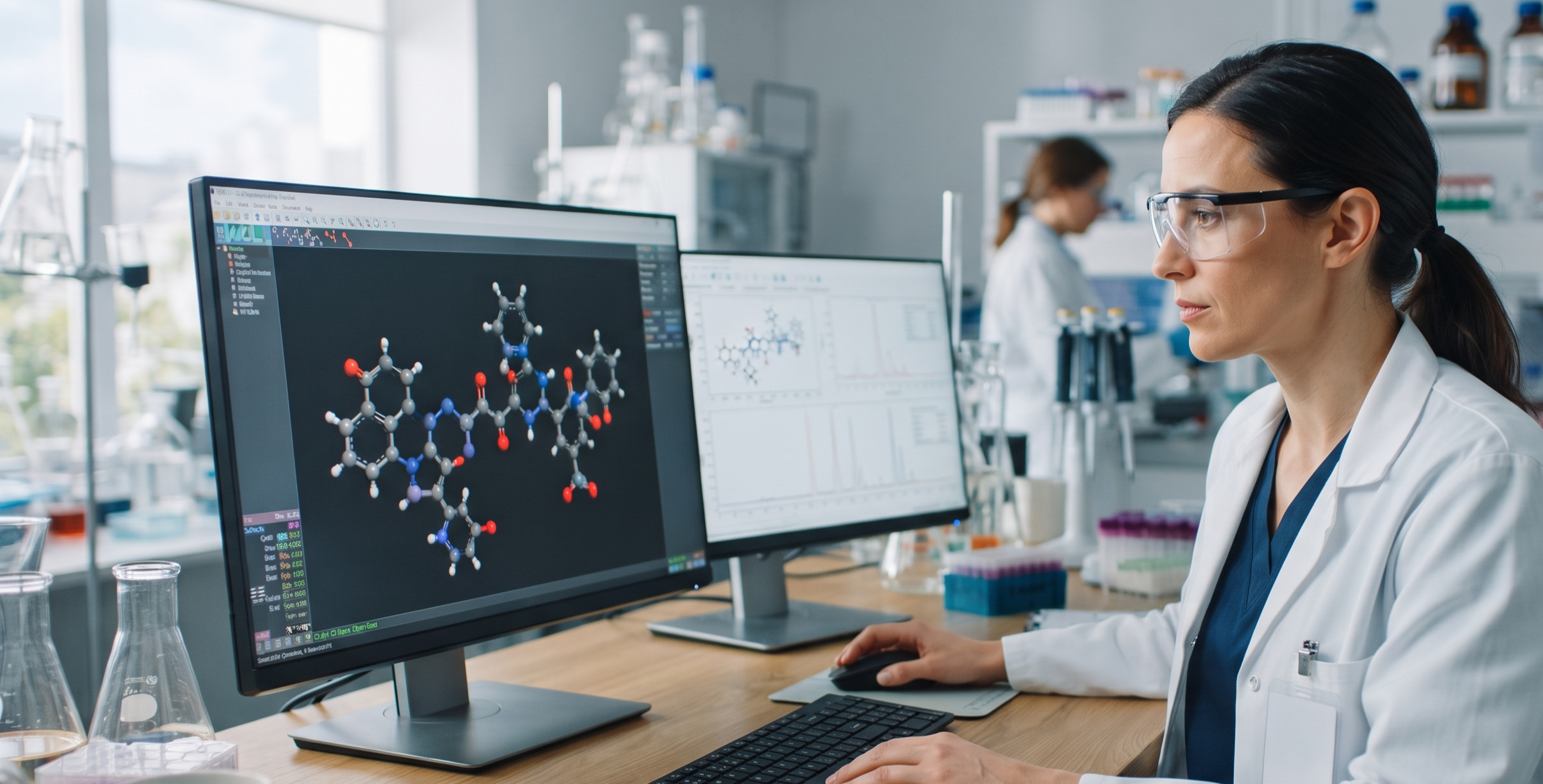
Furthermore, the rise of protein-folding foundation models, such as AlphaFold 3 and ESMFold, has provided a powerful new tool for biosimilar developers. By simulating the conformational ensemble of a monoclonal antibody under varying formulation and environmental conditions, AI can predict how structural integrity and epitope exposure will be maintained over time. This reduces the reliance on long-term, expensive stability studies and allows for the rapid, in-silico optimization of formulation matrices. By integrating these predictive tools into the early development cycle, pharmaceutical companies can significantly shorten the time it takes to move a biosimilar from the laboratory to the clinic, ensuring a faster path to market entry.
Predictive Bioprocessing and “By-Design” Comparability
The true transformative power of AI in biosimilar development lies in its ability to link the manufacturing process directly to the final product attributes. Using recurrent neural networks (RNNs) and graph neural networks (GNNs), researchers can model the complex and non-linear relationship between upstream bioreactor parameters—such as dissolved oxygen, pH, temperature, and nutrient feed composition—and the end-product’s N-glycosylation profile. This allows for the creation of a high-fidelity digital twin of the bioprocess. Before a single batch is run in the plant, the AI can simulate how changes in the cell culture environment will impact biosimilarity, enabling a proactive Quality by Design (QbD) approach to comparability.
This predictive capability is particularly valuable for achieving the exact glycan matching required for oncology biosimilars, where core fucosylation and sialylation levels directly impact antibody-dependent cellular cytotoxicity (ADCC) and systemic half-life. Instead of using a costly trial-and-error approach to media optimization and process tuning, developers can use AI to steer the bioprocess directly toward a specific target fingerprint defined by the reference product. This not only ensures a much higher success rate for comparability studies but also reduces the operational expenditure (OPEX) by minimizing the number of failed or off-spec development runs, which can cost millions of dollars each.
Data Integrity, Multi-Attribute Methods, and Digitalization
AI in biosimilar development is also driving the adoption of Multi-Attribute Methods (MAM). By replacing multiple conventional and time-consuming assays (such as CEX-HPLC and SEC) with a single, AI-enhanced LC-MS run, researchers can simultaneously quantify dozens of critical quality attributes (CQAs). The automation of data analysis through ML-driven spectral deconvolution ensures a level of consistency and data integrity that is essential for regulatory compliance. This digitalization of the analytical lab allows for the seamless transfer of data between global development sites, facilitating the creation of large-scale pre-competitive benchmark datasets that can be used to pre-train even more powerful foundation models for biotherapeutics.
Moreover, the integration of AI with Process Analytical Technology (PAT) enables real-time comparability monitoring during commercial production. Inline Raman spectroscopy, coupled with reinforcement learning algorithms, can adjust the process in real-time to maintain the biosimilar within its validated quality range. This continuous monitoring provides a much higher level of assurance than traditional end-product testing, significantly reducing the risk of batch rejections and ensuring a stable supply of high-quality biosimilars for the global market.
Explainable AI (XAI) and the Regulatory Horizon
As the industry increasingly adopts AI in biosimilar development, the focus is shifting toward the black box problem of deep learning models. Regulatory agencies like the FDA and EMA require that the decisions and predictions made by AI models are transparent, interpretable, and causally linked to biological and chemical reality. This has led to the adoption of Explainable AI (XAI) techniques, such as SHAP (SHapley Additive exPlanations) and LIME. These tools provide a clear and objective justification for why a model flagged a specific molecular attribute as dissimilar, allowing researchers to verify the AI’s findings through targeted laboratory experiments. This transparency is the essential key to securing regulatory acceptance for AI-driven comparability studies.
Moreover, the move toward streamlined and analytically focused clinical development for biosimilars depends on the strength and depth of the analytical package. If a manufacturer can demonstrate, through a combination of high-resolution analytics and robust AI modeling, that there are no clinically meaningful differences between their product and the reference biologic, the requirement for large-scale comparative efficacy studies can be waived. This shift in the regulatory paradigm represents a major victory for AI in biosimilar development, as it allows for the faster and more cost-effective delivery of affordable targeted therapies to patients worldwide, fundamentally improving global health equity.
Strategic Takeaways for Analytical Acceleration
The integration of artificial intelligence and advanced analytics is fundamentally changing the way biosimilars are researched, developed, and brought to the global market. For the biopharmaceutical industry, the opportunity lies in combining deep human expertise with the predictive power of machine intelligence.
AI in biosimilar development is the definitive solution for accelerating comparability studies and ensuring a robust totality of evidence in regulatory submissions. By automating complex spectral analysis, predicting higher-order structures, and optimizing bioprocesses through digital twins, the industry is overcoming the historical technical and economic bottlenecks of biologic development. The success of this transition depends on the adoption of explainable AI frameworks and the continuous validation of machine learning models against high-quality, real-world biological data.
To lead in the next generation of biotherapeutics, stakeholders must prioritize the modernization of their analytical infrastructure and the creation of interoperable digital data standards. The move toward AI-driven development requires a new level of multi-disciplinary collaboration between bioanalytical chemists, bioprocess engineers, and data scientists. By investing in AI in biosimilar development today, the pharmaceutical industry can secure a faster, more reliable, and more cost-effective path toward the biosimilars of the future, ensuring that the most advanced medical treatments are accessible to every patient who needs them. The integration of machine learning into the very fabric of drug development is not just about speed. It is about achieving a level of scientific precision that was previously impossible. Pharma Advancement believes that by understanding the molecular nuances of biologics through the lens of AI, we are creating a more transparent and predictable regulatory environment that benefits developers and patients alike. This digital transformation of biosimilarity is the essential bridge to a more equitable and innovative pharmaceutical landscape, where the complexity of life-saving drugs is matched by the power of our analytical tools.
