







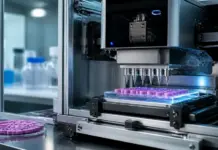
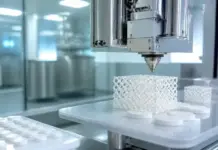

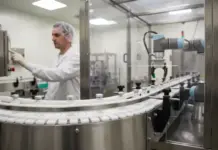
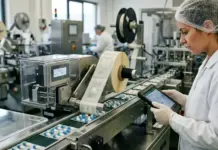



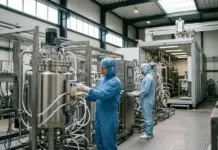
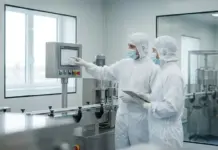


The promise of personalized medicine has long been tethered to the capabilities of the research laboratory, but in 2026, the industry is confronting the complex realities of commercial scale 3D drug manufacturing. While the ability to print a single, customized tablet for a specific patient is a remarkable feat of pharmaceutical innovation, scaling this process to meet the needs of a global population presents a unique set of hurdles. Pharma Advancement notes that the shift from low-volume prototyping to high-volume commercial production requires a fundamental reimagining of the pharmaceutical manufacturing supply chain, equipment design, and regulatory oversight. As companies strive to bring 3D-printed therapeutics to the masses, they must navigate the delicate balance between the benefits of customization and the economic demands of industrial scale. The challenge lies in moving from an experiment to a system that is reliable, profitable, and accessible to millions.
Overcoming Throughput Challenges in Commercial 3D Drug Manufacturing
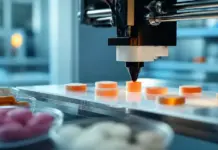
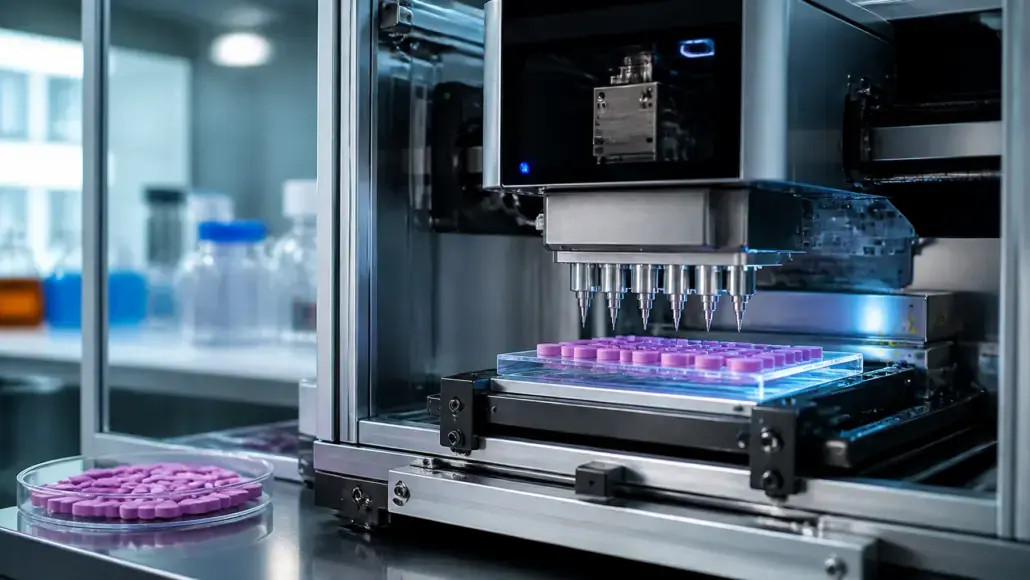
One of the primary challenges facing commercial scale 3D drug manufacturing is throughput. Traditional tablet pressing technology is capable of producing hundreds of thousands of units per hour, making it an incredibly efficient method for mass production. In contrast, most current 3D printing techniques are significantly slower, often taking minutes to produce a single dose. To make additive manufacturing commercially viable, the industry is developing high-speed printing platforms that utilize multi-nozzle systems or continuous production lines. However, increasing the speed of printing must not come at the expense of product quality or precision. Maintaining the structural integrity and dosage accuracy of each printed unit at high speeds is a significant engineering challenge that requires advanced healthcare technology and real-time process monitoring. The evolution toward Volumetric Printing—where a whole object is created simultaneously rather than layer by layer—is one of the most promising technological paths to solving the throughput problem in 2026.
Addressing the Economics of Large-Scale 3D Drug Production
Economic viability also plays a critical role in the adoption of commercial scale 3D drug manufacturing. The cost of specialized filaments, bio-inks, and the sophisticated printing hardware itself can be substantially higher than the raw materials and equipment used in traditional manufacturing. For 3D printing to compete with mass production, companies must demonstrate that the clinical benefits of personalized dosing—such as reduced side effects and improved patient outcomes—justify the higher production costs. Furthermore, the decentralization of manufacturing, while beneficial for patient access, introduces new logistical complexities. Managing a network of 3D printers across multiple hospitals and clinics requires a robust digital infrastructure to ensure that formulations are dispensed accurately and that quality standards are maintained globally. The transition to an N=1 manufacturing model requires a complete overhaul of how we calculate the return on investment for pharmaceutical innovation.
Regulatory Frameworks for Commercial Scale 3D Drug Manufacturing
Regulatory challenges also loom large as the industry moves toward commercial scale 3D drug manufacturing. Health authorities are traditionally set up to evaluate large, uniform batches of drugs, and the concept of mass customization requires a shift in how safety and efficacy are validated. Regulators are working to develop framework that allows for the approval of a printing process rather than an individual drug product. This would enable manufacturers to print a range of doses within a validated design space without needing separate approval for every variation. However, establishing these boundaries requires extensive data and a deep understanding of how different printing parameters affect the final product. This ongoing dialogue between industry and regulators is essential for creating a sustainable path toward commercialization for 3D-printed drugs in 2026. The goal is to create a regulatory environment that is as flexible and innovative as the technology it oversees.
Scaling Post-Processing and Quality Assurance
Post-processing and quality assurance at scale are additional factors that manufacturers must consider. Many 3D printing techniques require steps such as drying, curing, or removal of support structures after the printing is complete. In a laboratory setting, these tasks are easily managed by hand, but in commercial scale 3D drug manufacturing, they must be fully automated to ensure efficiency and consistency. Furthermore, the traditional method of destructive testing—where a percentage of the batch is destroyed to verify its contents—is not feasible for personalized doses. This necessitates the use of non-destructive analytical tools, such as Near-Infrared (NIR) spectroscopy or X-ray computed tomography, to verify the composition and structure of every printed unit. Integrating these tools into a high-speed production line is a technical feat that is currently at the forefront of pharmaceutical manufacturing innovation. The ability to verify the internal fingerprint of a pill without touching it is the new gold standard for industrial quality control.
Hybrid Manufacturing Models Combine Scale and Customization
Despite these challenges, the drive toward commercial scale 3D drug manufacturing continues to accelerate, fueled by the clear clinical need for more precise and patient-centric therapies. The industry is seeing the emergence of hybrid manufacturing models that combine the speed of traditional methods with the flexibility of additive manufacturing. For example, a standard tablet base could be mass-produced and then functionalized with a 3D-printed layer containing a personalized dose of a second medication. This approach leverages the strengths of both technologies, providing a scalable solution for the production of complex drug delivery systems. As we progress through 2026, the lessons learned from these early commercial efforts will be instrumental in shaping the future of pharmaceutical manufacturing, ultimately leading to a more personalized and efficient healthcare system that can respond to individual patient needs at an industrial pace.
Building a Reliable Raw Material Supply Chain
The raw material supply chain for commercial scale 3D drug manufacturing is another area that requires significant development. Unlike traditional manufacturing, which uses powders and liquids in bulk, 3D printing requires materials to be in specialized formats such as filaments, pellets, or precise ink formulations. Ensuring the consistent quality and availability of these materials is critical for maintaining the reliability of the manufacturing process. In 2026, we are seeing the emergence of specialized chemical suppliers who focus exclusively on pharmaceutical-grade additive manufacturing materials. These companies provide the essential building blocks for customized drugs, ensuring that they meet the rigorous standards for purity and performance required by the industry. The maturation of this supply chain is a vital step in making large-scale 3D drug production a reality.
Sustainability in Commercial Scale 3D Drug Manufacturing
Environmental sustainability is also a major consideration in the scale-up of 3D printing. While additive manufacturing is inherently more efficient than subtractive methods, the energy consumption of high-speed printers and the waste associated with failed prints can still be significant. Manufacturers are looking at ways to make commercial scale 3D drug manufacturing more sustainable by using renewable energy sources and developing closed-loop systems for material recycling. The goal is to create a manufacturing process that is not only clinically superior but also environmentally responsible, meeting the ESG goals that are increasingly important to investors and consumers. In 2026, a truly successful commercial operation must be able to demonstrate its commitment to both patient health and planetary health.
Developing the Workforce for Industrial 3D Drug Manufacturing
The workforce requirements for commercial scale 3D drug manufacturing are also evolving. Operating an industrial-scale 3D printing facility requires a team with a diverse set of skills, including mechanical engineering, software development, and quality assurance. Pharmaceutical companies are investing in training and education programs to build the necessary talent pool for this new era of manufacturing. The role of the Manufacturing Scientist has become central to these operations, acting as the bridge between the digital design of the drug and its physical production. This investment in human capital is as important as the investment in the technology itself, ensuring that the industry has the expertise needed to manage the complexities of large-scale additive manufacturing.
Digital Product Lifecycle Management for Personalized Drugs
Finally, the adoption of commercial scale 3D drug manufacturing is driving a new approach to product lifecycle management. Instead of focusing on a single, static product, manufacturers must now manage a dynamic library of digital drug formulations that can be adapted and updated in real-time. This requires a robust digital infrastructure for version control, data security, and regulatory documentation. In 2026, the digital asset of a drug formulation is as valuable as its physical inventory. Managing these assets effectively is a key component of success in the personalized medicine market, ensuring that the latest clinical insights can be rapidly translated into physical treatments for patients. This shift toward a digital-first manufacturing strategy is the ultimate legacy of the 3D printing revolution in the pharmaceutical industry.
Technological Innovations Driving Scalability
The path to successful commercial scale 3D drug manufacturing is paved with technological breakthroughs that address the limitations of current hardware. Engineers are developing new additive manufacturing techniques, such as volumetric 3D printing, which can fabricate entire objects in seconds by projecting light into a photosensitive resin. This could potentially bridge the gap between the speed of tablet pressing and the customization of printing, allowing for the rapid production of complex dosage forms. Additionally, the development of more durable and biocompatible materials is expanding the range of drugs that can be printed, making the technology applicable to a wider array of therapeutic areas. These advancements in pharma innovation are critical for proving that 3D printing is not just a niche tool but a viable alternative for large-scale production in a modern healthcare economy.
Digital Twins and AI Optimize Commercial Production
Moreover, the integration of digital twins—virtual replicas of the printing process—is helping manufacturers optimize their production lines for commercial scale 3D drug manufacturing. By simulating the entire manufacturing workflow, from material input to final packaging, companies can identify potential bottlenecks and test different scenarios before committing to a physical setup. This reduces the risk of costly errors and allows for more efficient resource allocation. The use of AI and machine learning to analyze the data generated by these digital twins is further enhancing the predictability and reliability of the manufacturing process, ensuring that the transition to commercial scale is as smooth and cost-effective as possible. Pharma Advancement highlights that hese digital tools are the silent architects of the modern pharmaceutical factory, providing the foresight needed to manage the complexities of 2026 production demands.
