










The pharmaceutical landscape is currently witnessing a paradigm shift unlike anything seen in decades. The meteoric rise of glucagon-like peptide-1 (GLP-1) receptor agonists has transitioned these treatments from niche diabetes management tools to global blockbuster therapies for obesity and metabolic health. As demand for semaglutide and tirzepatide continues to outpace supply, the industry is grappling with a fundamental question: is the existing GLP-1 manufacturing capacity sufficient to sustain this growth? For many patients and providers, the answer has been a frustrating series of shortages. However, behind the scenes, a massive mobilization of capital and engineering is underway, with contract development and manufacturing organizations (CDMOs) at the very heart of the solution.
The scale of the challenge is rooted in the sheer volume of patients requiring these therapies. Traditionally, biologics manufacturing was geared toward treating rare conditions or specific cancers where the patient population was measured in the thousands. GLP-1 drugs, conversely, target chronic conditions that affect hundreds of millions of people worldwide. This shift requires a move from specialized, small-batch pharmaceutical production to high-volume, industrialized scale-up. Pharma Advancement notes that to bridge this gap, the world’s leading pharmaceutical companies are increasingly leaning on CDMOs, which provide the specialized infrastructure and expertise necessary to navigate the complexities of peptide manufacturing at a global scale.
The Technical Complexity of Peptide Manufacturing
Unlike small-molecule drugs that can be synthesized through straightforward chemical reactions, GLP-1 drugs fall into the category of peptides. Peptides occupy a unique space between traditional chemicals and large-scale biologics manufacturing. They are long chains of amino acids that must be assembled in a precise sequence to ensure efficacy and safety. The primary method for producing these chains is Solid Phase Peptide Synthesis (SPPS). This process involves adding amino acids one by one to a resin substrate, requiring high levels of precision and large volumes of specialized solvents.
As companies look to increase GLP-1 manufacturing capacity, they face the inherent limitations of SPPS. While highly controlled, it is a time-consuming process that generates significant waste and requires massive reactor vessels to produce commercial quantities. Some manufacturers are exploring Liquid Phase Peptide Synthesis (LPPS) or hybrid approaches to improve throughput, but these transitions require significant re-validation and regulatory oversight. The precision required means that any deviation in the temperature, pressure, or chemical purity during the manufacturing process can result in a batch failure, further straining an already fragile drug supply chain.
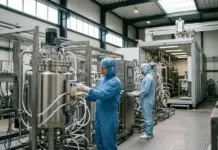
Furthermore, the purification of these peptides is a critical bottleneck. High-performance liquid chromatography (HPLC) is used to separate the desired GLP-1 sequence from side products and impurities. At the scale required for global demand, the amount of solvent and the size of the chromatography columns needed are staggering. This technical hurdle is one reason why many pharmaceutical giants choose to partner with CDMOs that already possess the specialized equipment and technical know-how to manage large-scale peptide purification without compromising product quality.
The Infrastructure of Contract Manufacturing
In the race to satisfy the market, contract manufacturing has become the primary engine of growth. CDMOs offer a plug-and-play solution for pharmaceutical companies that lack the internal capacity to build new factories overnight. Companies like Catalent, Lonza, and Thermo Fisher Scientific have become household names in the industry because they hold the keys to the production lines that the world desperately needs. By outsourcing to these organizations, drug developers can bypass the five-to-seven-year lead time required to build, commission, and validate a new biologics manufacturing facility.
The role of CDMOs extends beyond just providing floor space. They bring deep expertise in tech transfer—the process of moving a drug’s manufacturing instructions from a laboratory setting to a commercial production line. Given the volatility of GLP-1 manufacturing capacity, the ability of a CDMO to rapidly scale a process while maintaining strict adherence to Good Manufacturing Practices (GMP) is invaluable. These organizations are currently investing billions of dollars in new facilities, specifically targeting the high-growth peptide sector. This surge in investment is reshaping the CDMO market, turning it from a supportive service industry into a frontline strategic partner in the global drug supply ecosystem.
However, the reliance on CDMOs is not without its risks. The industry is currently facing a capacity crunch where the demand for CDMO services is so high that new drug developers may find it difficult to secure production slots. This has led to a competitive environment where the largest pharmaceutical players are often locking up capacity years in advance, potentially delaying the market entry of smaller innovators and generic competitors.
Strategic Acquisitions and Capacity Wars
The urgency to secure GLP-1 manufacturing capacity has triggered a series of unprecedented strategic moves in the pharmaceutical industry. Perhaps the most notable example is Novo Nordisk’s parent company, Novo Holdings, and its acquisition of Catalent, one of the world’s largest CDMOs. This multi-billion-dollar deal was a clear signal to the market: securing the supply chain is now a matter of corporate survival. By bringing a major CDMO in-house, Novo Nordisk aims to gain direct control over three key manufacturing sites that are instrumental in the fill-finish process for its GLP-1 drugs.
Eli Lilly has taken a similarly aggressive approach, though primarily through massive internal capacity expansion and strategic partnerships rather than a full acquisition of a major CDMO. Lilly has committed tens of billions of dollars to build new manufacturing hubs in Indiana, North Carolina, and Germany. These facilities are designed to be state-of-the-art centers for peptide manufacturing and biologics manufacturing, ensuring that they can maintain a steady drug supply even as the indications for GLP-1 therapies expand to include sleep apnea, kidney disease, and cardiovascular health.
These capacity wars highlight the high stakes involved. The company that can most effectively manage its pharmaceutical production and avoid stockouts will likely dominate the metabolic health market for the next decade. For the CDMOs that remain independent, this represents a golden era of growth, as they become the go-to partners for every other pharmaceutical company trying to enter the GLP-1 space with their own proprietary molecules or biosimilars.
Overcoming the Fill-Finish Bottleneck
While the synthesis of the GLP-1 peptide is complex, it is often the fill-finish stage that serves as the ultimate bottleneck in the drug supply chain. Fill-finish involves the sterile filling of the medication into delivery devices, such as pre-filled pens or vials, followed by packaging and distribution. GLP-1 drugs are typically administered via injection, which means they must be produced in a highly controlled, sterile environment to prevent contamination.
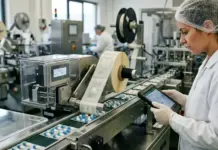
The specialized machinery required for high-speed sterile filling is in short supply globally. Furthermore, the auto-injector pens themselves are complex medical devices with their own separate supply chains. A shortage of a single plastic component or a specific gauge of needle can halt the entire pharmaceutical production line, regardless of how much active peptide is sitting in the warehouse. CDMOs that specialize in fill-finish services are currently running at near-total capacity, leading many to invest in new automated lines that can process millions of units per month.
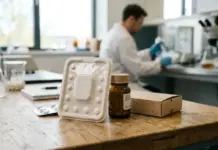
To mitigate these risks, some companies are exploring alternative delivery methods. The development of oral GLP-1 drugs is a major focus, as tablets are generally easier and cheaper to manufacture at scale than injectables. However, oral peptides face significant challenges regarding bioavailability and gut absorption. Until oral versions can match the efficacy and convenience of weekly injections, the pressure on the sterile fill-finish infrastructure will remain intense, keeping the focus squarely on the expansion of specialized biologics manufacturing facilities.
Regulatory and Quality Considerations
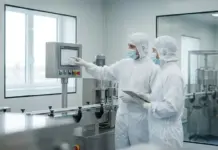
As GLP-1 manufacturing capacity expands at breakneck speed, maintaining the highest standards of quality and regulatory compliance is paramount. The FDA and EMA have rigorous requirements for biologics and peptides, and any lapse in quality control can lead to costly recalls or facility closures. For CDMOs, this means that speed must not come at the expense of safety. The integration of advanced analytical tools and real-time monitoring on the production floor is becoming standard practice to ensure that every batch of GLP-1 drugs meets the necessary specifications.
The global nature of the drug supply chain also adds a layer of regulatory complexity. A single GLP-1 product might have its API synthesized in one country, purified in another, and filled into pens in a third. Each of these sites must pass inspections by various national health authorities. CDMOs with a global footprint are particularly well-positioned to navigate this landscape, as they often have established relationships with regulators and a proven track record of compliance across multiple jurisdictions.
The move toward continuous manufacturing is another trend gaining traction. Instead of traditional batch processing, continuous manufacturing involves a constant flow of production, which can lead to higher yields and more consistent quality. While more difficult to implement for peptides than for simple chemicals, the potential to significantly boost GLP-1 manufacturing capacity makes it an attractive long-term goal for the world’s leading pharmaceutical production facilities.
Looking Ahead: Sustainable Supply
The current scramble to increase GLP-1 manufacturing capacity is a testament to the transformative potential of these drugs. While CDMOs and big pharma have made incredible strides in the last 24 months, the journey toward a stable and sustainable global supply is far from over. As more countries approve these medications for broader use, the demand curve is expected to continue its upward trajectory. The industry must not only focus on the volume of production but also on the resilience of the entire supply chain, from the sourcing of raw amino acids to the final delivery of the auto-injector to the pharmacy shelf.
In the coming years, Pharma Advancement sees a more diversified manufacturing landscape. New entrants into the CDMO space will likely focus on specialized peptide synthesis, while established players will continue to refine their biologics manufacturing processes to achieve greater efficiency. The lessons learned during this period of GLP-1 shortages will undoubtedly influence how the pharmaceutical industry approaches capacity expansion for future blockbuster therapies.
Ultimately, the success of GLP-1 drugs depends on accessibility. If the industry cannot meet global demand, the public health benefits of these therapies will remain out of reach for many who need them most. Through a combination of massive capital investment, technical innovation in peptide manufacturing, and deep strategic partnerships between drug developers and CDMOs, the pharmaceutical world is working tirelessly to ensure that the supply of these life-changing medicines finally catches up with the unprecedented demand. The evolution of the GLP-1 manufacturing capacity is not just a business story. It is a critical milestone in the history of modern medicine and global health.
