








The pharmaceutical landscape is currently witnessing a seismic shift driven by a single class of drugs that has captured the global imagination: glucagon-like peptide-1 (GLP-1) receptor agonists. Originally developed to manage type 2 diabetes, these therapies have pivoted into the obesity market with unprecedented velocity, creating a level of demand that the industry was arguably unprepared to meet. As patients and providers clamor for treatments like semaglutide and tirzepatide, the bottleneck has shifted from clinical validation to industrial execution. This environment has placed GLP-1 contract manufacturing at the center of a strategic whirlwind, where the ability to scale complex production is the ultimate competitive advantage.
For Contract Development and Manufacturing Organizations (CDMOs), the surge in the GLP-1 market represents more than just a lucrative contract. It is a catalyst for structural transformation. The sheer volume of production required to satisfy millions of patients worldwide necessitates a radical expansion of manufacturing capacity. While pharmaceutical giants have invested billions into their own internal facilities, the demand remains so vast that pharmaceutical outsourcing has become a mandatory component of their supply chain strategies. Pharma Advancement notes that this reliance on external partners has opened a multi-billion dollar window for CDMOs capable of handling the intricacies of peptide manufacturing and the high-stakes requirements of sterile injectables.
The Meteoric Rise of the GLP-1 Market and the Resulting Supply Gap
The current state of the GLP-1 market is defined by a paradox of success. While these drugs are performing exceptionally well in clinical and commercial terms, their availability is frequently hindered by supply chain constraints. What started as a breakthrough for metabolic health has evolved into a cultural phenomenon, leading to a situation where demand far outpaces existing drug production capabilities. The expansion of GLP-1 indications into cardiovascular health, sleep apnea, and potentially even neurological conditions only adds further pressure to an already strained pharma supply chain.
This supply-demand imbalance has forced a re-evaluation of how biologics are produced at scale. Unlike small-molecule drugs that can often be manufactured with relatively straightforward chemical synthesis, GLP-1s are peptides that require sophisticated biological or chemical processes. The transition from small-batch clinical production to mass-market industrial throughput is fraught with technical hurdles. For many drug sponsors, the quickest path to market and the most effective way to manage risk is to leverage the existing infrastructure and technical expertise of established CDMOs.
Why Pharmaceutical Outsourcing is the Engine of GLP-1 Success
The decision to lean into pharmaceutical outsourcing is rarely just about cost savings in the current GLP-1 climate; it is about agility and specialized capability. Developing the internal manufacturing capacity to produce hundreds of millions of doses requires years of construction, regulatory vetting, and workforce training. In a market where being first or most available determines market share, waiting for internal facilities to come online is a luxury few companies can afford.
CDMOs provide a plug-and-play solution that allows pharmaceutical companies to bypass some of these temporal barriers. By partnering with external manufacturers, drug sponsors can tap into pre-existing, CGMP-compliant facilities that are already optimized for biologics. Furthermore, CDMOs often possess a depth of experience in process optimization that can lead to higher yields and more robust production cycles. In the high-stakes world of GLP-1 contract manufacturing, even a small improvement in the efficiency of peptide manufacturing can translate into millions of additional doses and significant revenue gains.
The strategic importance of these partnerships is underscored by recent industry movements, such as Novo Nordisk’s parent company acquiring Catalent. This move was a clear signal that securing manufacturing capacity is now just as important as owning the intellectual property of the drug itself. For other players in the market, this acquisition has sparked a race to secure long-term agreements with the remaining top-tier CDMOs, ensuring they aren’t left behind in the hunt for sterile fill-finish capacity and raw material access.
Navigating the Complexity of Peptide Manufacturing and Biologics
The technical heart of the GLP-1 boom lies in the nuances of peptide manufacturing. Peptides sit in a unique space between small molecules and large biologics, often requiring a hybrid approach to production. Traditionally, peptides were produced using Solid-Phase Peptide Synthesis (SPPS), a method that is highly effective for research and small-scale production but becomes increasingly expensive and environmentally challenging at the scales required for the global GLP-1 market.
As CDMOs scale up, they are increasingly exploring Liquid-Phase Peptide Synthesis (LPPS) or recombinant DNA technology to improve sustainability and cost-effectiveness. Each method brings its own set of challenges regarding purity, solvent use, and waste management. Biologics production, in general, requires a level of environmental control and analytical rigor that is far beyond traditional medicine. Every batch must be meticulously tested for sequence accuracy, folding, and the absence of contaminants, making the quality control departments of CDMOs as vital as the production lines themselves.
Moreover, the downstream processing—the purification of the peptide after it has been synthesized—is often the primary bottleneck. Achieving the high levels of purity required for human injection involves complex chromatography steps that are difficult to scale without significant loss of product. CDMOs that have invested in advanced purification technologies and automated process controls are finding themselves in high demand, as they can offer the reliability and consistency that drug sponsors require to satisfy regulatory bodies like the FDA and EMA.
Addressing the Manufacturing Capacity Bottleneck in the Global Pharma Supply Chain
When we speak of manufacturing capacity in the context of GLP-1s, we are really talking about two distinct but interconnected needs: API (Active Pharmaceutical Ingredient) production and drug product manufacturing, specifically fill-finish. The API is the peptide itself, but the drug product is the final form that the patient uses, which for most GLP-1s, is a sophisticated autoinjector pen.
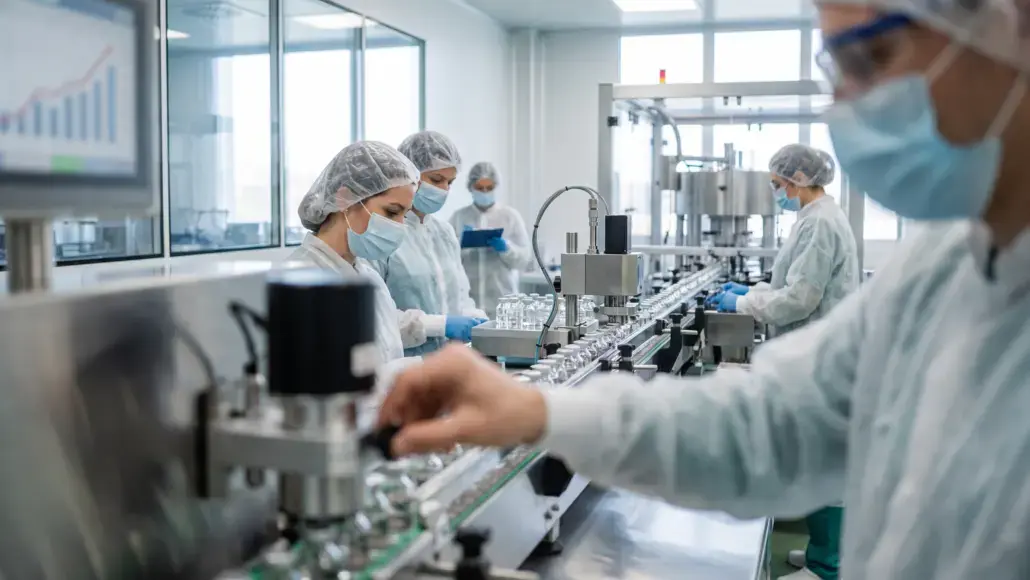
The pharma supply chain for GLP-1s is currently struggling most acutely at the fill-finish stage. Filling sterile liquids into glass carpules and then assembling those into mechanical delivery devices is a precision task that requires specialized machinery. There is a global shortage of high-speed sterile filling lines, and the lead time for ordering and installing new equipment can exceed 24 months. This has created a land grab for existing fill-finish capacity, with CDMOs like Lonza, Thermo Fisher, and WuXi Biologics significantly expanding their sterile injectable footprints to accommodate the GLP-1 surge.
The Critical Importance of Fill-Finish Operations
The complexity of the delivery device cannot be overstated. A GLP-1 autoinjector is a multi-component piece of medical hardware that must function perfectly every time to ensure the patient receives the correct dose. This adds another layer to GLP-1 contract manufacturing: the integration of device assembly. CDMOs are no longer just chemists and biologists; they must also be experts in mechanical assembly and secondary packaging.
This integration is where the real growth opportunities lie. CDMOs that offer an end-to-end service—from peptide synthesis to the final assembled and packaged pen—provide immense value by simplifying the supply chain. This one-stop-shop model reduces the risk of tech-transfer failures and simplifies the regulatory filing process, as the drug sponsor only has to audit and manage one primary partner rather than a fragmented network of suppliers.
The Shift Toward Oral Formulations and New Delivery Methods
While the current market is dominated by injectables, the next frontier of the GLP-1 market is oral formulations. Converting a peptide that is easily degraded by stomach acid into a stable, bioavailable pill is a formidable challenge for drug production. This transition will require entirely new manufacturing technologies, such as specialized coatings and absorption enhancers.
For CDMOs, this represents a second wave of opportunity. As oral GLP-1s move through clinical trials, the manufacturing capacity required will shift toward high-volume solid dose production, albeit with the added complexity of peptide stabilization. Those who are currently mastering the art of injectable peptide manufacturing are well-positioned to lead the charge into oral alternatives, further diversifying their service offerings and securing their place in the long-term GLP-1 landscape.
Strategic Investment and the Future of GLP-1 Contract Manufacturing
The long-term outlook for the GLP-1 market suggests that we are still in the early innings of a multi-decade growth cycle. As these drugs become the standard of care for obesity and its related comorbidities, the volume of production required will likely dwarf current estimates. This creates a compelling case for sustained investment in manufacturing capacity across the globe. CDMOs are responding by building factories of the future that utilize modular designs, continuous manufacturing, and digital twin technology to maximize output and minimize downtime.
Furthermore, the geographical distribution of the pharma supply chain is evolving. There is an increasing emphasis on regionalization to protect against global disruptions. We are seeing significant investments in GLP-1 contract manufacturing facilities in North America and Europe, aimed at bringing production closer to the largest consumer markets. This shift not only provides security of supply but also aligns with the growing regulatory preference for localized oversight of critical biologics.
The relationship between drug sponsors and CDMOs is also maturing. We are moving away from purely transactional, fee-for-service models toward strategic partnerships where risks and rewards are shared. In some cases, big pharma companies are providing the capital for CDMOs to build dedicated suites, ensuring that they have carved-out capacity for years to come. This level of collaboration is a testament to the fact that in the modern pharmaceutical era, manufacturing is no longer a back-end function—it is a front-end strategic pillar.
Pharma Advancement believes that the explosion of the GLP-1 market has rewritten the playbook for pharmaceutical outsourcing. What was once a tactical decision to manage overflow is now a cornerstone of global health strategy. CDMOs that can navigate the technical rigors of peptide manufacturing, solve the fill-finish bottleneck, and provide a resilient link in the pharma supply chain will find themselves at the heart of one of the most significant medical advancements of our time. The opportunities are vast, but the requirements for entry—technical excellence, massive scale, and unwavering quality—are equally high. For those who can meet the challenge, the GLP-1 era offers a path to unprecedented growth and the chance to play a vital role in addressing a global health crisis.
