













The pharmaceutical industry is currently witnessing one of its most significant shifts in history, moving from static, paper-based information to dynamic, interactive systems. This transformation is embodied in the adoption of digital labelling for pharmaceutical products, a development that is fundamentally changing how manufacturers communicate with patients and healthcare providers. For decades, the industry has relied on the physical patient information leaflet tucked into every box. However, as the volume of required safety data grows and the pace of medical discovery accelerates, these paper inserts have become increasingly impractical. Pharma Advancement notes that these digital solutions are stepping in to provide a more responsive, accessible, and sustainable way to deliver critical health information.
The Rise of E-Labelling for Drugs
At the heart of this movement is the concept of e-labelling for drugs. This digital-first approach allows manufacturers to host the most current product information on a secure, cloud-based platform. Instead of relying on a printed document that may be months out of date by the time it reaches the patient, the digital label can be updated instantly. When a regulatory body like the FDA or EMA issues a new safety warning or dosage adjustment, the manufacturer can reflect that change in the digital repository within minutes. This real-time synchronization is the single most important advantage of digital labelling for pharmaceutical products, as it ensures that the information being read by a doctor or patient is always the most accurate version available, directly improving patient safety.
QR Code Medicine Labels: Bridging Physical and Digital Information
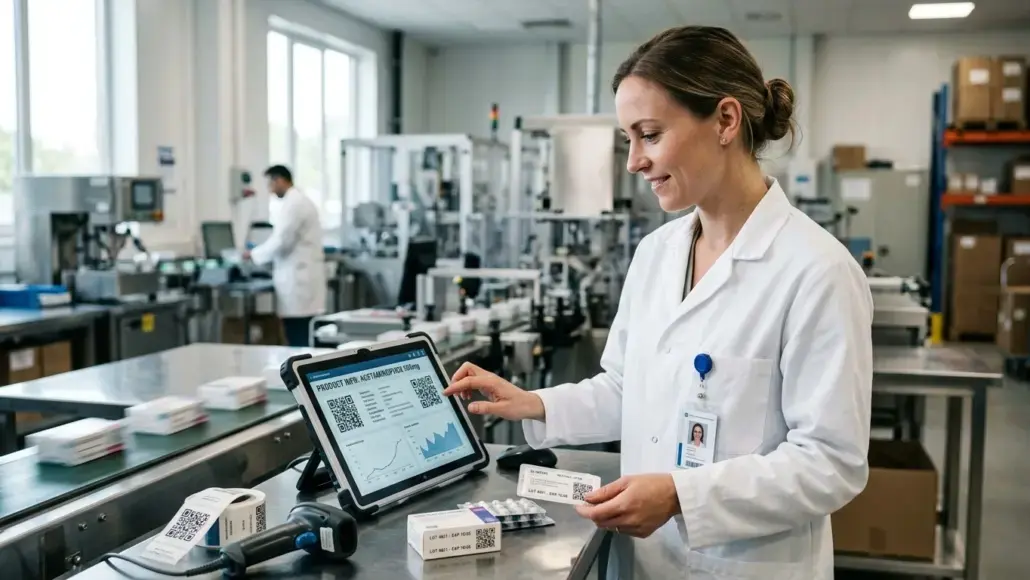
The implementation of QR code medicine labels serves as the primary gateway between the physical package and this digital world. By printing a unique, high-resolution code on the outer carton or the primary container, manufacturers give users instant access to a wealth of information that simply could not fit on a piece of paper. A simple scan with a smartphone can reveal digital drug info such as high-definition instructional videos for complex administration, interactive dosage calculators, and multi-language versions of the text. This capability is particularly vital for patients with low health literacy or those who speak a language other than the primary one in their region. The ability to present information in an engaging, visual format helps to bridge the communication gap and ensures that the medicine is used correctly.
Electronic Instructions for Use Enhance Accessibility
Moving toward electronic instructions for use also addresses a major physical challenge in pharmaceutical packaging. As medications become more specialized, the amount of regulatory information required is ballooning. This has led to incredibly long paper inserts printed in tiny fonts that are difficult for many patients to read, especially those with visual impairments or age-related conditions. Digital labelling for pharmaceutical products allows for the use of responsive design, where the text can be scaled, read aloud by a screen reader, or even translated into a different format like Braille for compatible devices. Many digital platforms also enable users to search for specific topics, bookmark important sections, and access multimedia guidance that simplifies complex treatment instructions. These interactive features improve comprehension, reduce medication errors, and support better adherence to prescribed therapies across diverse patient populations. This level of accessibility is a cornerstone of patient-centered care, empowering individuals to manage their health with greater independence and confidence.
Streamlining Global Supply Chains with Pharma Data Labels
The use of pharma data labels also plays a critical role in streamlining the complex global supply chain. For manufacturers operating in multiple countries, maintaining separate print runs for every local language and regulatory requirement is a massive logistical and financial burden. Digital labelling for pharmaceutical products allows for a more centralized approach. A single physical pack can be distributed across multiple regions, with the digital label automatically detecting the user’s location or language settings to provide the correct information. This reduction in the need for physical paper not only lowers production costs but also significantly reduces the environmental impact of the industry, aligning with global goals for waste reduction and sustainability in healthcare.
Ensuring Data Security and Information Integrity
Data security and integrity are paramount when dealing with medical information. One of the common concerns regarding digital labelling is the risk of a user being directed to an incorrect or malicious website. To combat this, the industry is adopting closed-loop systems and blockchain technology to ensure that every scan leads to a verified, tamper-proof source of information. These pharma data labels are designed to be immutable, meaning that once the manufacturer publishes an update, it cannot be altered by any unauthorized third party. This digital trust is essential for maintaining the authority of the information and ensuring that patients can rely on their screens as much as they once relied on a printed sheet.
Empowering Healthcare Professionals with Digital Labelling
The role of healthcare professionals is also being enhanced by this technology. Doctors and pharmacists can use digital labelling for pharmaceutical products to quickly verify batch numbers, check for drug interactions, and access professional-level clinical data that is not typically included in a patient leaflet. This rapid access to information can be a life-saving advantage in emergency situations or when dealing with complex, multi-drug regimens. Furthermore, some digital labels now include a feedback loop, allowing patients to report side effects or log their doses directly through the interface, providing valuable real-world data back to the manufacturer and health authorities.
Conclusion
In conclusion, the shift toward digital labelling for pharmaceutical products is not just a technological trend; it is a fundamental maturation of the healthcare ecosystem. By embracing e-labelling for drugs and electronic instructions for use, the industry is moving toward a future where information is no longer a static product but a dynamic service. This evolution ensures that the communication between the manufacturer and the patient is as precise, fast, and effective as the medication itself. Pharma Advancement believes that we move forward, the integration of AI and personalized data will further refine these systems, making digital labelling an indispensable tool for the next generation of patient care and pharmaceutical excellence.
