








The biopharmaceutical industry is witnessing a revolutionary shift with the rise of Advanced Therapy Medicinal Products (ATMPs), particularly cell and gene therapies. Unlike traditional small-molecule drugs or even large-scale biologics, these therapies are often patient-specific, produced in small batches, and require highly specialized manufacturing processes. This transition from “one size fits all” to “one size fits one” has exposed the limitations of traditional, rigid manufacturing infrastructure. To succeed in this new era, companies are turning toward flexible manufacturing facilities. These environments are designed to be agile, allowing for rapid reconfigurations, multi-product production, and the seamless scaling of processes from clinical trials to commercial launch. Flexible manufacturing facilities are not just a design choice they are the essential infrastructure enabling the commercialization of the next generation of life-saving medicine.
The Drivers for Flexibility in Cell Therapy
The primary driver for the adoption of flexible manufacturing facilities is the inherent variability and complexity of cell therapy processes. Whether it is an autologous therapy, where a patient’s own cells are modified and returned to them, or an allogeneic therapy derived from a healthy donor, the manufacturing process is often in a state of flux during early development. A facility designed for one specific process can quickly become obsolete as the science evolves. Flexibility allows companies to adapt their floor plans, equipment sets, and workflows without the need for massive capital reinvestment or lengthy construction delays.
Furthermore, the market for cell therapies is characterized by rapid growth and uncertain demand. A therapy might receive accelerated approval, requiring an immediate jump in production capacity. Alternatively, a company may need to manufacture multiple different products within the same facility to maximize asset utilization. Flexible manufacturing facilities utilize modular designs, “ballroom” concepts, and mobile equipment to create a “future-proof” environment. In these facilities, the walls are often movable, and the utilities are delivered through overhead “utility panels” that allow equipment to be plugged in anywhere on the floor. This level of adaptability is critical for navigating the volatile landscape of advanced therapies.
Embracing Single-Use Technology and Closed Systems
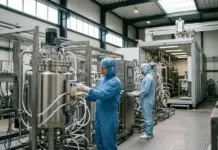
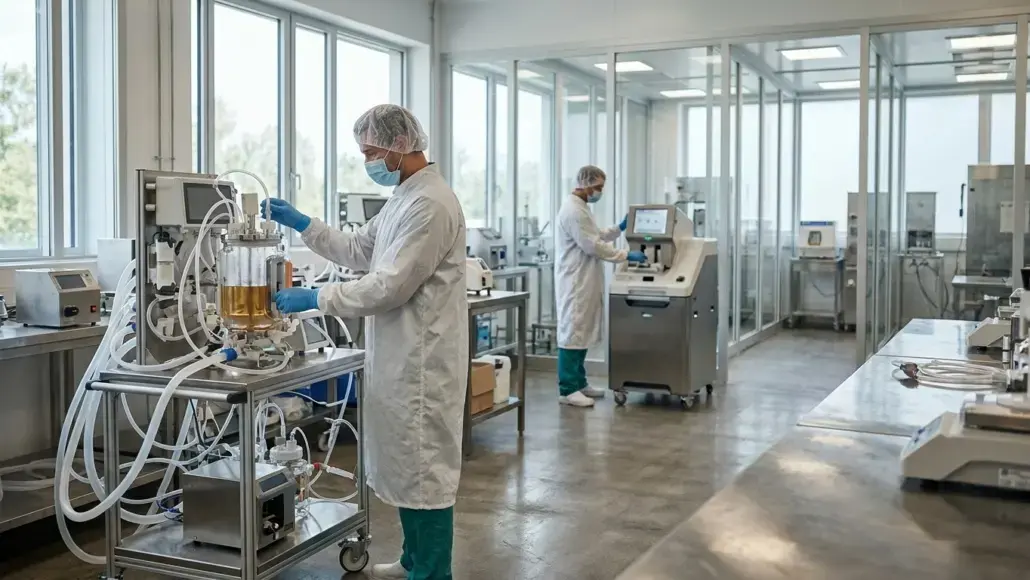
A cornerstone of the flexible manufacturing facility is the widespread adoption of Single-Use Technology (SUT). Traditional stainless-steel equipment requires extensive “clean-in-place” (CIP) and “steam-in-place” (SIP) procedures between batches, which can take days and require massive amounts of water and chemicals. SUT, consisting of disposable bioreactors, tubing, and bags, eliminates the need for these time-consuming steps. Once a batch is complete, the single-use components are simply disposed of and replaced with new, sterile ones. This drastically reduces changeover times, allowing a facility to switch between different products in a fraction of the time required by traditional plants.
Beyond speed, SUT facilitates the use of “closed systems,” where the product is never exposed to the external environment. This is particularly important for cell therapies, which cannot be terminally sterilized. In a flexible manufacturing facility, the use of closed, single-use systems allows for the “de-classification” of some areas. Processes that once required a Grade B cleanroom might now be performed in a Grade C or D environment because the product is safely contained within a sterile, disposable pathway. This reduction in the cleanroom footprint not only lowers operating costs but also provides even greater flexibility in how the space is used, as the physical barriers of the cleanroom become less of a constraint.
Modular Design: Building the Agile Factory
Flexible manufacturing facilities are increasingly being built using modular construction techniques. Instead of a single, monolithic building, these facilities are composed of pre-fabricated modules that are designed for specific functions such as cell expansion, viral vector production, or fill-finish operations. These modules can be added, removed, or rearranged as needed. This “Lego-like” approach to facility design allows companies to “scale out” by adding identical modules to increase capacity, rather than “scaling up” by building larger and more complex equipment.
Modular design also supports the “hub-and-spoke” model of manufacturing, which is highly relevant for cell therapies with short shelf lives. A company can deploy small, modular manufacturing units closer to major hospitals or treatment centers, reducing the logistical challenges of transporting live cells across long distances. These flexible manufacturing facilities are designed to be consistent and reproducible a module used in a clinical trial in Europe can be identical to one used for commercial production in the United States. This global consistency streamlines the regulatory approval process and ensures that patients receive a high-quality product regardless of where it is manufactured.
Optimizing Personnel and Digital Workflows
Flexibility is not just about the physical building it is also about the people and the digital systems that manage the process. In a flexible manufacturing facility, the workforce must be highly cross-trained and capable of pivoting between different products and technologies. The facility design must support this by providing clear, intuitive workflows and ergonomic workstations that can be adjusted for different tasks. Digitalization plays a crucial role here, with Manufacturing Execution Systems (MES) and Electronic Batch Records (EBR) providing the real-time guidance needed to manage complex, multi-product operations.
The digital layer of a flexible manufacturing facility allows for the rapid “onboarding” of new processes. Instead of rewriting thousands of pages of paper SOPs, engineers can update the digital workflow in the MES. This ensures that every step of the process is performed correctly and that all data is captured for compliance purposes. The integration of data from SUT sensors and automated equipment provides a level of process transparency that is essential for maintaining quality in a highly variable environment. Flexible manufacturing facilities are, by definition, “smart” facilities, where the physical and digital worlds are seamlessly integrated to support the needs of the patient.
Overcoming Regulatory and Operational Hurdles
While the benefits of flexible manufacturing facilities are clear, implementing them within the strict framework of GMP (Good Manufacturing Practice) requires careful planning. Regulators are increasingly supportive of flexibility, but they still require proof that a multi-product facility can prevent cross-contamination and maintain a validated state. This requires a robust contamination control strategy and a clear rationale for how the facility is managed. Companies must demonstrate that their cleaning protocols, air handling systems, and personnel flows are sufficient to protect each individual product.
Operational challenges also exist, particularly in the management of a complex supply chain. SUT requires a reliable supply of high-quality disposable components, and the facility must have adequate storage and disposal infrastructure to handle these materials. Furthermore, the increased complexity of managing multiple products and processes requires a high level of coordination between production, quality, and maintenance teams. However, for companies that can master these challenges, the reward is a manufacturing asset that is significantly more valuable and resilient than a traditional, single-purpose plant.
Conclusion: Enabling the Future of Medicine
The rise of cell and gene therapies represents one of the most exciting frontiers in modern medicine, offering hope for previously untreatable diseases. However, the success of these therapies depends on the industry’s ability to manufacture them safely, reliably, and at scale. Flexible manufacturing facilities supporting cell therapies are the answer to this challenge. By embracing modular design, single-use technology, and digital workflows, pharmaceutical companies can create the agile infrastructure needed to bring these revolutionary treatments to patients around the world. As the science of advanced therapies continues to evolve, the flexible facility will remain the essential platform for innovation, ensuring that the manufacturing floor can keep pace with the brilliance of the laboratory.
