













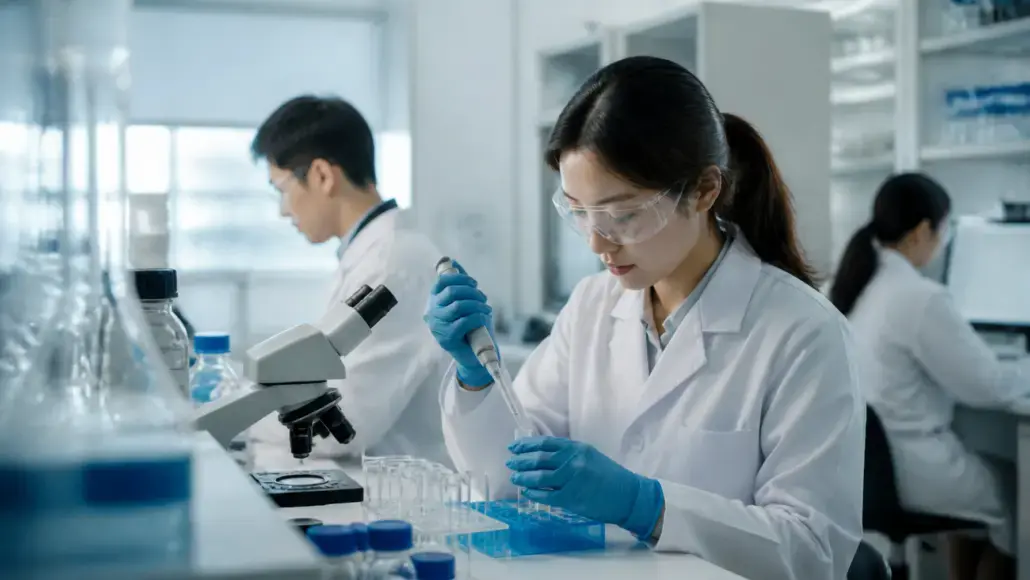
South Korea’s domestic pharmaceutical companies are increasing their research and development (R&D) investments in 2026, directing overseas earnings toward new drug development and the establishment of foundational capabilities. The latest figures show that research funding is becoming a major focus as companies strengthen their pipelines. According to the mid-year reports of the five major domestic pharmaceutical companies on the 20th August 2026, combined R&D expenditure during the first half of 2026 reached 562.8 billion Korean won. The amount represents a 16% increase from the same period in 2025, reflecting continued expansion in research funding across the industry.
Hanmi Pharmaceutical recorded the highest R&D spending among the five companies, investing 125.5 billion Korean won during the first half. Yuhan Corporation followed with 122.2 billion Korean won, while Daewoong Pharmaceutical spent 115.7 billion Korean won. Chong Kun Dang reported R&D expenditure of 113.5 billion Korean won, followed by GC Biopharma at 85.9 billion Korean won. The figures place the companies among the major domestic pharmaceutical firms increasing their research funding for new drug development.
Companies Advance New Drug Development
Hanmi Pharmaceutical is concentrating its development efforts on obesity treatments. The company plans to commercialize a customized obesity treatment for Koreans within this year, while also targeting 2031 for an obesity drug candidate substance designed to increase muscle mass.
Yuhan Corporation, following its lung cancer drug Leclaza, is working on candidate substances for allergy and metabolic dysfunction-associated steatohepatitis (MASH·fatty liver) treatments. The two programs entered Phase 2 and Phase 1 clinical trials in the first half of this year, respectively.
Daewoong Pharmaceutical is advancing a candidate substance for fibrosis treatment, with the goal of announcing Phase 2 clinical trial results next year and pursuing technology transfer, license out. Chong Kun Dang is conducting Phase 1 clinical trials for candidate substances targeting dyslipidemia (hyperlipidemia) and solid cancers.
Meanwhile, GC Biopharma is developing Aliglo, an immunodeficiency treatment, by moving from an intravenous injection formulation to a subcutaneous injection.
Overseas Revenue Supports R&D Expansion
Domestic pharmaceutical companies are accelerating new drug development by using cash cows (revenue sources) secured overseas. At the same time, the government’s move to lower the prices of generic drugs from this month is contributing to an industry-wide atmosphere that promotes new drug development.
