












The biopharmaceutical industry is navigating an era of unprecedented complexity and opportunity. As the focus shifts from blockbuster drugs toward personalized medicines and specialized biologics, the requirements for manufacturing infrastructure are undergoing a fundamental transformation. Traditional facilities, characterized by massive stainless-steel bioreactors and permanent piping, are often too rigid and capital-intensive to keep pace with modern scientific breakthroughs. In response, single use facility design has emerged as the preferred architectural and engineering approach for agile manufacturing. By leveraging disposable components and modular layouts, this design philosophy allows companies to rapidly adapt their production lines, minimize the risk of cross-contamination, and significantly reduce the time required to bring new therapies to the patients who need them.
The Architectural Shift from Permanent to Disposable
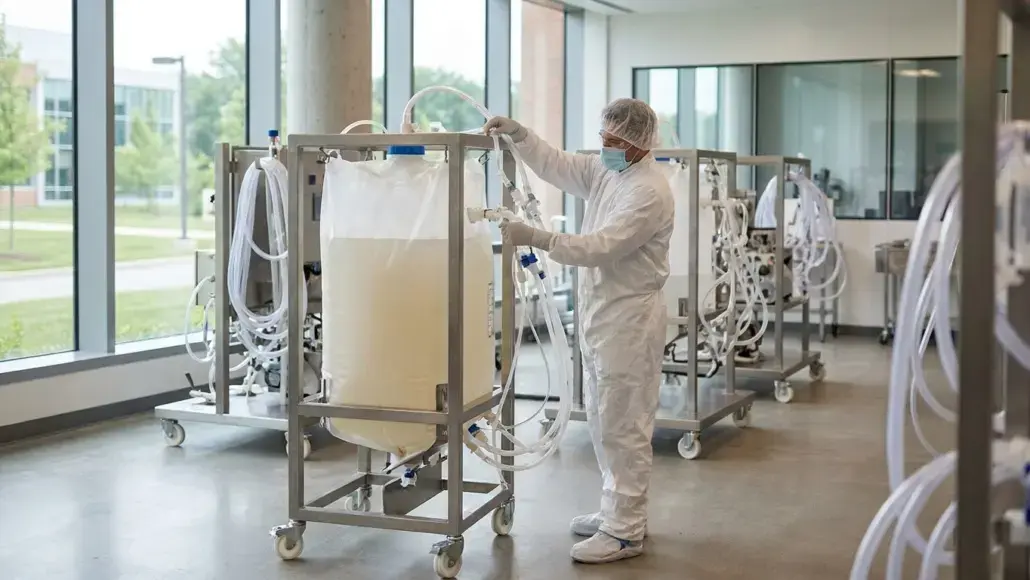
At its core, single use facility design represents a departure from the “fortress-like” construction of the past. Traditional facilities require extensive utilities steam for sterilization, massive quantities of high-purity water for cleaning, and complex drainage systems for chemical waste. A facility designed for single-use technology (SUT) has a much smaller utility footprint. Because components like bioreactor bags, tubing, and filters are disposed of after each batch, the need for Clean-in-Place (CIP) and Steam-in-Place (SIP) infrastructure is largely eliminated. This reduction in complexity allows for a “ballroom” design a large, open, classified space where equipment can be easily moved and reconfigured.
This architectural agility is enhanced by the use of “utility panels” located in the ceiling or along the walls. These panels provide “plug-and-play” access to power, gases, and digital networks, allowing manufacturing modules to be rearranged in hours rather than months. Single use facility design thus supports a dynamic manufacturing environment where the layout can be optimized for specific processes, from cell expansion to harvest and purification. This flexibility is essential for companies managing a diverse pipeline of products, as it ensures that the physical asset remains productive regardless of which therapeutic candidate moves forward.
Enhancing Biopharma Agility Through Reduced Changeover Times
The most immediate operational benefit of single use facility design is the drastic reduction in changeover times between product batches. In a stainless-steel facility, the transition between products can take days or even weeks, as every pipe and vessel must be meticulously cleaned and sterilized to prevent cross-contamination. This process is not only time-consuming but also requires extensive validation and environmental monitoring. In a single-use environment, the “cleaning” process is as simple as removing the used disposable set and installing a new, pre-sterilized one.
This efficiency gain is a key driver of biopharma agility. It allows companies to respond to market fluctuations or clinical trial data with minimal delay. For example, if a clinical trial requires an unexpected surge in production, a single-use facility can pivot almost immediately. Furthermore, the reduced changeover time allows for more frequent production runs of different products within the same facility, increasing the overall asset utilization. By decoupling the manufacturing process from the time-consuming constraints of permanent infrastructure, single use facility design empowers manufacturers to operate at the speed of modern science.
Mitigating Contamination Risks and Simplifying Validation
Sterility assurance is the absolute priority in biopharmaceutical manufacturing. Every connection, every valve, and every weld in a traditional system is a potential source of failure or microbial ingress. Single use facility design mitigates these risks by utilizing “closed systems” that are pre-sterilized and ready for use. These disposable systems are manufactured in controlled environments and often come with certificates of sterility, which simplifies the facility’s validation burden. Because the product is never exposed to the external environment, the risk of cross-contamination particularly in multi-product facilities is virtually eliminated.
The validation of a single-use facility is also more streamlined. Instead of validating complex CIP/SIP cycles and the cleanliness of permanent stainless-steel surfaces, the focus shifts to the qualification of the disposable components and the vendors who supply them. This “transfer” of validation responsibility from the manufacturer to the supplier is a significant factor in accelerating the path to GMP readiness. Single use facility design thus provides a more predictable and robust framework for compliance, allowing quality teams to focus on the integrity of the process rather than the maintenance of the infrastructure.
Financial Resilience and the Economics of Modularity
From a financial perspective, single use facility design offers a compelling alternative to traditional construction. The initial capital expenditure (CapEx) for a single-use plant is significantly lower, primarily because it avoids the costs of high-grade stainless steel and the associated utility systems. This lower barrier to entry is particularly important for smaller biotech firms and startups. Furthermore, the “modular” nature of SUT allows companies to scale their investment in capacity incrementally. A company can start with a small-scale clinical suite and then “scale out” by adding identical single-use modules as the product moves toward commercialization.
This reduction in capital risk is a major component of biopharma agility. In a world where drug development is fraught with uncertainty, the ability to build and commission a facility in 12 to 18 months compared to three to five years for a traditional plant is a game-changer. If a drug candidate fails to meet its clinical endpoints, the single-use equipment can often be repurposed or relocated, preserving the value of the investment. Single use facility design thus aligns the physical infrastructure of the company with its strategic and financial goals, providing a level of resilience that is impossible with static, permanent plants.
Sustainability and the Environmental Impact of Disposables
A common concern with single-use technology is the environmental impact of disposing of plastic components. However, when viewed through the lens of a full lifecycle assessment, single use facility design is often more sustainable than its stainless-steel counterpart. Traditional plants consume massive amounts of water and energy to generate the steam and chemicals needed for cleaning. They also produce significant volumes of wastewater that must be treated. In contrast, single-use facilities use up to 80% less water and 40% less energy over their operational lifecycle.
The industry is also making great strides in managing the waste stream from SUT. Many companies are implementing recycling programs where the plastic components are ground down and repurposed for other industrial uses, or utilized in “waste-to-energy” systems. When the reduction in water, chemicals, and energy is factored in, the environmental footprint of a single-use facility is often significantly lower than that of a traditional plant. As the pharmaceutical industry strives to meet ambitious Net Zero goals, single use facility design provides a practical path toward more sustainable manufacturing.
Conclusion: Designing for the Future of Bioprocessing
The move toward single use facility design is more than a trend it is a fundamental reconfiguration of the biopharmaceutical landscape. By prioritizing flexibility, speed, and sterility assurance, this design philosophy provides the infrastructure backbone needed to support the next generation of medical breakthroughs. As the industry continues to embrace personalized medicine and accelerated approval pathways, the ability to rapidly deploy and scale manufacturing capacity will be the defining factor in success. Single use facility design supporting biopharma agility is the key to ensuring that the manufacturing floor is as innovative as the laboratory, delivering high-quality therapies to patients with unprecedented speed and reliability.
