


















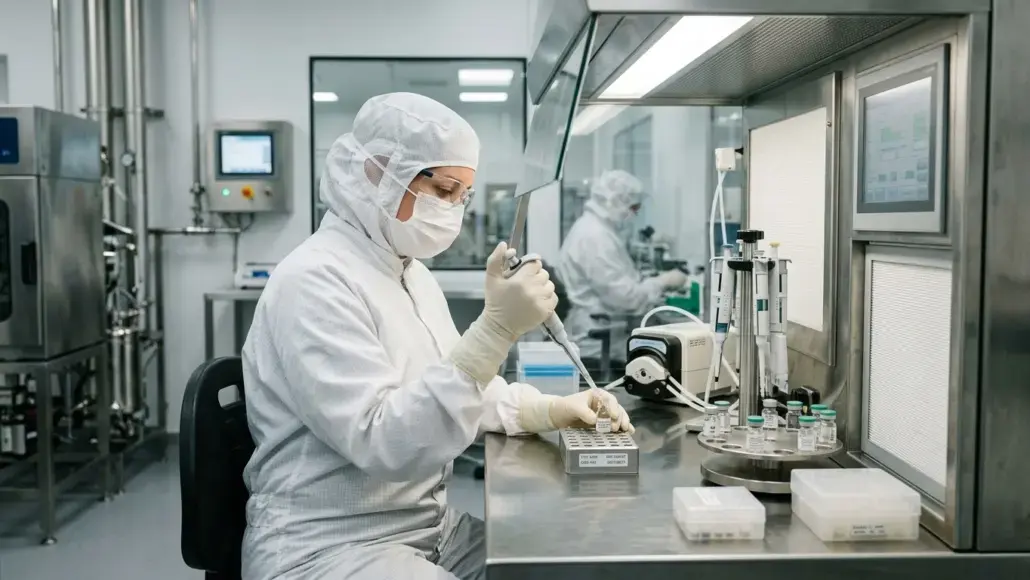
The pharmaceutical industry has spent decades perfecting the art of mass production. High-speed filling lines, capable of processing hundreds of vials per minute, have long been the gold standard for vaccines, small molecules, and recombinant proteins. However, the emergence of ‘living drugs’—cell and gene therapies (CGT) that consist of viable biological material—has fundamentally challenged this paradigm. Unlike conventional drugs, which are chemically stable and relatively robust, living drugs are incredibly sensitive to environmental stressors. To protect the integrity and potency of these transformative treatments, the industry must move away from the rigid, high-speed models of the past and embrace advanced fill-finish solutions that prioritize precision, safety, and a gentle touch.
Pharma Advancement notes that the transition to advanced fill-finish solutions is driven by the unique physical and biological properties of cell-based therapies. These products are often the result of weeks of complex manufacturing and are produced in very small volumes, sometimes just a few vials per patient. In this context, every microliter of the drug is precious. The mechanical forces exerted by a traditional high-speed filling line—such as the rapid movement of vials, the shear stress from pumping systems, and the potential for temperature fluctuations—can be fatal to the living cells. For these therapies, the finish line of the manufacturing process is not just about getting the product into a bottle. It is about ensuring that the cells remain viable and functional when they reach the patient.
The Vulnerability of Living Drugs to Environmental Stress
Living drugs are inherently fragile. Whether they are autologous CAR-T cells derived from a patient’s own blood or allogeneic therapies grown from donor cells, they are highly susceptible to changes in their surroundings. Temperature excursions, even for a few minutes, can trigger cellular death or lead to a loss of potency. Similarly, exposure to light or changes in pH can compromise the therapeutic effect. Traditional filling environments, which often involve large, open cleanrooms and manual interventions, pose a significant risk to these delicate products. Advanced fill-finish solutions address these challenges by creating a highly controlled, closed environment that shields the product from external influences.
In an advanced system, the entire filling process—from the moment the bulk drug leaves the formulation tank to the point where the vial is sealed—is handled within a sterile, closed loop. This minimizes the risk of microbial contamination and prevents the product from being exposed to the ambient environment. Furthermore, advanced fill-finish solutions utilize gentle pumping mechanisms, such as peristaltic pumps, which move the cells through the system without subjecting them to the high shear forces found in traditional piston-driven pumps. This level of mechanical sensitivity is essential for maintaining the health of the living active ingredient throughout the final stages of production.
Aseptic Integrity in the Absence of Final Sterilization
One of the most critical challenges in the production of living drugs is the requirement for absolute sterility. For conventional pharmaceuticals, manufacturers often rely on terminal sterilization—such as heating the product or exposing it to gamma radiation—to ensure that it is free of contaminants. However, living drugs cannot be terminally sterilized; any process that kills bacteria would also kill the therapeutic cells. As a result, the entire manufacturing process, and particularly the fill-finish stage, must be conducted under strictly aseptic conditions. Advanced fill-finish solutions provide the necessary infrastructure to maintain this integrity through the use of isolator technology and robotic automation.
Isolators are self-contained, sterile environments that provide a physical barrier between the product and the human operators. By moving the filling process inside an isolator, manufacturers can achieve a Grade A (ISO 5) cleanliness level with a much lower risk of contamination compared to traditional cleanrooms. When combined with robotic arms that handle the vials and stoppers, the need for human intervention is virtually eliminated. This is a core component of advanced fill-finish solutions, as human operators are the primary source of contamination in pharmaceutical environments. By removing the human factor, manufacturers can guarantee the aseptic integrity of every dose, ensuring that the final product is safe for infusion into patients with compromised immune systems.
Precision Over Speed: Redefining Success in CGT Filling
In the world of cell and gene therapy, the metrics for success are different. Raw speed is no longer the primary goal; instead, the focus is on accuracy, yield, and viability. Traditional filling lines are designed to handle millions of identical units, but CGT facilities often handle many small, disparate batches. A single facility might process a dozen different patient therapies in a single day, each requiring its own unique container and label. To manage this complexity, advanced fill-finish solutions utilize modular, flexible platforms that can be rapidly reconfigured for different products and formats.
This flexibility allows manufacturers to switch between vials, syringes, and bags with minimal downtime, making it possible to serve a diverse pipeline of therapies on a single line. Furthermore, advanced fill-finish solutions often feature check-weighing systems that measure the weight of every individual vial before and after filling. This ensures that every patient receives the exact dose prescribed, with zero waste. In a field where the starting material is limited and the cost of production is high, the precision offered by these systems is not just a luxury—it is a financial and clinical necessity. The ability to achieve 100% yield from a small clinical batch is one of the most significant benefits of investing in modern filling technology.
The Rise of Robotic Automation and Digital Integration
The future of fill-finish is undeniably robotic. Advanced fill-finish solutions are increasingly incorporating sophisticated robotic systems that can perform complex tasks with a degree of precision that far exceeds human capabilities. These robots can handle delicate glass vials without breakage, place stoppers with exact pressure, and even apply labels with perfect alignment. Beyond physical handling, these systems are also integrated with digital monitoring tools that provide a continuous stream of data on the environment and the process.
This digital integration allows for real-time monitoring, where every parameter—from the temperature of the cooling block to the speed of the conveyor belt—is tracked and recorded. If a parameter drifts outside the acceptable range, the system can automatically adjust itself or pause the process to prevent a batch failure. This level of oversight is a key feature of advanced fill-finish solutions, providing the detailed documentation required for regulatory compliance and quality assurance. As the industry moves toward Industry 4.0, the marriage of robotics and data will be the driving force behind the next generation of sterile filling operations.
Future-Proofing for a Changing Therapeutic Landscape
As the field of regenerative medicine continues to evolve, the requirements for fill-finish will become even more complex. We are already seeing the emergence of new therapeutic formats, such as tissue-engineered products and large-volume cell suspensions, that will require entirely new filling strategies. To stay ahead of these trends, manufacturers must invest in advanced fill-finish solutions that are not only effective for today’s products but also adaptable for the innovations of tomorrow.
The modular nature of modern filling platforms means that new technologies—such as laser-based vial sealing or rapid sterility testing—can be integrated into existing lines as they become available. This future-proofing is essential for companies that are building their long-term manufacturing infrastructure. By choosing advanced fill-finish solutions that are designed for flexibility and scalability, biopharma firms can ensure that they are ready to meet the needs of patients, no matter how the science of living drugs changes. In the end, the goal is to create a filling process that is as innovative and reliable as the therapies themselves.
Conclusion: Safeguarding the Patient Promise
The final step of the manufacturing process is often the most overlooked, yet it is arguably the most critical. No matter how advanced the science behind a cell or gene therapy may be, it is useless if it is not delivered to the patient in a safe, sterile, and potent condition. Advanced fill-finish solutions provide the necessary safeguard for these living medicines, ensuring that the years of research and weeks of manufacturing are not undone in the final minutes of production. By prioritizing precision, aseptic integrity, and mechanical sensitivity, the industry is proving its commitment to the highest standards of patient care.
As we look to the future, Pharma Advancement believes that the adoption of these advanced systems will be a defining characteristic of successful biopharmaceutical companies. The ability to handle small volumes with high precision and absolute sterility will be the new normal for a sector that is increasingly focused on personalized medicine. Through the continued development and implementation of advanced fill-finish solutions, we are not just filling vials. We are protecting hope and ensuring that the promise of living drugs is realized for every patient who needs them. The finish line has never been more important.
