



















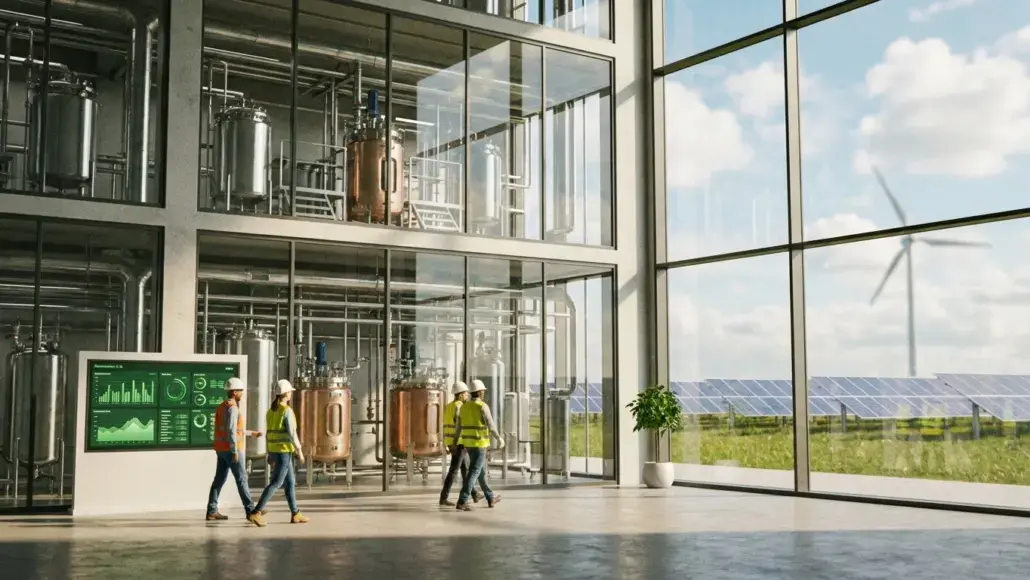
The pharmaceutical industry has long been recognized for its role in improving global health, but it is now facing a new and urgent mandate: improving the health of the planet. Historically, pharmaceutical manufacturing has been an energy-intensive and carbon-heavy endeavor, driven by the need for ultra-clean environments, precise temperature controls, and complex chemical processes. However, as the world moves toward a Net Zero future, the industry is undergoing a profound transformation. Pharma facility decarbonization is no longer a peripheral corporate social responsibility (CSR) initiative it is a central strategic priority, driven by investor pressure, regulatory mandates, and a genuine commitment to sustainability. By reimagining how facilities are designed, powered, and operated, the pharmaceutical sector is proving that it is possible to maintain the highest levels of GMP compliance while significantly reducing its environmental footprint.
The Strategic Importance of the Decarbonization Roadmap
For a pharmaceutical company, the path to Net Zero begins with a comprehensive decarbonization roadmap. This is a multi-year strategy that identifies the primary sources of greenhouse gas (GHG) emissions classified into Scope 1 (direct emissions from owned sources), Scope 2 (indirect emissions from purchased energy), and Scope 3 (indirect emissions in the value chain). Because facilities are the largest contributors to Scope 1 and 2 emissions, they are the natural focus of decarbonization efforts. Pharma facility decarbonization starts with a rigorous audit of energy use, water consumption, and waste generation, providing the data needed to set ambitious but achievable targets.
This roadmap must be integrated into the core business strategy. Investors are increasingly looking at Environmental, Social, and Governance (ESG) metrics when making decisions, and a robust decarbonization plan is a key indicator of long-term corporate resilience. Furthermore, governments around the world are implementing carbon taxes and stricter environmental regulations, making decarbonization an economic necessity. By taking a proactive approach to pharma facility decarbonization, companies can hedge against rising energy costs, avoid regulatory penalties, and enhance their reputation with patients, healthcare providers, and employees who increasingly value sustainability.
Electrification and the Shift to Renewable Energy
The most significant lever in pharma facility decarbonization is the transition away from fossil fuels. Traditionally, pharmaceutical plants have relied on natural gas boilers to generate the clean steam and hot water needed for sterilization and space heating. Modern decarbonization strategies focus on the “electrification” of these processes, replacing gas-fired equipment with high-efficiency industrial heat pumps. These systems can capture waste heat from other parts of the facility such as the cooling loops of a chiller and repurpose it for heating, creating a much more efficient and carbon-neutral energy cycle.
To achieve Net Zero, this electrification must be coupled with a shift to 100% renewable electricity. Many pharmaceutical companies are achieving this through Power Purchase Agreements (PPAs) for off-site wind and solar energy, or by installing massive solar arrays directly on their facility rooftops and grounds. Furthermore, the integration of on-site energy storage, such as large-scale battery systems, allows facilities to maintain a reliable power supply even with intermittent renewable sources. This transition to a “green” energy backbone is a cornerstone of pharma facility decarbonization, drastically reducing the Scope 2 footprint of the manufacturing process.
Optimizing HVAC Systems for Efficiency and Resilience
Heating, Ventilation, and Air Conditioning (HVAC) systems are the single largest energy consumers in a pharmaceutical facility, often accounting for more than 60% of total energy use. This is due to the strict requirements for air change rates and pressure differentials in cleanrooms. Pharma facility decarbonization thus requires a sophisticated approach to HVAC optimization. One of the most effective strategies is the use of “demand-controlled ventilation,” where air change rates are adjusted in real-time based on the actual particle load and occupancy of the room. By running the system only as much as needed to maintain compliance, manufacturers can achieve massive energy savings.
Additionally, the use of high-efficiency energy recovery wheels can capture the energy from exhaust air to pre-condition the incoming fresh air, reducing the load on chillers and boilers. These technical interventions must be supported by digital twins and real-time monitoring platforms that allow engineers to visualize energy flows and identify “hot spots” of inefficiency. In a decarbonized facility, the HVAC system is no longer a static utility it is a dynamic, intelligent system that balances the need for sterility with the imperative for sustainability. Pharma facility decarbonization is, at its heart, an engineering challenge that requires the integration of advanced controls and innovative design.
Reducing the Environmental Footprint of Chemical Processes
While energy use is a major focus, pharma facility decarbonization also addresses the carbon footprint of the manufacturing processes themselves. Many chemical synthesis steps are energy-intensive and produce significant amounts of waste. The industry is increasingly adopting “Green Chemistry” principles to design processes that use less hazardous chemicals, require less energy, and generate fewer byproducts. This might involve the use of biocatalysts (enzymes) instead of traditional chemical catalysts, which can operate at lower temperatures and pressures.
The shift toward continuous manufacturing also plays a role in decarbonization. Unlike traditional batch manufacturing, which requires massive vessels and extensive cleaning between runs, continuous manufacturing is a more compact and efficient process. It requires less floor space, which translates to smaller cleanrooms and lower HVAC loads. Furthermore, the precise control allowed by continuous manufacturing reduces the likelihood of failed batches and material waste. By integrating these process innovations into the facility design, companies can achieve deeper levels of decarbonization while improving their overall manufacturing productivity.
Managing the Value Chain: Tackling Scope 3 Emissions
While the facility itself is the focus of Scope 1 and 2 efforts, true Net Zero cannot be achieved without addressing Scope 3 emissions the carbon footprint of the suppliers and partners who provide raw materials, packaging, and logistics. Pharma facility decarbonization efforts are increasingly extending beyond the factory walls. Companies are working with their vendors to ensure that the materials they buy are produced sustainably. This might involve using recycled packaging materials, optimizing transport routes to reduce fuel consumption, or requiring suppliers to commit to their own decarbonization goals.
The “circular economy” is a key concept in managing Scope 3 emissions. Instead of a “take-make-dispose” model, pharmaceutical companies are looking for ways to reuse and recycle materials. For example, the plastic components from single-use systems can be ground down and used as fuel in waste-to-energy plants, or even recycled into non-medical industrial products. By viewing the facility as part of a larger, interconnected ecosystem, pharma companies can drive decarbonization across their entire value chain. This holistic approach is essential for meeting the ambitious Net Zero targets that the industry has set for itself.
Conclusion: A Greener Future for Healthcare
The journey toward a Net Zero pharmaceutical industry is a complex and long-term endeavor, but the momentum is undeniable. Pharma facility decarbonization is the engine of this transition, providing the practical, engineering-led solutions needed to reduce the industry’s environmental impact without compromising on patient safety. By embracing electrification, renewable energy, HVAC optimization, and green chemistry, the pharmaceutical sector is proving that it can be a leader in the global fight against climate change. As we look to the future, the “sustainable facility” will be the new standard for excellence, demonstrating that the pursuit of health must include the protection of the planet. Through innovation and commitment, the pharmaceutical industry is driving toward a future where every life-saving medicine is produced in a way that is as clean as the air in its own cleanrooms.
