



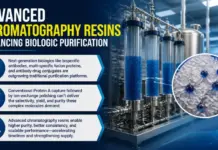


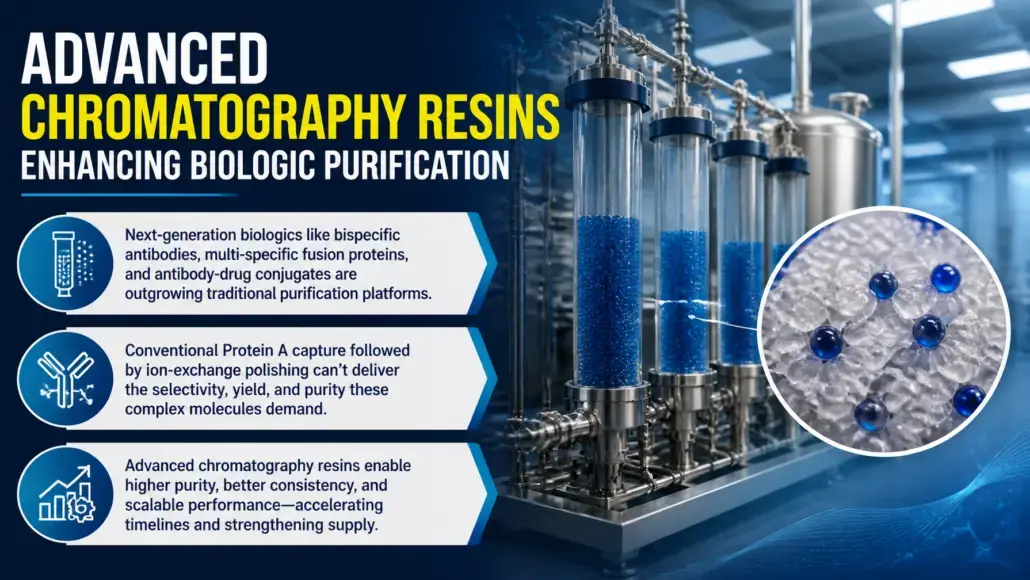
Commercial biopharmaceutical downstream processing is facing acute operational bottlenecks as complex next-generation therapeutic modalities outgrow traditional purification platforms. For over two decades, the biomanufacturing industry relied on standardized platform approaches for conventional monoclonal antibodies, utilizing Protein A affinity capture followed by ion-exchange polishing. However, the commercial ascendance of bispecific antibodies, multi-specific fusion proteins, antibody-drug conjugates, and viral vectors has shattered these legacy assumptions. Upstream bioreactor titers routinely reach six to ten grams per liter, shifting production costs and operational constraints directly into downstream harvest and chromatography suites. In response, biomanufacturers are scaling advanced chromatography resins engineered with tailored surface chemistries, macroporous bead architectures, and engineered affinity ligands to preserve resolution at high throughput.
Next-generation biologics exhibit structural heterogeneity that strains standard chromatography media. Bispecific formats, for instance, generate mispaired homodimer variants, light-chain mispairings, and fragmented species that share nearly identical physical and chemical profiles with the target heterodimer. Conventional chromatography matrices frequently fail to resolve these closely related impurities without suffering severe yield losses. Furthermore, high-titer crude harvests load heavy concentrations of host cell proteins, chromatin fragments, and high-molecular-weight aggregates onto columns, causing premature fouling and driving up resin replacement expenses. Modern resin design addresses these vulnerabilities through sophisticated matrix engineering and high-affinity ligand chemistry.
Next-Generation Affinity Ligands and Alkaline Durability
The core capture step for antibody-based therapeutics continues to rely heavily on Protein A affinity chromatography, but the ligands themselves have undergone radical structural modification. Genetic engineering and computational directed evolution have produced synthetic and recombinant Protein A variants that offer unprecedented operational resilience and binding efficacy.
Key performance characteristics engineered into these modern affinity resins include:
- Dynamic binding capacities exceeding seventy to eighty grams of monoclonal antibody per liter of resin at residence times under four minutes.
- Exceptional alkaline stability tolerating routine sanitization with zero point five to one molar sodium hydroxide across hundreds of cleaning-in-place cycles.
- Tailored elution profiles operating at milder acidic conditions between pH 3.8 and 4.2, preventing acid-induced aggregation of vulnerable multi-specific architectures.
- Engineered multivalent ligand orientations that eliminate steric hindrance and maximize functional surface utilization across internal bead pore networks.
- Low ligand-leaching rates that minimize downstream contamination and streamline subsequent polishing and clearance steps.
Extending the functional lifespan of affinity resins generates compelling cost reductions. Protein A media represents one of the most expensive raw material expenditures in downstream bioprocessing, often costing thousands of dollars per liter. By engineering alkaline-tolerant mutations into the B-domain of Protein A, resin manufacturers allow bioprocess teams to deploy aggressive sodium hydroxide sanitization protocols that completely eradicate microbial bioburden and stripped foulants without degrading ligand binding affinity. Consequently, single chromatography resin batches routinely survive well over two hundred purification cycles without loss of dynamic binding capacity, cutting raw material costs per gram of purified active product.
Multimodal Matrices and Separation of Closely Related Variants
Downstream polishing steps increasingly depend on mixed-mode or multimodal chromatography to remove subtle product-related impurities that evade standard ion exchange or hydrophobic interaction media. Multimodal chromatography resins incorporate functional ligands that present multiple modes of interaction simultaneously, typically pairing electrostatic charge groups with hydrophobic or hydrogen-bonding moieties.
Operational and separation advantages delivered by multimodal polishing matrices include:
- High salt tolerance enabling direct column loading of high-conductivity harvest streams without requiring costly dilution tanks or buffer exchange steps.
- High-resolution separation of bispecific heterodimers from homodimer impurities based on localized hydrophobic patch variations.
- Simultaneous clearance of high-molecular-weight aggregates, residual host cell DNA fragments, and host cell protein complexes in a single chromatography cycle.
- Broad operational windows accommodating wide variations in mobile phase conductivity and pH without suffering capacity collapse.
- Dual-action flow-through polishing modes that bind trace impurities while allowing the target therapeutic biologic to pass unhindered with yields exceeding ninety-five percent.
These multimodal surface chemistries prove especially valuable for clearing challenging host cell protein species that hitchhike on therapeutic antibodies through weak non-specific associations. By exerting multiple simultaneous interaction forces, multimodal resins break these weak secondary complexes, capturing trace impurities firmly while allowing the purified biotherapeutic to elute cleanly.
Macroporous Bead Architectures for Large Macromolecular Vectors
The rapid expansion of cell and gene therapies has exposed the physical limitations of conventional chromatography beads, which were optimized primarily for compact fifty-to-one-hundred-and-fifty kilodalton proteins. Adeno-associated virus vectors, lentivirus capsids, lipid nanoparticles, and messenger RNA molecules are substantially larger macromolecular structures, with hydrodynamic diameters ranging from twenty to several hundred nanometers. When applied to standard porous beads, these large therapeutic particles cannot access internal pore volumes, resulting in severe steric exclusion and dynamic binding capacities dropping below five percent of nominal values.
To overcome these mass transfer constraints, advanced chromatography resins feature specialized physical architectures:
- Gigaporous and macroporous polymeric matrices with mean pore diameters exceeding one hundred to three hundred nanometers, enabling unhindered convective mass transfer of viral vectors.
- Hydrogel-filled porous composite beads that combine structural mechanical rigidity with high-density, three-dimensional functional ligand networks.
- Monolithic continuous separation media constructed from single-piece cross-linked polymer blocks, completely eliminating void volumes and providing flow-rate-independent resolution.
- Engineered single-domain camelid antibody fragment ligands that specifically recognize intact capsid surface epitopes to differentiate between full, partial, and empty viral particles.
Resolving full viral capsids containing therapeutic genetic payloads from empty or partially packaged capsids remains one of the most formidable analytical and preparative challenges in gene therapy manufacturing. Advanced anion-exchange resins engineered with quaternary amine surface chemistries and optimized surface charge densities exploit minute isoelectric point differences between full and empty capsids, allowing gene therapy producers to achieve high-resolution gradient elution that dramatically enriches full-capsid ratios in final drug lots.
Continuous Multi-Column Chromatography and Process Intensification
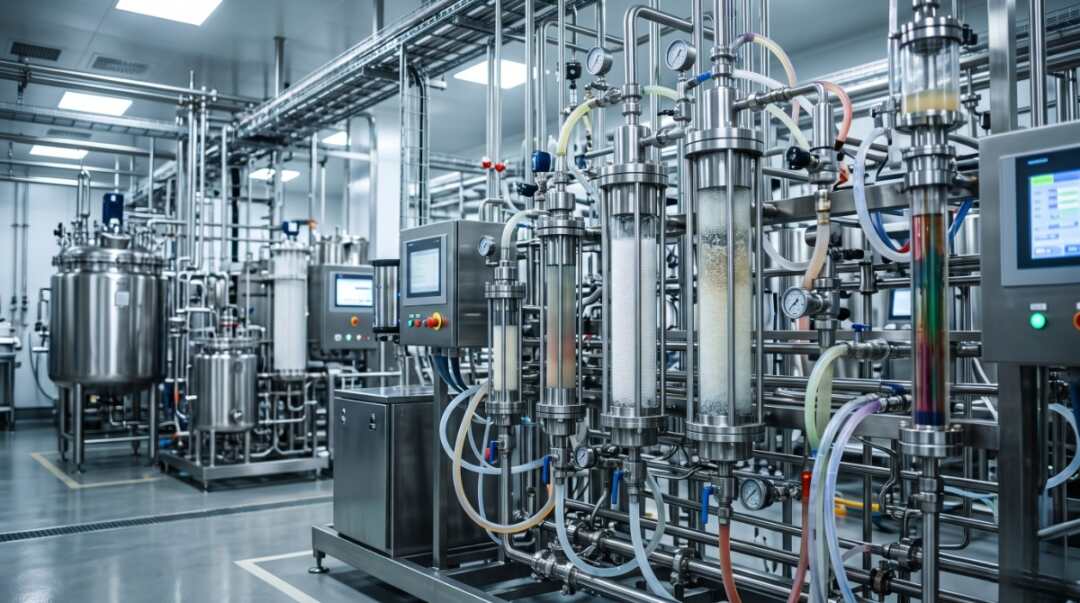
Downstream processing is increasingly converging with upstream continuous perfusion through the deployment of multi-column chromatography systems. Conventional batch chromatography leaves large portions of resin capacity underutilized during loading to prevent product breakthrough before column saturation occurs. In contrast, continuous chromatography platforms, such as periodic counter-current chromatography and multi-column simulated moving bed systems, link multiple smaller columns in series.
In these continuous multi-column setups, the primary column is loaded past its dynamic breakthrough threshold, allowing escaping product to be captured instantly on a secondary connected column. This operational intensification maximizes resin utilization, reduces buffer consumption by up to fifty percent, and shrinks required column diameters from meters to centimeters.
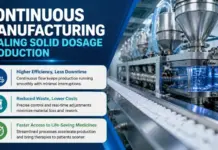
This transition toward multi-column continuous chromatography in downstream bioprocessing directly parallels the broader shift toward continuous pharmaceutical manufacturing for complex small molecules, demonstrating how real-time process analytics and automated fluid diversion are redefining efficiency standards across both chemical and biological drug production. By synchronizing continuous multi-column chromatography with continuous viral inactivation and flow-through polishing, biomanufacturers are building unified, end-to-end continuous bioprocessing plants.
As biopharmaceutical pipelines diversify into structurally demanding modalities, Pharma Advancement believes that downstream purification platforms can no longer rely on legacy platform chromatography. Advanced chromatography resins provide the binding capacity, selectivity, and mechanical durability required to resolve complex molecular variants, protect drug yields, and deliver safe, accessible biotherapeutics to patients worldwide.
