






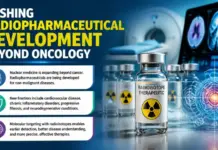











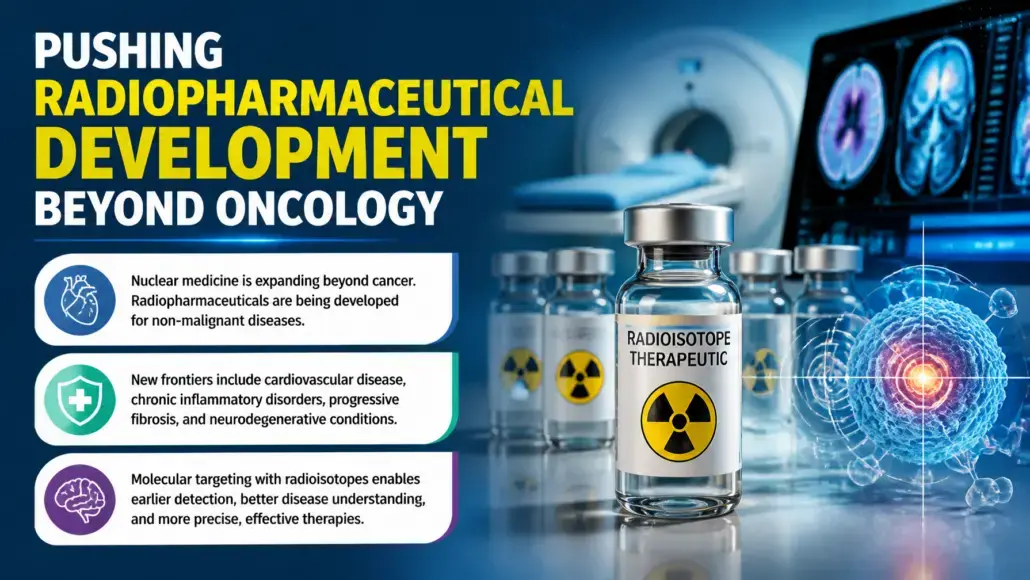
Nuclear medicine is breaking out of its historical containment within tumor biology. While commercial attention has centered on blockbuster radioligand therapies for metastatic prostate cancer and neuroendocrine malignancies, biopharmaceutical enterprises are directing radioisotope targeting vehicles toward non-malignant disease areas. Cardiovascular pathology, chronic inflammatory disorders, progressive tissue fibrosis, and neurodegenerative decline represent expanding frontiers where molecularly targeted radiation can provide localized cellular modulation and quantitative biological mapping.
This strategic expansion reflects a fundamental realization across global drug development pipelines. Pathophysiological drivers such as activated fibroblasts, hyper-reactive macrophages, pathological protein aggregates, and neovascularization are not exclusive to malignant neoplasms. Pharma Advancement observes that by exploiting the same precision targeting principles that define modern theranostics, pharmaceutical teams are engineering isotope-ligand constructs capable of diagnosing and intervening in chronic organ destruction before irreversible structural failure occurs.
Clinical Expansion Into Fibrotic and Cardiovascular Pathologies
Tissue fibrosis across major organs remains an intractable cause of global mortality. Cardiac fibrosis, idiopathic pulmonary fibrosis, and chronic renal scarring involve persistent activation of pathological fibroblasts. Rather than relying on non-specific systemic immunosuppressants, researchers are targeting fibroblast activation protein, an enzyme abundantly expressed by pathologically active fibroblasts but minimally present in quiescent adult tissues.
Quantitative imaging agents targeting fibroblast activation protein have shown the ability to identify subclinical cardiac remodeling and active myocardial scarring following ischemic events. Delivering diagnostic radioisotopes such as gallium-68 or fluorine-18 allows clinicians to visualize ongoing active collagen deposition in real time, differentiating active fibrogenesis from stable fibrous tissue.
Therapeutic intervention follows diagnostic identification. In preclinical and exploratory translational studies, low-dose radioligand delivery targeting fibroblast activation protein has demonstrated the capacity to deplete hyperactive fibroblast populations selectively. This targeted depletion halts excessive extracellular matrix deposition without impairing baseline structural homeostasis.
Cardiovascular amyloidosis represents another critical arena where radiopharmaceutical agents are reshaping clinical pathways. Transthyretin amyloid cardiomyopathy often went undetected until terminal heart failure developed. Bone-seeking radiotracers labeled with technetium-99m now provide definitive non-invasive identification of myocardial amyloid deposits, enabling early pharmacological stabilization and monitoring of disease progression.
Targeting Chronic Inflammation and Autoimmune Disorders
Systemic autoimmune and inflammatory disorders present biological targets where focal cellular ablation and molecular tracking can redefine clinical outcomes. Synovial inflammation in rheumatoid arthritis, mucosal immune activation in inflammatory bowel disease, and chronic vascular inflammation in large-vessel vasculitis feature dense infiltrations of activated immune subsets.
Macrophage-targeted radiopharmaceuticals illustrate the potential of precision molecular targeting in chronic inflammation:
- Folate receptor beta targeting constructs selectively deliver diagnostic and therapeutic isotopes to pro-inflammatory M1 macrophages while bypassing resting immune populations.
- Somatostatin receptor targeting peptides, historically refined for neuroendocrine oncology, bind active inflammatory immune cells to quantify chronic vascular wall inflammation in atherosclerosis.
- Chemokine receptor ligands, particularly those targeting CXCR4, identify active leukocyte recruitment sites across vulnerable atherosclerotic plaques and inflamed synovial compartments.
- Translocator protein tracers crossing the blood-brain barrier identify focal neuroinflammatory microglia activation in neurodegenerative disorders such as multiple sclerosis and Alzheimer’s disease.
Selective irradiation of localized inflammatory sites through short-range radioisotopes offers a therapeutic alternative for refractory localized autoimmune disease. Synovectomy using targeted beta-emitting or alpha-emitting colloids delivers localized cytoreduction to diseased synovial linings, reducing joint destruction while avoiding the systemic toxicities of prolonged immunosuppression.
Overcoming Biological and Logistical Translation Hurdles
Translating radiopharmaceuticals into non-malignant clinical indications demands different regulatory and pharmacological thresholds than those established in late-stage oncology. Tolerability parameters for chronic non-cancer conditions are exceptionally stringent, requiring strict limitation of off-target radiation exposure.
Dosimetric considerations represent the primary pharmacological challenge. In oncology, bone marrow toxicity and modest renal radiation absorption are often deemed acceptable trade-offs against fatal malignant progression. In chronic inflammatory, metabolic, or cardiovascular diseases, radiation absorbed by kidneys, salivary glands, and bone marrow must be kept negligible over multi-year patient management horizons.
Pharmacokinetic optimization addresses these safety requirements:
- Rapid systemic clearance ensures that unbound radioligands are swiftly eliminated through the urinary tract before accumulating in radiosensitive parenchymal tissues.
- Pre-targeting strategies separate the target-recognition ligand from the radioactive payload, allowing non-radioactive targeting molecules to localize at disease sites before a clearing radiolabeled effector is administered.
- Shorter-lived radioisotopes such as fluorine-18 for imaging and lead-212 or copper-67 for therapeutics provide concentrated localized biological activity while minimizing prolonged patient exposure.
- Protective nephroprotective infusions and cleavable linkers promote accelerated renal elimination of radioactive catabolites, preserving long-term glomerular and tubular function.

Supply chain and logistical constraints present another operational obstacle. Radiopharmaceuticals depend on strict decay half-lives, requiring tight coordination between radioisotope production reactors, radiochemistry facilities, and regional administration clinics. Expanding treatment sites beyond specialized cancer centers into cardiology, rheumatology, and neurology suites requires expanded radiation safety handling protocols and decentralized distribution hubs.
As clinical researchers optimize targeting molecules for non-cancerous indications, their parallel efforts in isotope selection closely mirror how alpha-emitter therapies are setting higher benchmarks for localized cellular ablation. High linear energy transfer isotopes deliver concentrated cytotoxic effects within microscopic radii, creating unique opportunities to modify localized pathogenic cell clusters without irradiating surrounding healthy tissue.
The clinical validation of non-oncology radiopharmaceuticals will depend on well-designed multi-center trials demonstrating clear clinical utility over existing systemic biologics and small molecules. By linking non-invasive quantitative molecular imaging with targeted therapeutic radioisotopes, clinicians can identify which patients exhibit active pathological processes and monitor therapeutic response objectively at the molecular level.
Regulatory Paradigms and Market Evolution
Health authorities are adapting regulatory assessment frameworks to accommodate theranostic pairings in chronic non-malignant disorders. Regulatory agencies require validated surrogate endpoints that link molecular tracer uptake to meaningful functional recovery in organ performance.
Standardized imaging quantification is becoming a requirement in clinical protocol design. Standardized uptake values derived from targeted positron emission tomography scans provide reproducible measurements of target density, allowing investigators to stratify patient cohorts and confirm target engagement before initiating therapeutic dosing.
Health economics will play a decisive role in reimbursement approvals across private and national healthcare systems. Demonstrating that a single or limited-course radiopharmaceutical intervention can arrest progressive organ fibrosis, prevent end-stage renal replacement therapy, or avert heart transplantation provides a compelling value proposition against lifelong administration of expensive systemic biologics.
Pharma Advancement notes that the future of radiopharmaceutical therapeutics lies in precise molecular intervention across organ systems. As targeting biology diversifies and isotope supply chains mature, targeted radioligands will take their place alongside small molecules and monoclonal antibodies as foundational tools in the treatment of chronic degenerative diseases.
