

















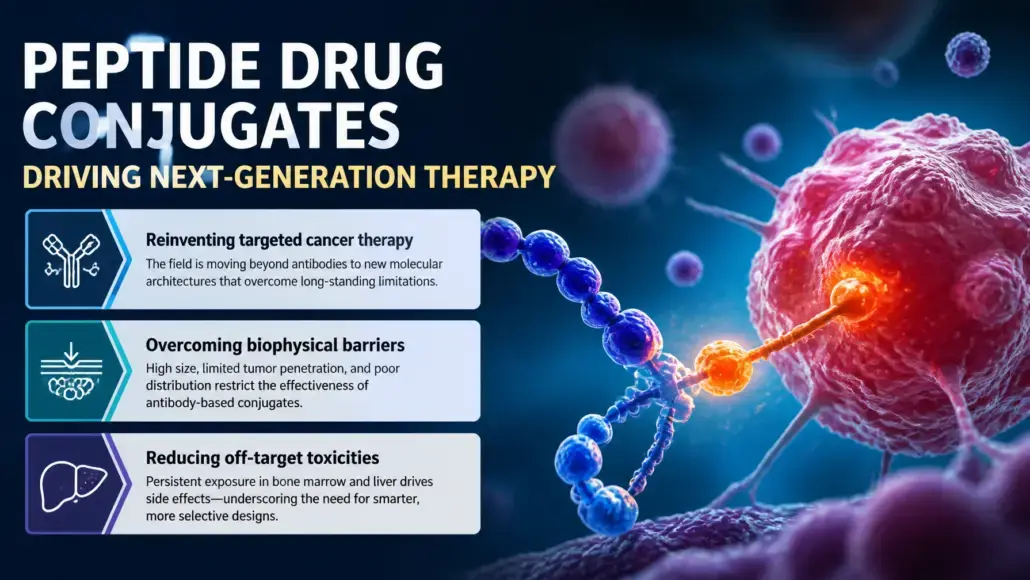
Targeted cancer therapeutics are entering an era of structural reinvention. While antibody-drug conjugates established multi-billion-dollar commercial success by linking cytotoxic payloads to monoclonal antibodies, their clinical utility is frequently bounded by fundamental biophysical constraints. High molecular weight, slow extravasation into dense tumor stroma, persistent bone marrow exposure, and liver uptake have created an urgent clinical need for alternative targeted architectures. Pharma Advancement observes that peptide drug conjugate platforms are emerging as a transformative modality, combining the target specificity of biologics with the tissue penetration and favorable clearance kinetics of synthetic small molecules.
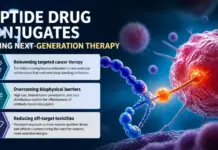
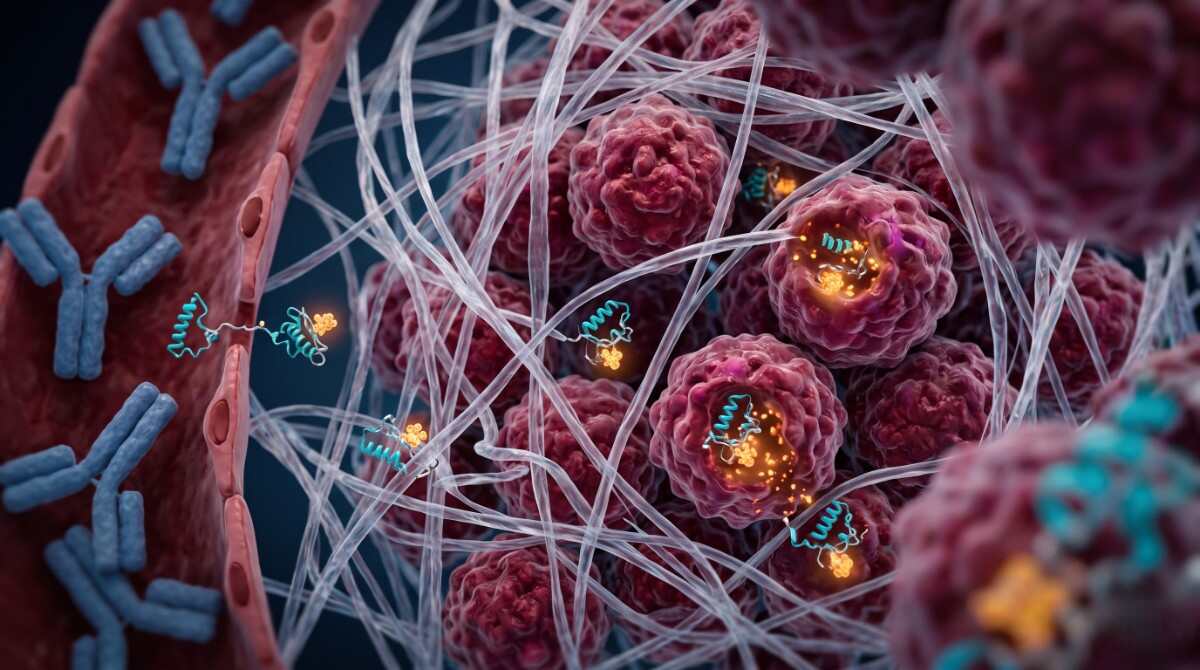
A peptide-drug conjugate consists of three synthetically integrated components: a selective peptide targeting ligand, a chemically stable linker, and a potent cytotoxic or biological payload. By replacing massive one-hundred-and-fifty kilodalton immunoglobulins with compact two-to-five kilodalton peptide sequences, biopharma developers gain unprecedented control over molecular size, stoichiometry, and pharmacokinetic behavior. This dimensional advantage translates directly into enhanced vascular extravasation and deep, homogenous diffusion across solid tumor architectures that remain largely impenetrable to intact antibodies.
Overcoming Biophysical Constraints of Conventional Conjugates
Monoclonal antibodies rely on passive diffusion and convective fluid transport to penetrate malignant tissues. In desmoplastic tumors such as pancreatic ductal adenocarcinoma, ovarian carcinoma, and triple-negative breast cancer, elevated interstitial fluid pressure and a dense collagen-rich extracellular matrix establish severe physical barriers against macromolecular transport. Antibodies often pool in perivascular regions, creating a heterogeneous distribution pattern known as the binding site barrier.
Peptide drug conjugate platforms alter this physical equation through distinct transport mechanisms:
- Compact hydrodynamic radius enables peptides to cross dense microvascular endothelial gaps and diffuse freely through extracellular matrices.
- Favorable diffusion coefficients allow peptides to penetrate multiple cellular layers within minutes rather than days, distributing lethal payloads evenly across hypoxic tumor compartments.
- Shorter plasma half-lives of several hours prevent the prolonged systemic circulation that causes off-target myelosuppression and interstitial lung disease in antibody-drug conjugate regimens.
- Synthetic chemical production bypasses biological cell-line expression systems, dramatically lowering production costs and eliminating batch-to-batch glycan heterogeneity.
These physical advantages enable oncologists to deliver high local concentrations of potent antineoplastic agents directly into solid tumors while sparing surrounding healthy tissue from prolonged exposure.
Engineering Linker Chemistry and Cytotoxic Payloads
The therapeutic window of any targeted conjugate rests on the balance between systemic stability and intracellular release. If a linker breaks prematurely in the bloodstream, free cytotoxic toxins cause severe systemic toxicities such as neutropenia, neuropathy, and thrombocytopenia. Conversely, if a linker fails to cleave within malignant target cells, the payload remains trapped in an inactive conjugated form.
Peptide drug conjugates utilize cleavable and non-cleavable linker chemistry tailored to specific intracellular triggers:
- Enzyme-cleavable peptide linkers, such as valine-citrulline and valine-alanine motifs, remain stable in circulating blood but undergo rapid hydrolysis by lysosomal proteases such as cathepsin B upon endocytosis.
- Acid-labile hydrazone linkers exploit the acidic microenvironment of late endosomes and lysosomes to trigger spontaneous payload separation following receptor internalization.
- Disulfide linkers release their payloads in response to the high concentrations of intracellular glutathione found inside malignant cells compared to extracellular plasma.
- Hydrophilic masking moieties, including polyethylene glycol chains, are incorporated around the linker domain to reduce premature renal clearance and prevent non-specific hepatic uptake.
The payload repertoire is simultaneously expanding beyond traditional tubulin inhibitors. While monomethyl auristatin E and maytansinoid derivatives remain potent cytotoxic options, researchers are conjugating topoisomerase I inhibitors, such as exatecan derivatives, targeted radionuclides, immunomodulatory agonists, and targeted protein degraders to peptide scaffolds.
Bystander killing capability represents another design parameter. Lipophilic payloads released within target cells can diffuse through lipid bilayers into neighboring antigen-negative tumor cells, eradicating heterogeneous cancer cell clusters that escape primary receptor recognition.
Renal Clearance Management and Pharmacokinetic Optimization
While rapid clearance protects radiosensitive and rapidly dividing bone marrow cells, it introduces a unique organ-specific pharmacological challenge. Peptides below sixty kilodaltons are filtered freely through the glomeruli of the kidneys and partially reabsorbed by proximal tubular epithelial cells via the megalin-cubilin scavenger receptor complex.
Accumulation of cytotoxic payloads within renal tubules can induce dose-limiting nephrotoxicity unless specific engineering solutions are deployed:
- Co-administration of basic amino acid solutions, such as lysine and arginine, competitively blocks proximal tubular reabsorption pathways, promoting rapid urinary excretion of unbound conjugates.
- Albumin-binding fatty acid chains or transient serum protein-binding motifs are engineered onto peptide termini to prolong circulation modestly and modulate renal filtration rates.
- Charge-optimized peptide sequences eliminate excessive positive surface charges that favor electrostatic interaction with negative renal brush-border membranes.
- Cleavable linkers designed to undergo rapid metabolism within tubular lumens ensure that filtered molecules are converted into harmless catabolites before cellular uptake occurs.
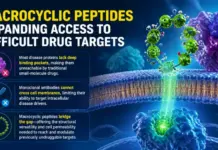
To overcome enzymatic degradation and conformational instability in linear peptide design, medicinal chemists are turning to structural cyclization, demonstrating how Macrocyclic Peptides Expanding Access to Difficult Drug Targets are providing durable molecular templates for complex therapeutic platforms. Locked ring structures shield peptide bonds from protease attack and lock active binding conformations, transforming fragile peptide motifs into resilient pharmacological warheads.
Concurrently, developers are optimizing cellular internalization kinetics. Certain peptide receptors, such as integrins and somatostatin receptors, undergo continuous endocytic recycling, enabling a single cell-surface receptor to transport multiple waves of peptide-drug conjugate molecules into the lysosomal compartment over time.
Translational Perspectives and Commercial Trajectory
Clinical trials across North America, Europe, and Asia are evaluating peptide drug conjugates across challenging clinical indications, including platinum-resistant ovarian cancer, metastatic urothelial carcinoma, and glioblastoma. Early clinical data demonstrate acceptable safety profiles with lower rates of severe ocular toxicities and peripheral neuropathy compared to historical antibody-drug conjugate standards.
Future commercialization will be supported by highly scalable manufacturing economics. While commercial antibody production requires multi-week mammalian bioreactor runs, downstream affinity chromatography, and complex cold-chain storage, synthetic peptides are produced via automated solid-phase peptide synthesis at high purity and lower capital intensity.
As biopharmaceutical chemistry resolves renal handling parameters and expands the diversity of receptor-targeting ligands, Pharma Advancement notes that peptide-drug conjugates will reshape targeted systemic therapy. By delivering potent destructive payloads into dense, heterogeneous tumors with rapid clearance kinetics, these platforms provide a precise and versatile therapeutic tool for modern precision medicine.
