








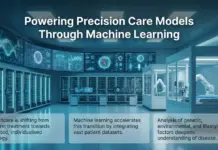
















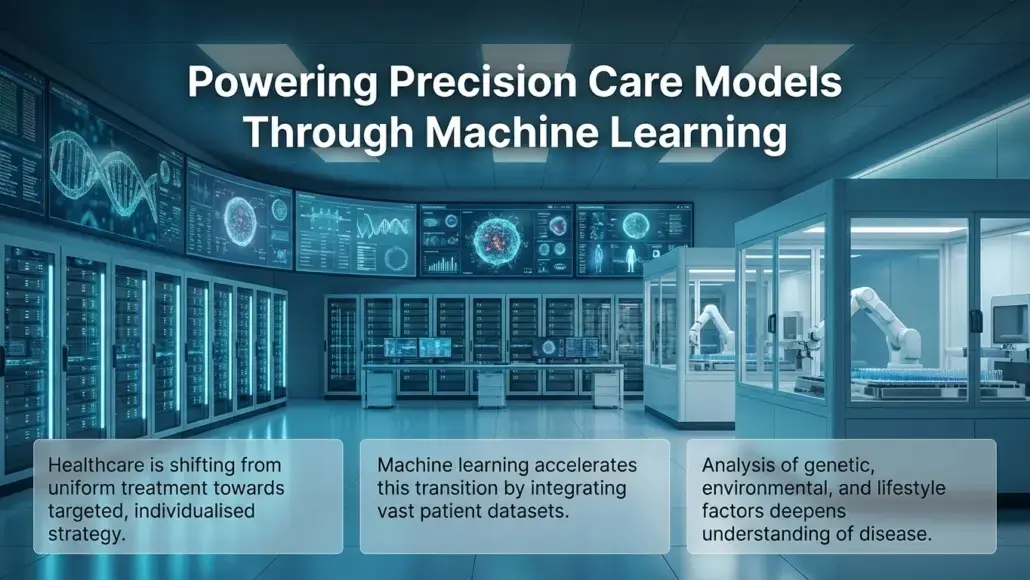
The pharmaceutical and healthcare industries are shifting away from a uniform approach to treatment toward a more targeted, individualised strategy. This transition is being accelerated by precision care models powered by machine learning, which allow for the integration of vast datasets to tailor medical interventions to the specific needs of each patient. By analyzing genetic, environmental, and lifestyle factors, these models provide a deeper understanding of disease mechanisms and treatment responses than was ever possible through traditional clinical methods. For pharmaceutical companies, this represents a fundamental change in how drugs are developed, marketed, and prescribed.
The market for precision medicine has continued to expand, with projections suggesting a compound annual growth rate of over 11 percent through 2030. This growth is driven by advancements in genomic sequencing and the increasing sophistication of machine learning algorithms that can identify complex patterns in biological data. For B2B stakeholders, the focus is on how these models can improve drug efficacy, reduce adverse reactions, and ultimately drive better clinical outcomes. The ability to prove the value of a therapy for a specific patient population is becoming essential for securing regulatory approval and reimbursement in a value based care environment.
Tailoring Treatment through Multi Omics Integration
The foundation of precision care is the integration of multiple layers of biological data, often referred to as multi omics. This includes genomics, proteomics, metabolomics, and transcriptomics. Machine learning is the only technology capable of processing these high dimensional datasets to identify the unique biological signatures of a disease. Precision care models powered by machine learning can predict how a patient will respond to a specific drug based on their molecular profile, allowing clinicians to select the most effective therapy from the outset.
 This approach is particularly advanced in oncology, where the genetic mutations of a tumor can vary significantly between patients. Machine learning models can analyze the DNA of a tumor to suggest targeted therapies that are more likely to be effective than standard chemotherapy. This not only improves survival rates but also spares patients from the toxic side effects of treatments that are unlikely to work for them. Beyond cancer, precision care is also being applied to chronic conditions like diabetes and cardiovascular disease, where machine learning can identify the specific drivers of disease progression in different patient subgroups.
For pharmaceutical developers, these models offer a way to identify new drug targets and biomarkers. Pharma Advancement observes that by understanding the molecular pathways of a disease in greater detail, companies can develop therapies that are more precise and have a higher probability of success in clinical trials. This reduces the time and cost of drug development, allowing for the faster delivery of innovative treatments to patients. Furthermore, the use of precision care models allows for the development of ‘companion diagnostics’ that identify the patients most likely to benefit from a specific therapy, creating a more integrated approach to healthcare.
Optimizing Dosage and Minimizing Adverse Events
One of the most immediate applications of machine learning in precision care is the optimization of drug dosage. Many medications have a narrow therapeutic window, meaning that the difference between an effective dose and a harmful one is very small. Traditional dosing based on weight or age is often imprecise and can lead to sub optimal outcomes or serious adverse events. Precision care models powered by machine learning can analyze real time data from patient monitors and lab tests to suggest the optimal dose for an individual at a specific point in time.
This real time dosing support is especially valuable for drugs like anticoagulants, immunosuppressants, and certain antibiotics. By continuously monitoring the patient’s response and adjusting the dose accordingly, machine learning models can maximize efficacy while minimizing the risk of toxicity. This not only improves patient safety but also reduces the overall cost of care by preventing complications that would otherwise lead to longer hospital stays or additional treatments. Reports indicate that AI driven dosing can reduce adverse drug events by up to 25 percent.
The business implications for pharmaceutical companies are significant. By demonstrating that their drugs can be used more safely and effectively through precision dosing, companies can differentiate their products in a crowded market. Furthermore, the data generated by these models can be used to support post market surveillance and regulatory submissions, providing real world evidence of a drug’s safety profile. As healthcare systems move toward value based reimbursement, the ability to minimize adverse events will be a key driver of financial performance.
Managing Chronic Conditions through Digital Therapeutics
Precision care is also transforming the management of chronic diseases through the use of digital therapeutics. These are software based interventions that use machine learning to provide personalized guidance to patients, often through a smartphone app. For example, a digital therapeutic for diabetes can analyze a patient’s blood glucose levels, diet, and physical activity to provide real time suggestions for insulin dosing or lifestyle changes. Precision care models powered by machine learning ensure that this guidance is tailored to the individual’s specific needs and goals.

These tools are particularly effective for conditions where patient behavior plays a significant role in outcomes. By providing continuous support and feedback, digital therapeutics can help patients adhere to their treatment plans and achieve better long term health. For pharmaceutical companies, digital therapeutics offer a way to extend the reach of their products and provide a more comprehensive solution to chronic disease. Many companies are now partnering with software developers to create ‘beyond the pill’ solutions that combine pharmacological treatments with digital support. These personalized treatment pathways are often validated through the AI analysis of medical imaging in trials, which provides the high resolution data needed to confirm clinical efficacy.
The data collected by these tools is also a goldmine for researchers. By tracking how thousands of patients manage their conditions in the real world, pharmaceutical companies can gain insights into the effectiveness of their therapies and identify unmet needs. This information can be used to drive the development of next generation treatments and improve the design of clinical trials. As the use of digital therapeutics grows, we can expect to see them become an integral part of the standard of care for a wide range of chronic conditions.
Challenges in Data Privacy and Standardization
Despite the promise of precision care models powered by machine learning, there are significant hurdles to widespread adoption. The most pressing is the issue of data privacy. These models require access to sensitive personal information, including genomic data and medical records. Ensuring that this data is protected from unauthorized access and used ethically is a top priority for patients and regulators. Any precision care project must include robust encryption, de identification techniques, and clear consent protocols.
Standardization is another major challenge. For machine learning to be effective across different healthcare systems, the data must be collected and stored in a consistent way. Currently, electronic health records are often fragmented and use different formats, making it difficult to integrate data from multiple sources. Efforts are underway to create global standards for health data, but progress is slow. Furthermore, the regulatory framework for AI driven precision care is still evolving, with agencies like the FDA working to develop guidelines for the validation and monitoring of these tools.
Finally, there is the need for clinical validation. For clinicians to adopt these models, they need to see clear evidence that they improve patient outcomes. This requires large scale, well designed clinical trials that compare precision care with the standard of care. Pharmaceutical companies must invest in the clinical research needed to prove the value of their precision care solutions. Promoting transparency and sharing the results of these trials is essential for building the trust needed for widespread adoption.
Advancing Precision Care Through AI and Data Integration
The shift toward individualized, data-driven healthcare is being rapidly accelerated by leading global pharmaceutical and health tech companies actively embedding AI into precision care models. AstraZeneca recently deployed breakthrough generative AI tools, MapDiff and Edge Set Attention, to design targeted biologic therapies and proteins with unprecedented speed. In the diagnostics space, Roche is transforming clinical trial outcomes through its AI-powered computational pathology device, VENTANA TROP2, which determines a patient’s exact eligibility for targeted non-small cell lung cancer therapies.
Furthermore, Sanofi is bridging the gap between drug discovery and patient experience by scaling AI solutions that accurately parse clinical evidence and provide personalized digital support for immunology patients. The foundation of these AI models is massive multi-omics data, driving Tempus AI to launch an ambitious initiative to sequence and link 100,000 disease-specific whole genomes with clinical outcomes to train predictive care algorithms. Meanwhile, Pfizer is leveraging machine learning in a collaboration with UT Southwestern to design optimized RNA delivery platforms, ensuring precision therapeutics safely reach the exact cells and tissues they are intended to treat.
The Strategic Path Forward for Pharma Executives
For pharmaceutical executives, the adoption of precision care models powered by machine learning is a strategic imperative. The transition to personalized medicine is already underway, and companies that fail to adapt risk being left behind. Success requires a commitment to innovation and a willingness to invest in the technologies and talent needed to build and deploy these models. This includes building strong partnerships with tech companies, research institutions, and healthcare providers.
Executives should also focus on developing a clear value proposition for their precision care solutions. This involves understanding the needs of patients, clinicians, and payers, and demonstrating how these models can improve outcomes and reduce costs. The focus should be on building a sustainable ecosystem where data is shared securely and used to drive continuous improvement in patient care. In the long run, the integration of precision care will lead to a more effective, efficient, and patient centered healthcare system.
The future of medicine is precision, and machine learning is the engine that will drive this transformation. Pharma Advancement believes that by leveraging the power of data to understand the unique needs of every patient, we can move closer to the goal of providing the right treatment at the right time. The journey is complex, but the rewards for patients and society are immense. For pharmaceutical companies, the move toward precision care represents a new frontier of opportunity, where the focus shifts from volume to value.
References
- Personalized Medicine Coalition
- Grand View Research
- Nature Medicine
- World Health Organization
- FDA
- McKinsey
- World Economic Forum
- AstraZeneca
- Roche
- Sanofi
- Tempus AI
- Pfizer
