
























AI Summary
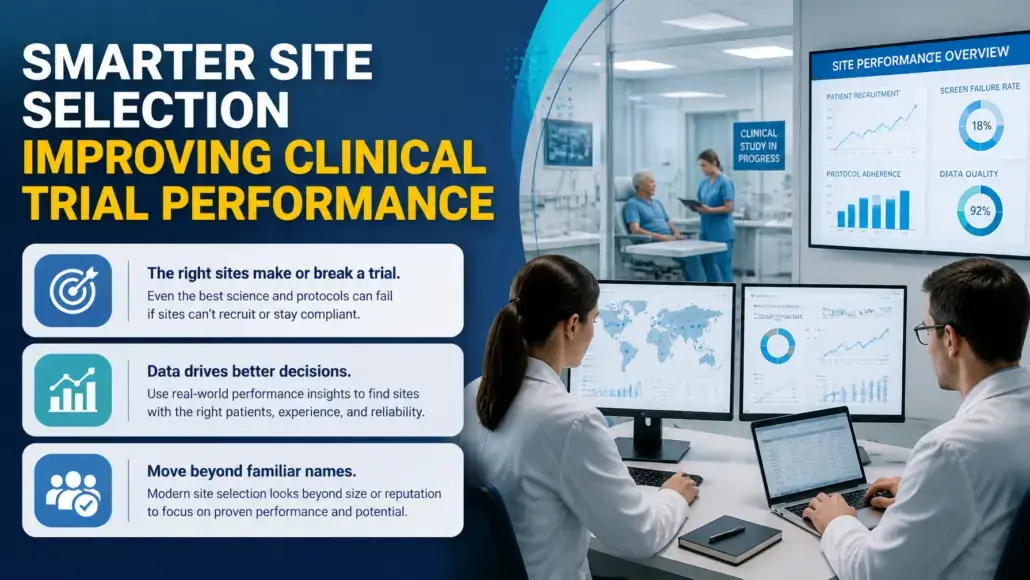
Selecting the right investigative sites is perhaps the most consequential decision in the entire clinical trial lifecycle. A study can have a groundbreaking molecule and a perfectly designed protocol but if the sites are unable to recruit patients or maintain compliance the entire effort will falter. The transition toward data driven site selection marks a significant departure from the traditional reliance on familiar names or large academic centers. Modern pharmaceutical companies are now using objective metrics to evaluate potential locations based on their proven ability to deliver results. This shift is essential for optimizing the global footprint of a trial and ensuring that resources are invested where they will have the greatest impact on speed and quality.
The foundation of this new approach is the integration of historical performance data with geographic and demographic insights. Pharma Advancement notes that by focusing on data driven site selection, researchers can identify hidden gems in the research community that might otherwise be overlooked. These are often smaller specialized clinics that have deep connections with their local patient populations and a high level of dedication to their research missions. Conversely big name institutions that are overburdened with multiple competing trials might not be the best choice for a study that requires rapid enrollment and intense coordination. The ability to distinguish between prestige and performance is a key advantage of a data driven strategy.
Evaluating Demographics and Operational Health
Patient density and accessibility are critical factors that must be analyzed during the selection process. It is not enough to know how many people in a city have a particular condition researchers must also understand how likely those individuals are to participate in a clinical trial. Through data driven site selection teams can map out the proximity of potential sites to the patient population and evaluate factors such as local transportation and cultural attitudes toward research. This level of granular analysis ensures that the trial is accessible to the people who need it most and that the recruitment targets are grounded in reality rather than just broad assumptions.
The operational health of a site is another vital consideration. A high performing site needs more than just a large patient pool it requires an experienced staff and robust infrastructure and a commitment to data quality. When data driven site selection is utilized, sponsors can look at a site past record of protocol deviations and query response times and staff stability. These indicators are strong predictors of how a site will perform in a new study. By avoiding locations with a history of compliance issues or slow data entry the sponsor can significantly reduce the risk of delays and ensure a cleaner dataset for the final analysis.
Refining the Feasibility Assessment Strategy
The feasibility assessment is the first step in the site selection process and it is often where the most significant errors occur. Traditional feasibility surveys are prone to bias as investigators naturally want to appear as capable as possible to secure the study. By adopting data driven site selection techniques sponsors can verify the information provided in these surveys against independent data sources. They can check pharmacy records or insurance claims data to see if the investigator truly has access to the number of patients they claim to see each month. This verification step is crucial for building a recruitment plan that will actually work in the real world.
Furthermore the competitive landscape at a site must be carefully evaluated. A site might have a large patient population but if they are already running three other trials in the same therapeutic area the staff may be spread too thin. Through data driven site selection, planners can see exactly which other studies are active at a specific location and how many patients have already been committed to those projects. This helps in identifying sites that have the capacity to give the new study the attention it deserves. Strategic site selection is as much about avoiding competition as it is about finding opportunities.
The financial implications of site selection are also profound. The cost of setting up and maintaining a site can vary significantly depending on the country and the type of institution. By leveraging data driven site selection sponsors can perform a cost benefit analysis for every potential location. They can weigh the higher costs of a site in a major metropolitan area against the potential for faster enrollment and higher quality data. This level of transparency allows for more effective budget management and ensures that the total investment in the site network is aligned with the goals of the trial.
Strengthening Site Relationships and Long Term Success
While data is essential for the initial selection process the long term success of a trial depends on the strength of the relationship between the sponsor and the site. Data driven site selection helps in building these relationships by ensuring that the expectations for each site are realistic and achievable. When sites feel that they are being supported rather than just monitored they are more likely to be engaged and proactive in their work. Providing sites with the data they need to manage their own performance fosters a collaborative environment where everyone is working toward a common goal.
The use of centralized monitoring and digital communication tools further enhances the performance of the site network. These technologies allow the sponsor to provide real time feedback and support to the investigators. If a site is struggling to find patients the sponsor can see this immediately and offer additional recruitment resources or training. This proactive management is only possible when the initial selection was based on a solid foundation of data driven site selection. It ensures that the study remains on track and that any issues are addressed before they become major problems.
A Scalable Path for Future Trials
In conclusion the transition to a more intelligent approach to choosing research locations is a vital part of the broader effort to modernize clinical research. By embracing data driven site selection, pharmaceutical companies can improve the efficiency and reliability of their trials. This not only benefits the sponsors through reduced costs and faster timelines but also benefits the patients who are waiting for new treatments. The future of clinical research belongs to those who can effectively use data to navigate the complex global landscape of investigative sites. The shift from subjective choice to objective selection is the key to unlocking the full potential of clinical innovation.
The final result of this transformation is a more agile and responsive research infrastructure. Pharma Advancement believes that as the industry continues to evolve and new therapies become more targeted the ability to find the right sites will only become more critical. The commitment to data driven site selection is an investment in the future of medicine and a testament to the power of analytics to drive meaningful change. The path forward is clear and it is paved with the insights gained from a rigorous and data centric approach to site selection.
