






















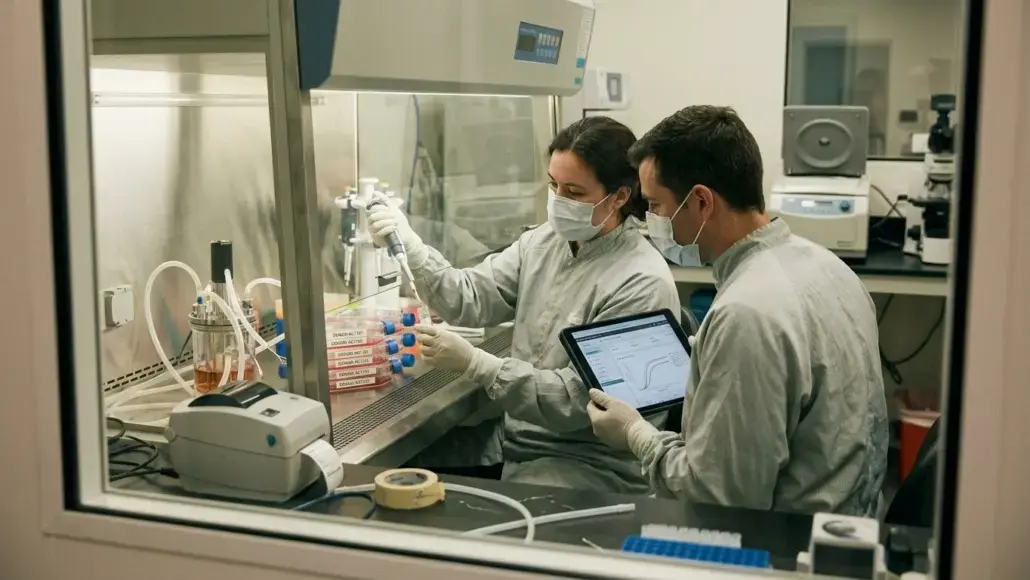
The advent of Chimeric Antigen Receptor T-cell (CAR-T) therapy has marked one of the most significant milestones in the history of oncology. For patients battling advanced hematological malignancies, particularly those who have not responded to conventional chemotherapy or bone marrow transplants, these living drugs offer a genuine chance at remission. However, the promise of CAR-T therapy is often tempered by a brutal reality: the time it takes to manufacture these personalized treatments. For many patients, the disease does not wait for the factory. This clinical urgency is the primary catalyst driving the industry to prioritize CAR-T manufacturing speed, as researchers and engineers work tirelessly to break the traditional 14-day barrier and deliver these therapies to the bedside in record time.
Historically, the manufacturing cycle for an autologous CAR-T product—a process that begins with the collection of a patient’s own T-cells and ends with their re-infusion—lasted anywhere from three to four weeks. During this period, known as the vein-to-vein time, patients are often in a fragile state, requiring bridging therapies to keep their disease in check. The complexity of this journey is immense: the cells must be transported from the hospital to a centralized manufacturing facility, genetically modified to express the CAR protein, expanded to billions of cells, tested for quality and sterility, and then shipped back for infusion. Any delay in this intricate web can have devastating consequences. Pharma Advancement notes that by focusing on CAR-T manufacturing speed, the industry aims to shorten this window, providing patients with a vital lifeline when they need it most.
The Evolution from Manual to Automated Workflows
One of the most significant obstacles to rapid manufacturing has been the reliance on manual, open-system processes. In the early days of CAR-T development, much of the work was performed by highly skilled technicians in laminar flow hoods, moving cells between various flasks and bags. This approach was not only labor-intensive but also prone to human error and contamination risks. To achieve a meaningful increase in CAR-T manufacturing speed, the industry has shifted toward closed-system automation. These automated platforms integrate multiple steps—such as cell selection, activation, transduction, and expansion—into a single, unified device that operates without human intervention.
Closed-system automation offers several advantages. First, it significantly reduces the cleanroom footprint required, as the closed nature of the equipment provides an inherent barrier against environmental contaminants. Second, it allows for a degree of process consistency that is impossible to achieve manually. By removing the variability of human touch, manufacturers can ensure that every batch of cells is treated with the same precision, leading to higher yields and more predictable timelines. This shift is the bedrock of the effort to improve CAR-T manufacturing speed, enabling facilities to process more patient batches simultaneously while maintaining the highest standards of safety.
Breaking the 14-Day Barrier through Bioprocessing Innovation
The 14-day barrier has long been a symbolic goal for the CAR-T industry. For years, the cell expansion phase alone could take 10 to 12 days, as manufacturers waited for the modified T-cells to multiply to a sufficient dose. However, recent advancements in bioprocessing are challenging the notion that more time equals better cells. In fact, emerging research suggests that younger cells—those that have spent less time in culture—may actually be more potent and persistent once infused back into the patient. This insight has led to the development of shortened expansion protocols, where the cells are harvested and infused in as little as 24 to 48 hours after transduction.
These rapid manufacturing protocols are a game-changer for CAR-T manufacturing speed. By eliminating the lengthy expansion phase, companies can drastically reduce the vein-to-vein time, sometimes to under a week. This not only benefits the patient but also improves the overall efficiency of the manufacturing facility. When a single bioreactor can process a new batch every few days instead of every two weeks, the capacity of the plant is effectively quadrupled. This increase in throughput is essential for making CAR-T therapies more accessible and affordable for a broader population of patients worldwide.
The Role of Rapid Quality Control and Release Testing
Another major bottleneck in the manufacturing journey is the final quality control (QC) and release testing phase. Traditionally, this process could take a week or more, as scientists performed a battery of tests to ensure the product was sterile, potent, and free of impurities. Many of these tests, such as the compendial sterility test, require a 14-day incubation period to confirm the absence of microbial growth. To truly optimize CAR-T manufacturing speed, the industry is transitioning toward rapid microbial methods (RMM) and real-time analytical tools that can provide results in hours rather than days.
Next-generation sequencing (NGS) and polymerase chain reaction (PCR)-based assays are now being used to confirm the identity and purity of the cell product with incredible speed. Additionally, automated potency assays are providing insights into the functional activity of the cells long before they reach the patient. By integrating these rapid QC tools directly into the manufacturing workflow, firms can move toward real-time release, where the product is cleared for infusion as soon as the final processing step is complete. This innovation is a critical component of the strategy to maximize CAR-T manufacturing speed and minimize the time patients spend waiting for their therapy.
Logistics and the Future of Bedside Manufacturing
While bioprocessing innovations are crucial, the logistics of transporting cells across the globe remains a significant hurdle. Centralized manufacturing models, where cells are shipped to a single hub for processing, are highly efficient but add days to the vein-to-vein timeline due to shipping and customs. To combat this, some organizations are exploring decentralized or point-of-care (POC) manufacturing. In this model, the manufacturing equipment is located directly within the hospital or a nearby satellite facility. By processing the cells locally, the need for long-distance transport and cryopreservation is eliminated, providing a massive boost to CAR-T manufacturing speed.
The vision of bedside manufacturing is becoming increasingly feasible thanks to the development of compact, lab-on-a-chip style devices that can handle the entire manufacturing process in a small, footprint-efficient unit. While regulatory challenges remain—such as ensuring consistent quality across multiple hospital sites—the potential for same-day or next-day infusion is a powerful motivator. As the technology continues to mature, the focus on CAR-T manufacturing speed will likely drive a shift toward these more localized models, further closing the gap between the patient and the laboratory.
Conclusion: A New Era of Patient Care
The quest to improve CAR-T manufacturing speed is more than just an engineering challenge; it is a moral imperative. Every day that a patient waits for their treatment is a day that their disease has the upper hand. By embracing automation, shortening expansion times, and revolutionizing quality control, the industry is proving that it is possible to deliver these complex, living therapies with the speed and precision that modern medicine demands. The 14-day barrier is no longer an insurmountable wall, but a milestone that is being passed on the way to even faster delivery timelines.
As we look ahead, the lessons learned from CAR-T manufacturing will undoubtedly influence the development of other cell and gene therapies. The focus on efficiency, consistency, and speed is creating a new blueprint for biomanufacturing that prioritizes the needs of the individual patient above all else. In the end, Pharma Advancement believes that the ultimate measure of success for any CAR-T program will not just be the efficacy of the drug, but the speed at which it can be delivered to the person whose life depends on it. Through the relentless pursuit of CAR-T manufacturing speed, we are building a future where no patient is ever told that they have run out of time.
