



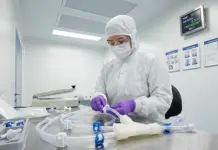
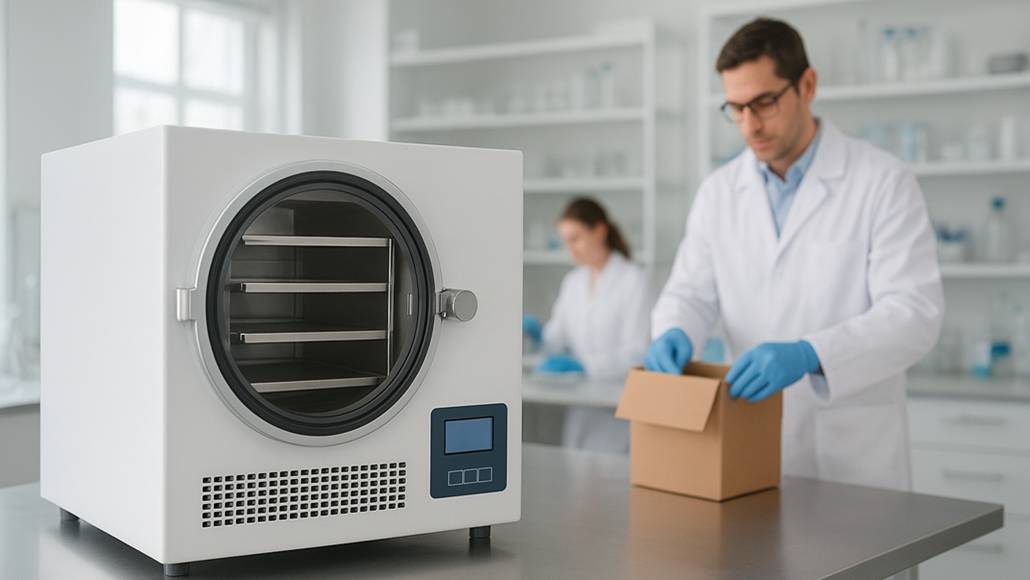





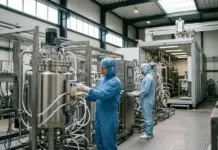
Cleanrooms are the absolute heart of sterile pharmaceutical manufacturing, providing the controlled environments necessary to ensure that drugs are free from microbial and particulate contamination. However, these environments are also among the most energy-intensive spaces on the planet. A typical cleanroom can consume up to 50 times the energy of a standard office building, primarily due to the massive volumes of air that must be filtered, cooled, dehumidified, and circulated. This high energy demand creates a significant operational risk: any fluctuation in energy supply or a sudden spike in costs can jeopardize production. Energy resilient cleanrooms are designed to address this vulnerability. By integrating energy efficiency, advanced HVAC optimization, and on-site power solutions, these modern environments reduce operational risk while supporting the industry’s transition toward a more sustainable and reliable manufacturing model.
The Intersection of Energy Demand and Sterile Integrity
The primary challenge in designing energy resilient cleanrooms is that the requirements for sterility are non-negotiable. Regulatory standards mandate specific air change rates, pressure differentials, and temperature/humidity levels to maintain a validated state. Historically, this has led to “over-designing” cleanrooms, where HVAC systems run at full capacity 24/7 to ensure compliance, even when the room is not in use. This “set it and forget it” approach is inherently inefficient and leaves the facility highly vulnerable to energy disruptions. If the grid fails and the backup systems are not perfectly tuned, the sudden loss of HVAC can lead to a loss of pressure, potentially contaminating a sterile zone and ruining an active batch.
Energy resilience, therefore, starts with a deeper understanding of the relationship between energy consumption and cleanroom performance. It involves moving away from static, high-energy designs toward dynamic systems that can adapt to changing conditions without compromising the sterile boundary. Energy resilient cleanrooms are “smart” environments that use real-time data to maintain the highest levels of sterility while using the minimum amount of energy required. This reduction in baseline energy demand is the first and most effective step in reducing operational risk, as it makes the facility easier to support with backup and alternative power sources.
HVAC Optimization: The Key to Efficiency and Resilience
The HVAC system is the single largest consumer of energy in a cleanroom, often accounting for 60% to 90% of the total energy bill. Optimizing this system is central to creating energy resilient cleanrooms. One of the most effective strategies is the implementation of Variable Frequency Drives (VFDs) on fan motors. VFDs allow the air change rate to be adjusted based on the actual particle load in the room. During periods of low activity or when the room is unoccupied, the air changes can be safely reduced, leading to exponential energy savings. Because fan power is proportional to the cube of the fan speed, even a small reduction in airflow can result in a significant drop in energy use.
Another critical optimization strategy is the use of high-efficiency energy recovery systems. These systems capture the thermal energy from the exhaust air and use it to pre-condition the incoming fresh air. In climates with extreme temperatures or humidity, this can drastically reduce the load on the chillers and boilers. Furthermore, advanced control algorithms can predict changes in external weather conditions and adjust the HVAC settings proactively, preventing the system from “fighting” the environment and consuming excessive power. These optimizations not only lower costs but also make the cleanroom more resilient to power fluctuations, as the system is operating closer to its peak efficiency and has more “headroom” to handle disruptions.
Decentralized Power and On-Site Energy Solutions
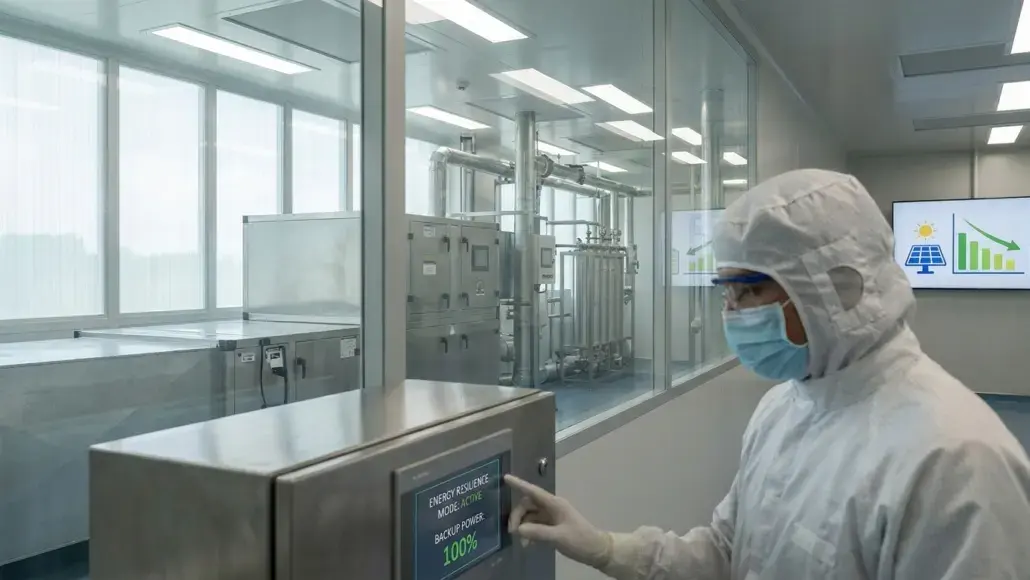
For a cleanroom to be truly energy resilient, it must be able to withstand a failure of the municipal power grid. While traditional diesel generators have been the standard for backup power, energy resilient cleanrooms are increasingly integrating on-site renewable energy and storage solutions. Solar photovoltaic (PV) arrays, combined with large-scale battery energy storage systems (BESS), can provide a reliable and sustainable source of power for critical cleanroom functions. In some cases, facilities are implementing microgrids that can “island” themselves from the main grid during a disturbance, ensuring that the cleanroom remains in a validated state regardless of the external situation.
The integration of on-site power also offers a financial hedge against rising energy prices and peak demand charges. By using stored energy during periods of high electricity costs (a practice known as peak shaving), pharmaceutical companies can significantly reduce their operational expenses. Moreover, the move toward “electrification” of the facility replacing gas-fired boilers with high-efficiency heat pumps allows more of the facility’s energy needs to be met by on-site renewable sources. This transition to a more self-sufficient energy model is a cornerstone of energy resilient cleanrooms, providing both security of supply and long-term cost stability.
Digital Twins and Real-Time Energy Management
The management of energy resilient cleanrooms is increasingly driven by digital technology. A Digital Twin a virtual model of the cleanroom’s physical and mechanical systems allows engineers to simulate the energy impact of different operational scenarios. For example, they can model how a change in the gowning procedure or the introduction of a new piece of equipment will affect the heat load and airflow patterns. This allows for the optimization of the cleanroom’s energy profile before any physical changes are made, reducing the risk of unexpected performance issues.
Real-time energy management systems (EMS) provide the visibility needed to maintain resilience on a day-to-day basis. These systems monitor every aspect of energy consumption, from the power used by individual HEPA fan filter units to the efficiency of the main chillers. By correlating this data with environmental monitoring results, facility managers can prove that their energy-saving measures are not impacting sterility. If an energy-saving strategy such as reducing airflow leads to a slight increase in particle counts, the EMS can automatically revert to a more conservative setting. This data-driven approach ensures that energy resilient cleanrooms are always operating at the optimal balance of sterility and efficiency.
Reducing Operational Risk through Sustainable Design
The move toward energy resilient cleanrooms is not just about saving money it is about future-proofing the business. As governments around the world implement stricter carbon reduction targets and energy efficiency mandates, pharmaceutical companies that have already invested in resilient infrastructure will be at a significant advantage. Furthermore, a resilient facility is a more reliable facility. By reducing the complexity of the HVAC systems and making the cleanroom more self-sufficient, companies can minimize the “noise” of minor utility issues and focus on their core mission of manufacturing high-quality drugs.
Sustainable design also has a positive impact on the facility’s reputation and its ability to attract investment. Investors are increasingly looking at Environmental, Social, and Governance (ESG) metrics when evaluating pharmaceutical companies. A facility that can demonstrate a high level of energy resilience and a low carbon footprint is viewed as being more stable and better managed. In this way, energy resilient cleanrooms are a key part of a broader strategy to reduce operational risk and build a more resilient and sustainable pharmaceutical industry.
Conclusion: A New Standard for Cleanroom Excellence
The cleanroom of the future will be defined by its ability to maintain absolute sterility while operating with maximum energy efficiency and resilience. Energy resilient cleanrooms reducing operational risk are the answer to the twin challenges of climate change and energy volatility. By embracing HVAC optimization, on-site power, and digital management, the pharmaceutical industry can create manufacturing environments that are not only safer for the patient but also more sustainable for the planet. The transition to this new model requires a shift in mindset, from seeing energy as a fixed cost to seeing it as a manageable risk. For those companies that lead the way, the rewards will be measured in improved uptime, lower costs, and a more secure future for their life-saving products.
