



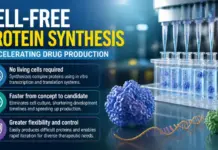
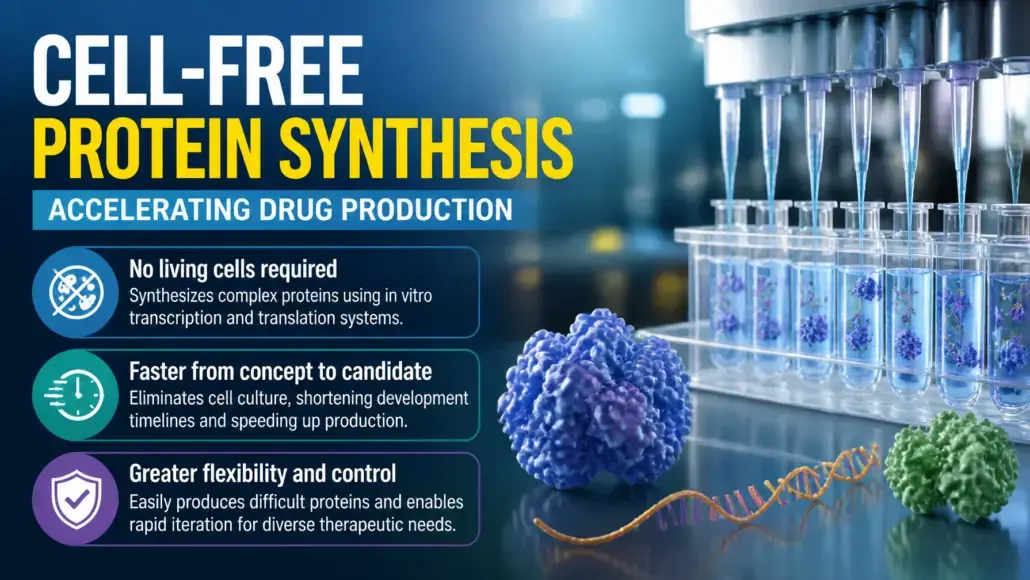
Biopharmaceutical manufacturing is experiencing an operational paradigm shift as drug developers deploy in vitro transcription and translation platforms to synthesize complex therapeutic proteins without living cells. Traditional recombinant protein production relies on genetically modified host organisms, such as Chinese hamster ovary cells or Escherichia coli, cultivated inside massive stirred-tank bioreactors. While cellular fermentation has underpinned the biopharmaceutical industry for decades, it remains encumbered by multi-week seed train expansion, complex clone selection cycles, and the inherent biological vulnerability of living cell cultures to contamination or phenotypic drift. In response, biomanufacturers are scaling cell free protein synthesis systems that decouple protein production from cellular viability, compressing manufacturing cycles from weeks to hours.
Cell-free expression platforms operate by harvesting the internal transcription and translation machinery of lysed host cells. Ribosomes, aminoacyl-tRNA synthetases, translation initiation factors, and elongation complexes are isolated, concentrated, and reconstituted within an optimized biochemical matrix. Once supplied with linearized DNA templates, nucleotide triphosphates, amino acids, and high-energy regenerating substrates, these open cell extracts begin immediate protein translation. Because the system is devoid of cell membranes and complex living metabolic networks, development teams can monitor, sample, and manipulate the synthetic environment with unprecedented precision.
Biochemical Architecture and Cell Extract Engineering
The commercial evolution of cell-free protein synthesis reflects rapid advancements in crude extract preparation and metabolic pathway optimization. Historically constrained to microgram-scale analytical discovery assays, modern cell extract platforms achieve multi-gram per liter expression yields capable of supporting commercial biotherapeutic supplies. Scalable high-pressure homogenization and continuous flow centrifugation now generate highly active crude lysates with minimal batch-to-batch variation.
Significant engineering milestones established across industrial cell-free extracts include:
- Crude extract preparation from specialized microbial, insect, plant, and mammalian host strains engineered to eliminate endogenous proteases that degrade nascent therapeutic targets.
- Integration of inverted inner membrane vesicles derived from Escherichia coli, providing functional oxidative phosphorylation cascades that regenerate adenosine triphosphate continuously from inexpensive carbon sources.
- Addition of molecular chaperones, peptidyl-prolyl cis-trans isomerases, and protein disulfide isomerases directly into the open reaction medium to ensure correct tertiary and quaternary folding.
- Supplementation of synthetic tRNA molecules and orthogonal aminoacyl-tRNA synthetases enabling the precise site-specific incorporation of non-canonical amino acids.
- Targeted genetic silencing of competing metabolic pathways within the host genome, redirecting nucleotide and amino acid feedstocks exclusively toward recombinant product translation.
- Cell-free glycoprotein synthesis platforms incorporating purified bacterial and eukaryotic oligosaccharyltransferases alongside lipid-linked oligosaccharides to execute defined post-translational glycosylation cascades.
These biochemical interventions allow biomanufacturers to produce challenging molecular architectures that are severely toxic or lethal to living host cells. Engineered microbial toxins, targeted cytotoxic antibody payloads, membrane-embedded channel proteins, and complex multi-specific biologics that disrupt cellular viability during conventional fermentation are translated smoothly in cell-free environments without triggering host cell death.
Operational Agility in Rapid Response and Personalized Medicine
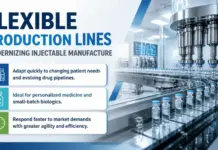
The open architecture of cell-free protein synthesis introduces remarkable speed and supply chain agility into biomanufacturing networks. Conventional cell culture operations require months to establish research cell banks, complete clonal isolation, and scale up bioreactor volumes through successive seed stages. If a therapeutic protein requires rapid deployment or custom tailoring for individual patients, living cell fermentation cannot satisfy compressed delivery windows.
Key operational advantages demonstrated by commercial cell-free facilities include:
- Production of clinical-grade therapeutic proteins within twenty-four to forty-eight hours directly from synthetic DNA sequences, bypassing months of cell line development.
- Elimination of extensive clean-in-place and steam-in-place validation cycles through the deployment of single-use, benchtop cell-free reaction cartridges.
- Flexible on-demand manufacturing models capable of operating in decentralized modular facilities or transportable production units deployed at clinical points of care.
- Precise expression of patient-specific neoantigen vaccines and personalized monoclonal antibodies tailored to combat individualized tumor mutations.
- Immediate stoichiometric tuning of multi-subunit protein complexes by adjusting plasmid input ratios directly within the master reaction vessel.
- Direct site-specific bioconjugation of polyethylene glycol polymers and cytotoxic payloads using bioorthogonal click-chemistry handles installed during in vitro ribosomal translation.
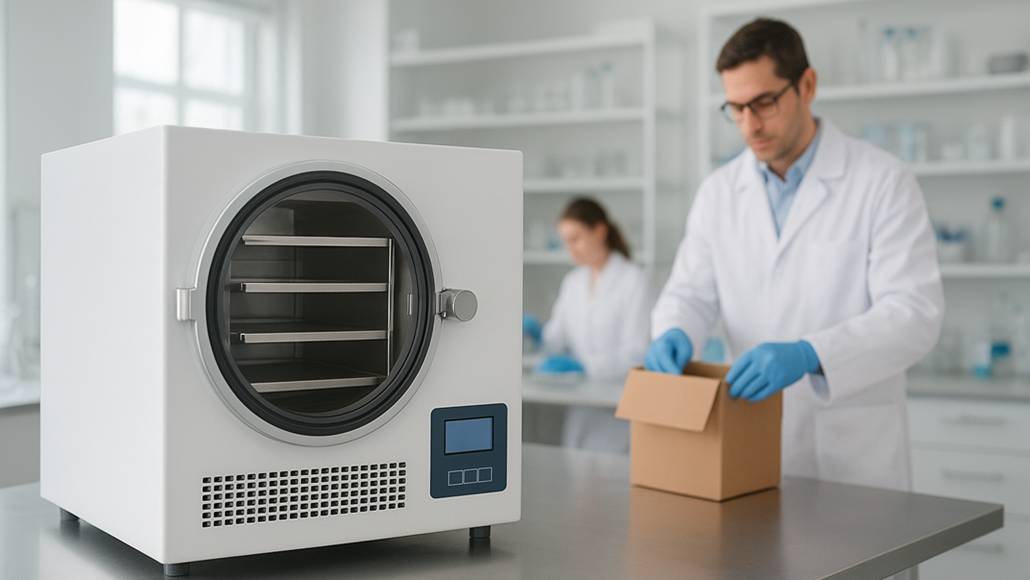
In emergency biodefense scenarios, vaccine development campaigns, and targeted pandemic countermeasure initiatives, the ability to transition instantly from digital genomic sequence to purified biologic substance is transformative. Rather than maintaining massive standing inventories of vulnerable biological products with finite shelf lives, healthcare institutions and military agencies can store lyophilized cell-free extract kits and synthetic DNA vectors at room temperature, initiating localized production only when therapeutic demand arises.
Downstream Purification Interfaces and Lysate Complexities
While cell-free protein synthesis circumvents the challenges of cell viability and harvest clarification, downstream processing must handle unique biochemical impurities. The reaction broth contains high concentrations of residual bacterial or mammalian ribosomes, metabolic enzymes, unconsumed amino acids, energy substrates, and non-target host nucleic acids.
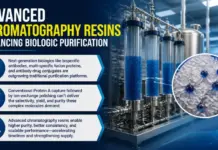
As cell-free translation delivers high-titer yields of multi-specific antibodies and non-standard recombinant proteins, processing pipelines rely on advanced chromatography resins improving purification of complex biologics to isolate intact therapeutic formats from unreacted cell lysates and truncated variants. Tailored surface chemistries, mixed-mode matrices, and high-capacity affinity ligands operate in direct continuity with cell-free translation units, ensuring that multi-functional biologics achieve rigorous clinical-grade purity profiles without requiring prolonged intermediate storage.
Downstream engineering strategies specifically optimized for cell-free manufacturing streams include:
- Automated tangential flow filtration assemblies that rapidly separate low-molecular-weight reaction byproducts and buffer salts from target macromolecular biologics.
- Specialized multimodal chromatography media that simultaneously resolve nucleic acid fragments and host cell extract proteins through concerted hydrophobic and electrostatic interactions.
- Inline microfluidic sensors monitoring target protein folding and disulfide bond formation in real time prior to chromatographic loading.
- Rapid enzymatic digestion protocols utilizing engineered endonucleases to hydrolyze residual DNA templates and host ribosomal RNA into small, non-fouling nucleotide fragments.
Continuous processing is increasingly paired with cell-free biomanufacturing. Continuous-exchange cell-free systems utilize semipermeable dialysis membranes that continuously supply fresh nutrients and energy substrates from an external reservoir while diluting inhibitory small-molecule reaction byproducts. These continuous bioreactor setups prolong translation kinetics for dozens of hours, elevating volumetric productivity and generating sustained gram-scale yields.
Regulatory Trajectory and Commercial Industrialization
Global regulatory bodies, including the United States Food and Drug Administration through its Emerging Technology Program, are actively engaged in qualifying cell-free biomanufacturing systems for commercial pharmaceutical supply. The absence of living organisms dramatically simplifies viral clearance validation and eliminates risks associated with mycoplasma or adventitious viral contamination inherent to mammalian cell cultures.
Process analytical technologies are straightforward to integrate into open cell-free vessels. Optical sensors, mass spectrometry sampling loops, and real-time automated assays measure translational elongation rates, substrate depletion, and product glycosylation profiles directly without breaking sterile cellular boundaries. As biopharmaceutical portfolios expand toward multi-specific fusion proteins, novel antibody formats, and decentralized personalized treatments, Pharma Advancement belives that cell free protein synthesis delivers the rapid, flexible manufacturing capability necessary to meet modern therapeutic challenges.
