




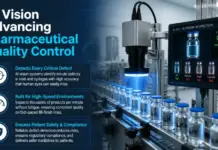






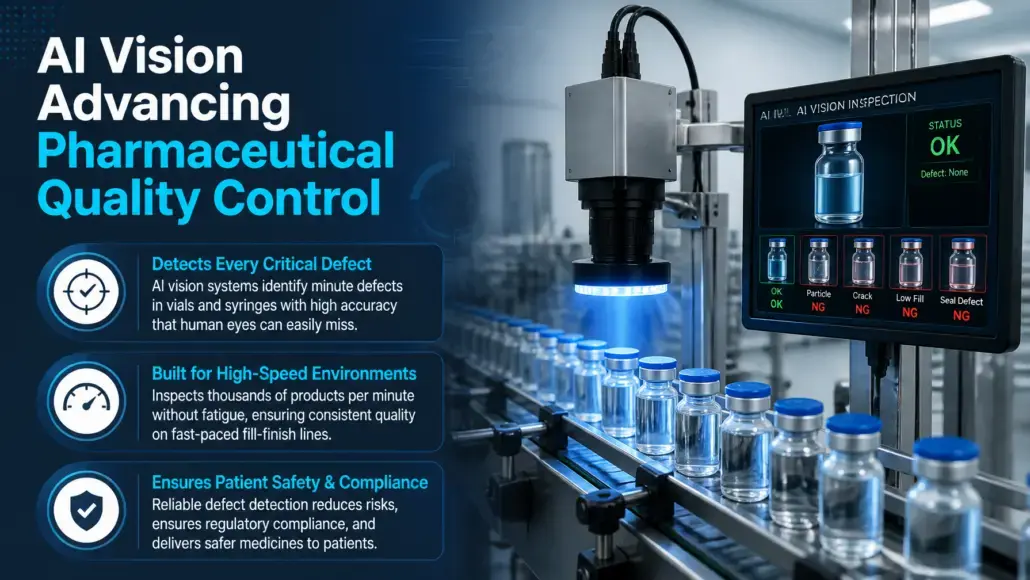
The pharmaceutical manufacturing industry is currently undergoing a digital transformation, with one of the most critical advancements being the implementation of AI vision for pharmaceutical quality control. In the fast paced environment of high speed fill finish lines, where thousands of vials and syringes are processed every hour, the traditional methods of manual visual inspection are no longer sufficient. Human inspectors are prone to fatigue and can struggle to detect minute defects or particulates at such high speeds. AI driven inspection systems, however, utilize advanced deep learning algorithms and high resolution cameras to provide a level of accuracy and consistency that far exceeds human capabilities. Companies like Roche and Sanofi have already integrated these modules into their European manufacturing hubs, achieving remarkable results in quality assurance.
The core objective of AI vision is to ensure that every single unit of medicine that leaves a production facility is free from defects and contaminants. This is particularly important for sterile injectable drugs, where the presence of a single foreign particle can lead to severe adverse reactions in patients. Pharma Advancement observes that by using AI to analyze images of vials in real time, manufacturers can identify and reject faulty products instantly, preventing them from entering the supply chain. This technology is not just about automation. It is about significantly enhancing the reliability of the quality control process and protecting patient safety.
Technical Superiority of AI Inspection Modules
The integration of AI into visual inspection systems represents a significant technological leap. Traditional automated inspection systems relied on simple rule based algorithms that were often unable to distinguish between a harmless bubble and a dangerous glass shard. AI vision, however, uses neural networks that have been trained on vast datasets of both perfect and defective products. This allows the system to recognize complex patterns and make highly accurate decisions even in challenging conditions. Syntegon, a leader in pharmaceutical processing technology, has developed AI inspection modules that are specifically designed for high speed lines, offering a seamless integration into existing workflows.
Roche and Sanofi have been early adopters of Syntegon’s AI technology, implementing it across their European fill finish hubs. These companies have reported that the AI modules can achieve ninety nine point nine percent accuracy, a level of precision that was previously unattainable. The systems are capable of detecting a wide range of defects, including cracks in the glass, improper seal crimping, and the presence of foreign particulates. Furthermore, the AI can be trained to handle difficult to inspect products, such as highly viscous liquids or suspensions that tend to trap bubbles. By reducing the number of false rejects, the technology also helps to minimize waste and improve the overall efficiency of the production line.
Enhancing Detection Rates and Reducing False Rejects
One of the most significant challenges in pharmaceutical quality control is the balance between detection rates and false rejects:
- Balancing Inspection Trade-offs: Conventional systems struggle between oversensitivity (rejecting good products, causing waste and higher costs) and undersensitivity (allowing defective products to slip through).
-
Nuanced Visual Analysis: AI vision resolves this compromise by delivering more sophisticated, contextual image evaluation.
Syntegon’s AI-based system boosts particle detection by 70%. Simultaneously reduces false rejection rates by 60%, significantly minimizing unnecessary scrap.
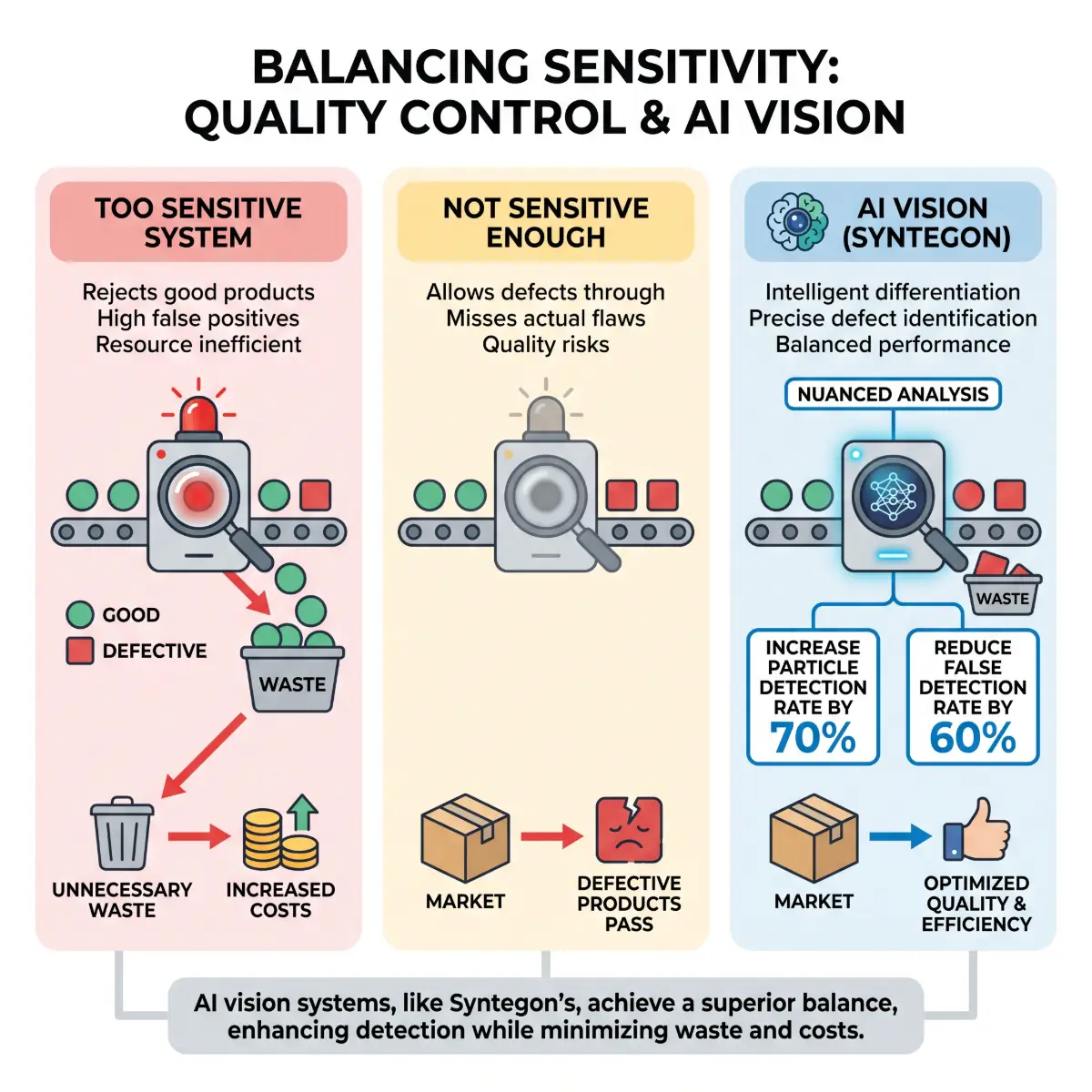
This dramatic improvement in performance is possible because the AI can learn from its mistakes. If the system incorrectly identifies a product as defective, the data can be used to retrain the model, making it smarter and more accurate over time. This continuous learning process ensures that the quality control system remains effective even as production parameters or raw material characteristics change. For large pharmaceutical companies, the reduction in false rejects can save millions of dollars in lost revenue each year, making the investment in AI vision a clear business priority.
Integrating AI into High-Speed Fill-Finish Hubs
The implementation of AI vision requires a well planned integration into the manufacturing infrastructure:
- Eliminating Line Bottlenecks: AI systems process high-resolution images within milliseconds, keeping pace with complex, interconnected high-speed fill-finish lines.
- Real-Time Quality Assurance: Instantaneous visual verification enables manufacturing lines to run at full production capacity without compromising quality standards.
- Automated Compliance Logging: Detailed inspection data feeds directly into digital batch records, ensuring every verification is securely and automatically documented.
For companies like Sanofi and Roche, the integration of AI has also involved a shift in the roles of quality assurance personnel. Instead of performing repetitive visual checks, these professionals are now focused on managing the AI systems and analyzing the data they generate. This shift toward data driven quality management provides a more comprehensive view of the manufacturing process, allowing companies to identify long term trends and identify potential issues before they become serious problems. The move to AI vision is not just a change in technology. it is a change in the culture of quality within the organization.
Navigating Regulatory Standards for AI in Pharma
Regulatory compliance is a top priority for any pharmaceutical manufacturer, and the use of AI in quality control is subject to strict standards. Agencies like the FDA and the EMA require that all automated systems are fully validated and that the data they produce is accurate and reliable. The validation of AI vision systems involves demonstrating that the algorithms can consistently identify defects and that they are not susceptible to bias or error. Manufacturers must also maintain detailed records of the training data and the performance of the system over time.
Syntegon and other technology providers have worked closely with regulators to develop validation frameworks for AI in pharmaceutical manufacturing. These frameworks provide a clear roadmap for companies looking to implement the technology, ensuring that they can meet all regulatory requirements while reaping the benefits of improved quality and efficiency. As more companies successfully validate their AI systems, the technology is becoming more widely accepted by the industry and the regulators alike. The future of pharmaceutical quality control is clearly data driven, and AI vision is at the heart of this transformation.
The Future of AI in Pharmaceutical Manufacturing
As AI technology continues to advance, we can expect to see even more sophisticated applications in the pharmaceutical industry. Beyond visual inspection, AI could be used to optimize the entire manufacturing process, from drug discovery to final packaging. In the field of quality control, future systems may incorporate multi modal sensors, such as hyperspectral imaging or acoustic sensors, to provide an even more detailed analysis of each product. The ultimate goal is to create a fully autonomous manufacturing environment where every step is monitored and optimized by AI.
Pharma Advancement notes that AI vision is a transformative technology that is setting a new standard for quality assurance in high speed fill finish lines. By achieving ninety nine point nine percent accuracy and significantly reducing false rejects, companies like Roche and Sanofi are proving that AI is a powerful tool for enhancing patient safety and operational efficiency. As the technology becomes more widely adopted and the regulatory landscape continues to evolve, AI vision will become an essential component of the modern pharmaceutical factory.
References
- Precedence Research
- Syntegon Technology
- Deepceutix
- Eureka
- Sanofi
- Roche
