






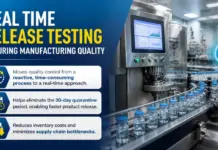













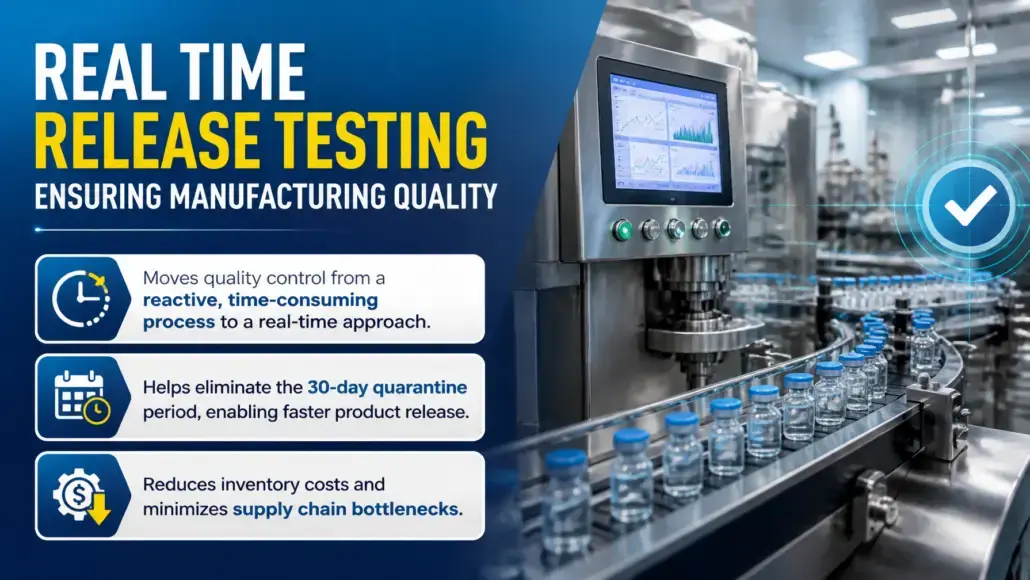
The traditional approach to quality control in pharmaceutical manufacturing has long been a reactive and time consuming process. In a legacy batch system, samples are taken from a finished batch and sent to a laboratory for a series of offline tests to verify potency, purity, and stability. This process often results in a thirty day quarantine period during which the product cannot be shipped, leading to significant inventory costs and potential supply chain bottlenecks. However, the adoption of intelligent Process Analytical Technology (PAT) is now enabling a shift toward real-time release testing, a proactive approach that ensures quality is built into the product throughout the entire manufacturing process.
Real-time release testing allows manufacturers to release products for shipment immediately after the final manufacturing step is completed, based on the data collected by in-line sensors during production. These sensors monitor critical process parameters and quality attributes in real time, providing a much higher level of assurance than traditional laboratory testing. By integrating technologies like Near-Infrared and Raman spectroscopy, manufacturers can identify and correct any deviations as they happen, ensuring that every unit meets the required specifications. Novartis has been a leader in this area, implementing PAT across its oncology portfolio to accelerate market delivery and improve operational efficiency.
The Role of Intelligent PAT in Quality Assurance
Process Analytical Technology is defined by the FDA as a system for designing, analyzing, and controlling manufacturing through timely measurements of critical quality and performance attributes. Unlike traditional testing, which provides a snapshot of the product at a single point in time, PAT provides a continuous stream of data throughout the manufacturing cycle. This allows for a much deeper understanding of the process and enables the use of advanced control strategies to maintain a state of control. Intelligent PAT systems use sophisticated algorithms to interpret the data from in-line sensors and provide actionable insights for production operators.
The implementation of PAT is a cornerstone of the broader Pharma 4.0 movement, which aims to create a more connected and data driven manufacturing environment:
- Minimized Human Error & Higher Consistency: Automating quality control reduces manual errors and ensures consistent product quality.
- Continuous Process Verification: PAT systems capture real-time data that enables continuous verification, proving process robustness and reliability to regulatory agencies.
- Proactive Quality Management: Moving to proactive oversight strengthens patient safety and risk control.
- Faster Time-to-Market: Efficient, automated quality assurance speeds up production cycles, delivering a key competitive edge in time-critical markets.
In-Line Sensors and Spectroscopy for Real-Time Analysis
The effectiveness of real-time release testing depends on the accuracy and reliability of the in-line sensors used to monitor the production process. Near-Infrared and Raman spectroscopy are two of the most commonly used technologies for this purpose. NIR spectroscopy uses light to measure the chemical composition and physical properties of a material, such as the concentration of an active ingredient or the moisture content of a granulated powder. Raman spectroscopy provides a molecular fingerprint of the material, allowing for the precise identification and quantification of different chemical species.
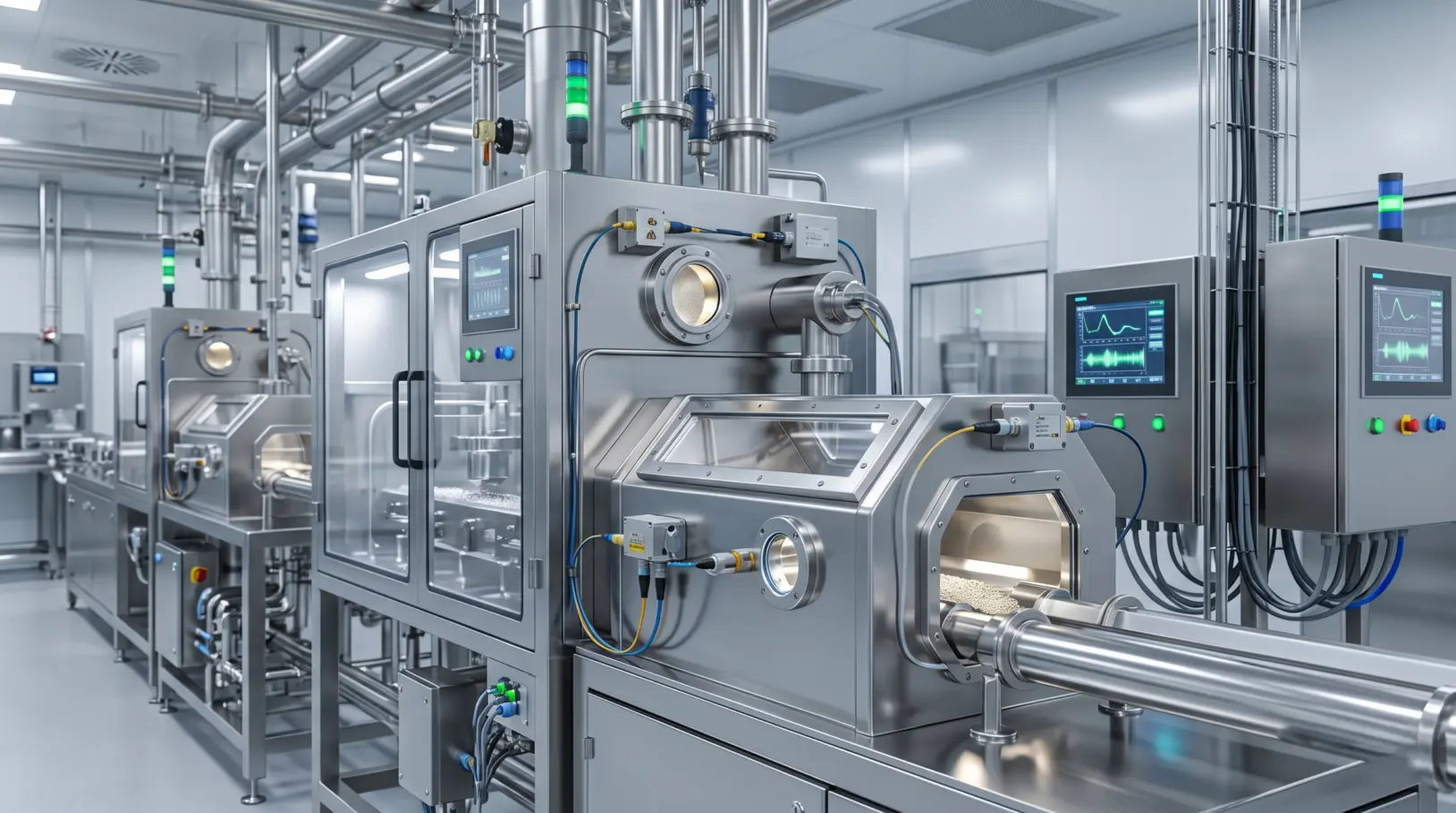
These sensors are integrated directly into the manufacturing equipment, allowing for the non destructive analysis of the product as it moves through the line. For example, in a continuous blending process, an NIR sensor can monitor the uniformity of the mixture in real time, ensuring that every tablet contains the correct dose of the medication. If the sensor detects a deviation, the control system can automatically adjust the flow rates of the ingredients to bring the process back into specification. Among the various sensor technologies used in this process, AI vision systems represent the cutting edge of visual quality attributes, transforming fill finish lines into fully autonomous checkpoints.
Eliminating the Thirty-Day Quarantine Bottleneck
The most significant business benefit of real-time release testing is the elimination of the lengthy post production quarantine period. In the traditional model, the capital tied up in quarantined inventory can be substantial, and the delay in shipping products can lead to missed sales opportunities and increased logistics costs. By releasing products in real time, manufacturers can significantly improve their cash flow and reduce the need for large storage facilities. This is particularly valuable for high value therapies with short shelf lives, where every day of delay can have a major impact on the product’s value.
Novartis has successfully implemented RTRT for its oncology products, allowing the company to deliver life saving medications to patients much faster. The company has reported that the use of PAT and RTRT has not only reduced lead times but also improved the robustness of its manufacturing processes. By identifying potential issues early, Novartis has been able to reduce the number of failed batches and minimize the need for costly investigations. The success of this initiative has demonstrated the clear benefits of RTRT for the pharmaceutical industry and has paved the way for more widespread adoption of the technology.
Regulatory Confidence and Global Standardization
Regulatory agencies like the FDA and the EMA have been strong supporters of PAT and real-time release testing, recognizing the benefits for patient safety and supply chain resilience. The International Council for Harmonisation of Technical Requirements for Pharmaceuticals for Human Use (ICH) has provided guidelines, such as ICH Q8 (R2), which outline the principles of Quality by Design and the use of PAT for real time release. These guidelines provide a clear framework for manufacturers to follow, ensuring that their RTRT systems meet the highest standards of regulatory confidence.
The implementation of RTRT also facilitates global standardization of manufacturing processes. Because the quality of the product is verified in real time using standardized sensors and algorithms, manufacturers can ensure that their products are consistent regardless of where they are produced. This is particularly important for global companies with manufacturing facilities in multiple countries. By providing a higher level of assurance and reducing the risk of quality related drug shortages, RTRT is helping to build a more reliable and efficient global pharmaceutical supply chain.
The Future of Pharmaceutical Quality
The adoption of real-time release testing and intelligent PAT represents a fundamental shift in the way the pharmaceutical industry manages quality. By moving from a reactive, lab based approach to a proactive, data driven model, manufacturers can improve their operational efficiency, enhance patient safety, and accelerate the delivery of life saving medications. The success of leaders like Novartis in implementing these technologies across their oncology portfolios is a clear indication of the transformative potential of RTRT.
As we look toward the future, Pharma Advancement believes that the industry can expect to see even more sophisticated applications of PAT and RTRT as the industry continues its digital transformation. The integration of these technologies with AI and machine learning will enable even higher levels of process optimization and quality assurance. The ultimate goal is a fully integrated and autonomous manufacturing environment where every product is released in real time, ensuring that the right medicine reaches the right patient at the right time. The benefits are clear: higher quality, lower costs, and a safer, more responsive global health system.
References
-
Novartis
-
Pharma Almanac
-
News Medical
-
GMP Navigator
