
























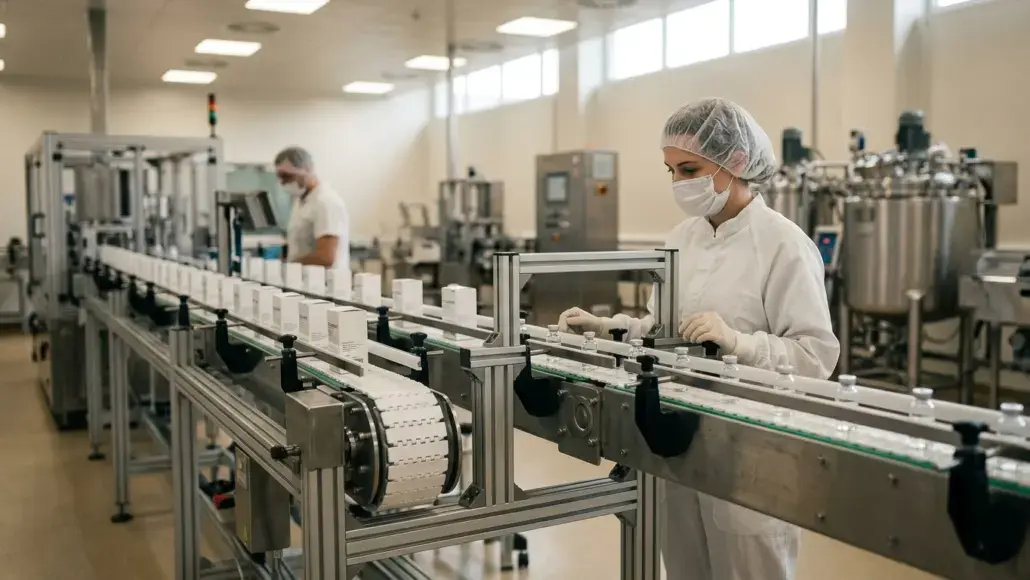
Modular conveyor architectures are fundamentally redefining the layout and operational capabilities of modern pharmaceutical manufacturing facilities. In an industry that is rapidly moving away from large-scale, dedicated production lines toward more agile, multi-product environments, the need for a flexible material handling infrastructure has never been greater. Traditional conveyor systems are often rigid, custom-built structures that are difficult and expensive to modify once installed. Modular conveyor architectures, however, utilize standardized, plug-and-play components that can be quickly reconfigured to accommodate new products, changing production volumes, or entirely different manufacturing processes. Pharma Advancement notes that this modularity is a critical enabler for the factory of the future, where the ability to adapt to market demands in real-time is a key competitive advantage.
The shift toward modularity is driven by the rise of specialized biologics and personalized medicines, which are often produced in smaller batches and require more frequent changeovers. In a multi-product facility, the conveyor system must be able to support a diverse range of primary and secondary packaging formats—from vials and syringes to blister packs and cartons—without needing a total system overhaul. Modular conveyor architectures allow manufacturers to mix and match different conveyor modules—such as straights, curves, merges, and diverts—to create a bespoke layout that can be evolved as the facility’s needs change. This level of flexibility is transforming pharmaceutical manufacturing from a static, capital-intensive process into a more fluid and responsive operation.
The Engineering Principles of Modular Conveyor Systems
The core of modular conveyor architectures lies in the use of standardized mechanical and electrical interfaces. Every module is designed to be self-contained, with its own drive motor, control electronics, and safety features. These modules can be snapped together like building blocks, with power and communication cables integrated into the frame for easy daisy-chaining. This distributed intelligence means that there is no need for a massive, centralized control cabinet; instead, each module communicates with its neighbors to coordinate the flow of material. This decentralized approach significantly reduces the time and complexity required for installation and commissioning, as each module can be pre-tested before it even arrives at the facility.
Furthermore, the mechanical design of these modules is optimized for the rigorous requirements of the pharmaceutical industry. Frames are typically constructed from high-grade stainless steel with smooth, open profiles that are easy to clean and sanitize. The use of low-friction materials and high-efficiency motors ensures that the systems are energy-efficient and quiet—a critical factor for the comfort and safety of operators in a cleanroom environment. The modularity also extends to the wear parts, such as belts and rollers, which can be replaced in minutes without the need for specialized tools. This ease of maintenance is a hallmark of the modular design philosophy, ensuring that the system remains operational for the maximum amount of time.
Enhancing Production Flexibility and Rapid Changeovers
The primary benefit of modular conveyor architectures is the dramatic improvement in production flexibility. In a traditional plant, adding a new piece of equipment or changing the flow of product can take weeks of engineering work and physical reconstruction. With a modular system, the same changes can often be accomplished in a single shift. Modules can be moved, swapped, or added to the line with minimal disruption, allowing for agile manufacturing that can keep pace with shifting clinical trial requirements or sudden market surges. This speed-to-market is an invaluable asset in the highly competitive pharmaceutical landscape.
Moreover, modularity is a key driver of rapid changeovers between different products. In a multi-product facility, the down-time between batches is a major cost driver. Modular conveyor architectures often feature quick-change guides and adjustable rails that can be set for different product dimensions in seconds. Some advanced systems even utilize motorized guides that can be automatically re-positioned by the plant’s central control system, eliminating the risk of human error and ensuring that the line is perfectly set up for the next product every time. This integration of modular hardware and smart software is the essence of flexible production, allowing manufacturers to maximize the utilization of their high-value cleanroom space.
Supporting Multi-Product Facilities and Smart Factories
The implementation of modular conveyor architectures is a cornerstone of the modern ‘smart factory’ and the move toward Industry 4.0. Because each module is an intelligent, connected device, it provides a wealth of real-time data on the status and performance of the material flow. This data can be used to optimize the entire facility’s throughput, identifying and resolving bottlenecks before they impact production. For example, if one module detects a buildup of product, it can signal upstream modules to slow down or re-route material to a different part of the line. This self-healing capability ensures a constant and smooth flow of product, even in the most complex multi-product environments.
Furthermore, modular architectures facilitate the use of Digital Twins for facility planning. Engineers can use virtual models of the standardized modules to simulate different floor layouts and production scenarios before any physical changes are made. This allows for a more rigorous and data-driven approach to facility design, ensuring that the layout is perfectly optimized for the specific mix of products being manufactured. The ability to try before you buy in a virtual environment reduces the risk and cost associated with major facility upgrades. In a smart factory, the conveyor system is not just a way to move things; it is a dynamic, data-generating infrastructure that supports continuous improvement and operational excellence.
Modular Automation and the Scalability of Pharma Production
Another significant advantage of modular conveyor architectures is their inherent scalability. A pharmaceutical start-up can begin with a simple, small-scale conveyor line for initial clinical production. As the product moves toward commercialization and volumes increase, the manufacturer can easily scale up their capacity by adding more modules or creating additional parallel lines. This pay-as-you-grow model reduces the initial capital requirement and allows for a more sustainable and manageable growth path. The modular approach also makes it easier to replicate success across multiple global sites, as the same standardized modules can be deployed in facilities around the world, ensuring a consistent and validated process everywhere.
The integration of modular automation—such as robotic arms or pick-and-place units—is also much simpler with a modular conveyor. These units can be mounted directly onto the standardized conveyor frames, with integrated power and data connections ready to go. This allows for the creation of highly automated cells that can be easily moved or re-configured within the facility. This flexibility is essential for the production of the next generation of complex medications, which often require specialized handling or processing steps that may change over time. By providing a stable yet adaptable platform for automation, modular conveyor architectures are future-proofing pharmaceutical manufacturing against the challenges of tomorrow.
The Future of Modular Architectures: AI and Mobile Robotics
Looking ahead, the evolution of modular conveyor architectures will be characterized by even deeper integration with artificial intelligence and mobile robotics. We are seeing the development of mobile conveyor modules that are mounted on autonomous mobile robots (AMRs). These units can move themselves around the factory floor, docking with different machines to create temporary, on-demand production lines. This would represent the ultimate in flexibility, where the entire layout of the plant can change automatically based on the daily production schedule. AI-driven logistics platforms would manage this dance of mobile modules, ensuring that every piece of material is in the right place at the right time.
We may also see the development of re-configurable surface conveyors, where a single module can change its function—from a standard belt to a sorting or merging unit—through the use of thousands of small, independently controlled actuators. This level of granular control would allow for the most complex material flows to be managed with a single, highly sophisticated modular platform. As these technologies mature, the distinction between the conveyor and the factory will continue to blur, resulting in a more integrated, intelligent, and efficient manufacturing ecosystem. Modular conveyor architectures are the foundational layer of this transformation, providing the flexible backbone that makes the smart factory possible.
Conclusion: A Strategic Asset for Agile Manufacturing
In conclusion, modular conveyor architectures are a strategic asset for any pharmaceutical manufacturer looking to thrive in an increasingly complex and fast-paced market. By providing a flexible, scalable, and easy-to-maintain material handling infrastructure, they enable the agile production models required for modern multi-product facilities. The integration of distributed intelligence and standardized components simplifies installation and commissioning, while the ability to rapidly re-configure the line supports faster speed-to-market and more efficient changeovers.
As the industry continues to move toward personalized medicine and Industry 4.0, the importance of modularity will only grow. It is a philosophy that aligns perfectly with the need for data-driven optimization and sustainable growth. By investing in a modular conveyor infrastructure, manufacturers are not just improving their current material flow; they are building a resilient and adaptable facility that can meet the challenges of the future with confidence. Pharma Advancement believes that modular conveyor architectures are the flexible heart of the modern pharmaceutical plant, ensuring that the right medicine reaches the right patient with maximum efficiency and quality.
