




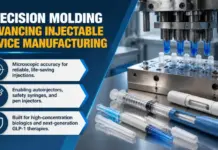






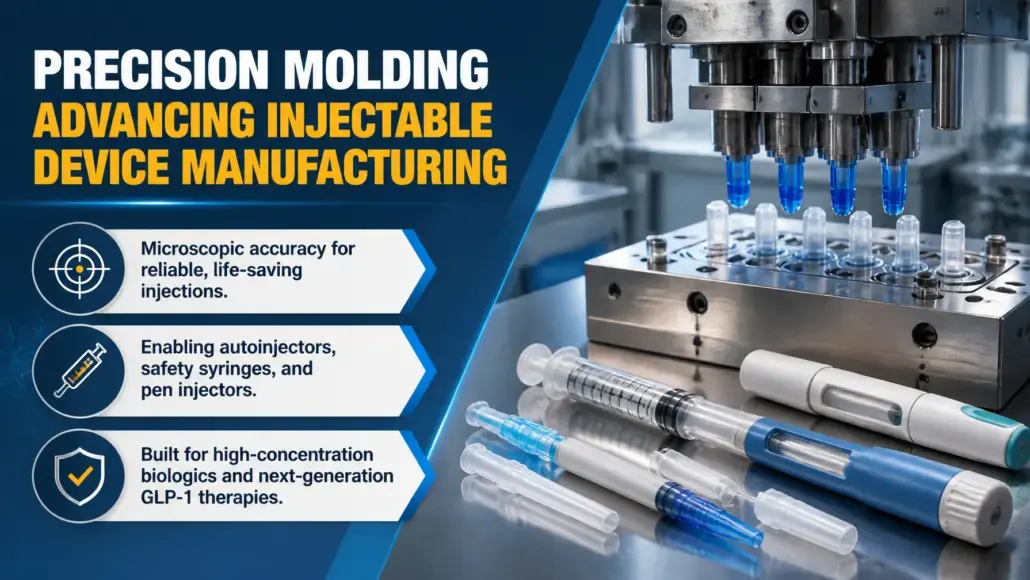
The surge in demand for self-administration therapies has transformed the landscape of medical device manufacturing. Today, the reliability of a life-saving injection often depends on the microscopic accuracy of plastic components. Pharma Advancement notes that precision molding for injectable devices is now at the forefront of this industrial shift, providing the intricate parts needed for autoinjectors, safety syringes, and pen injectors. As pharmaceutical companies move toward high-concentration biologics and GLP-1 treatments, the tolerances required for these components have reached unprecedented levels.
Manufacturing these parts requires more than just a standard injection molding machine. It demands an integrated approach that combines advanced polymer science, sophisticated mold design, and cleanroom operations. Every feature on a plunger rod or a needle shield must be consistent to ensure that the final device functions exactly as intended every time. Even a minor deviation in a component can lead to an incomplete dose or a mechanical failure, which is unacceptable in a clinical setting.
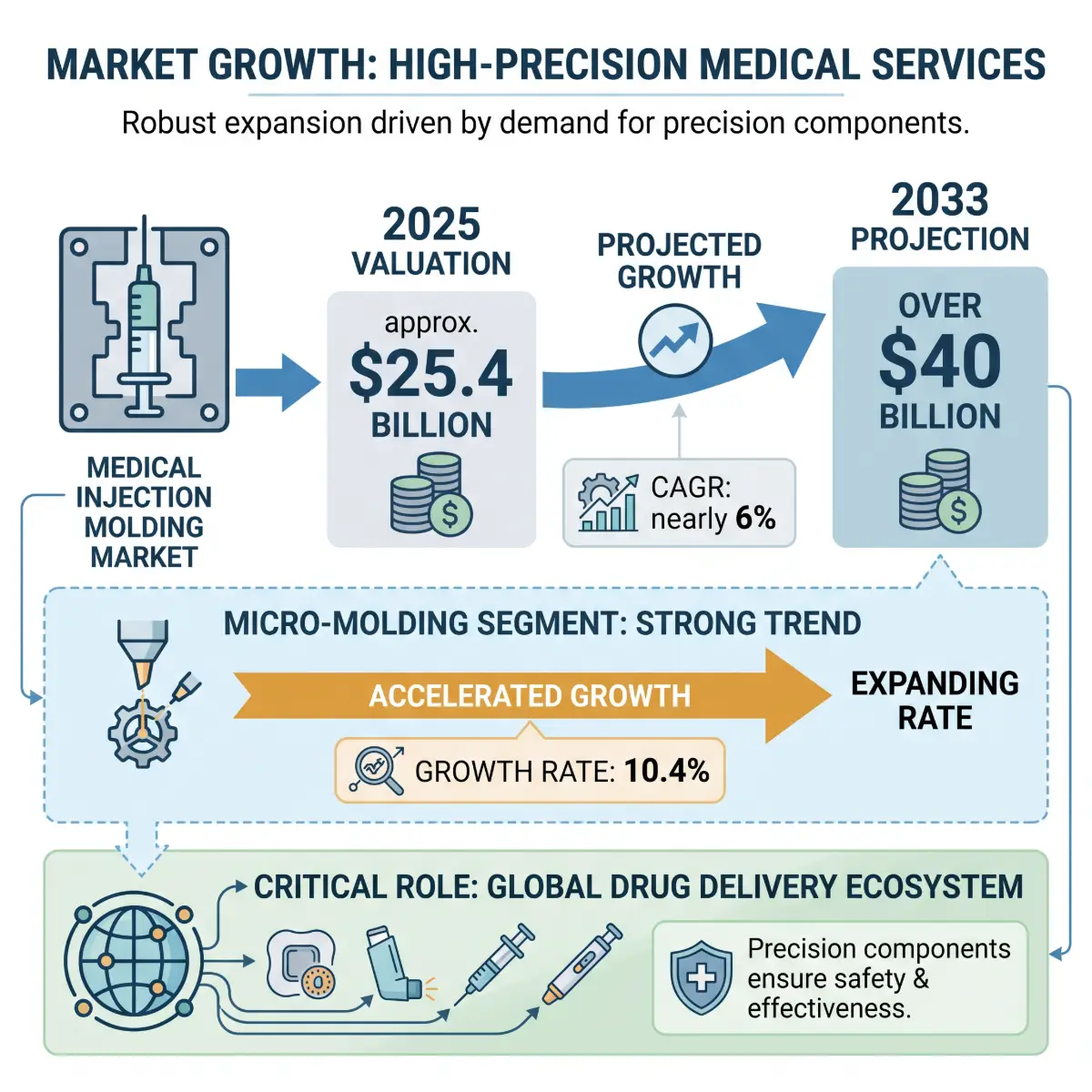
The market for these high-precision services is experiencing robust growth. The medical injection molding market is valued at approximately 25.4 billion dollars in 2025. Industry experts project that this market will grow at a compound annual rate of nearly 6 percent, reaching over 40 billion dollars by 2033. This trend is particularly strong in the micro-molding segment, which is expanding at a rate of 10.4 percent. These figures highlight the critical role that precision components play in the global drug delivery ecosystem.
Engineering Challenges in Micro Molding
Micro-molding involves creating features that are often smaller than a grain of sand. In the context of injectable devices, this might include the delicate threads of a dose-selection dial or the internal mechanisms of an autoinjector. Engineers must achieve sub-10-micron tolerances to ensure that these parts interface perfectly with one another. This requires specialized equipment that can control the injection pressure and temperature with extreme precision.
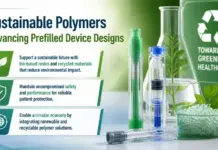
The choice of material is also a critical factor in the success of the molding process. Modern devices often utilize high-performance polymers such as cyclo-olefin copolymers or polyetheretherketone. these materials offer excellent chemical resistance, transparency, and mechanical strength. However, they also behave differently under the heat and pressure of the molding process. Engineering teams must conduct extensive simulations to predict how the polymer will flow into the mold and how it will shrink as it cools.
Gerresheimer has made significant investments in its autoinjector capacity and recently opened a new pharmaceutical glass and polymer plant in China. The company has also expanded its manufacturing footprint in the United States to meet the rising demand for GLP-1 pen injectors. These facilities utilize the latest scientific molding techniques to ensure that every part meets the rigorous standards required by regulatory bodies worldwide.
Maintaining Quality in Cleanroom Environments
Precision molding for medical devices must occur within controlled environments to prevent contamination:
- Cleanroom Standards and Automated Sterile Handling: Operations rely on ISO 13485 compliance and ISO 14644 cleanrooms to eliminate particulates and bioburden, using automated handling systems to transfer parts from molds to assembly without human contact inside a unified sterile zone.
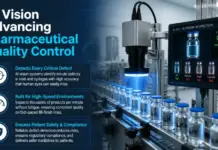
- Inline Vision Inspection and Quality Control: High-resolution cameras inspect every part in real time to catch minute defects—such as flash, short shots, or surface flaws—preventing defective components from reaching assembly and safeguarding the supply chain against costly recalls.
West Pharmaceutical Services recently launched the West Synchrony prefillable syringe system, which won a 2025 Pharmaceutical Technology Excellence Award. This system is designed to provide a high level of compatibility with a wide range of biologics. The development of such systems relies on the ability to produce elastomeric and polymer components with extreme precision, ensuring a perfect seal and a consistent delivery force.
The Impact of GLP-1 Therapies on Production
The explosive growth of the GLP-1 market has put immense pressure on the molding industry:
- Complex Pen Injector Architecture: Delivering these drugs relies on sophisticated pen injectors constructed from dozens of high-precision parts, requiring exceptional manufacturing accuracy.
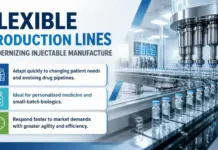
- High-Volume Production Scaling: To satisfy surging market demand without sacrificing stringent quality standards, manufacturers are scaling output using multi-cavity molds capable of producing hundreds of components per cycle.
Managing the complexity of these high-volume operations requires a deep understanding of scientific molding principles. Every cavity in a mold must be identical to ensure that the parts produced are interchangeable. This requires a rigorous validation process, including installation, operational, and performance qualification. By establishing a robust process window, engineers can ensure that the system is resistant to small variations in the raw material or environmental conditions.
Phillips-Medisize has expanded its capabilities in this area following the acquisition of the Vectura Group in 2025. This move allows the company to integrate its expertise in precision molding with advanced inhalation and injectable delivery technologies. By providing a full-service solution from design to commercial manufacturing, the company is helping its partners bring complex combination products to market more efficiently.
Advancing Material Performance for Specialized Storage
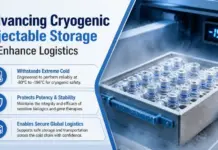
As the industry moves toward more complex medications, the requirements for the devices that deliver them are also evolving. For example, some biologics and cell therapies require storage at extreme temperatures. The components used in these devices must be able to maintain their structural integrity and functional performance in these harsh conditions. This is where the intersection of molding and material performance for cryogenic injectable storage becomes vital.
Cryogenic storage presents unique challenges for plastic parts. Standard polymers can become brittle and crack at -80 degrees Celsius or lower. Engineers are now developing specialized polymer blends and coatings that can withstand these temperatures while still providing the necessary barrier properties. The precision molding process must be adapted to handle these advanced materials, often requiring different cycle times and cooling profiles to achieve the desired properties.
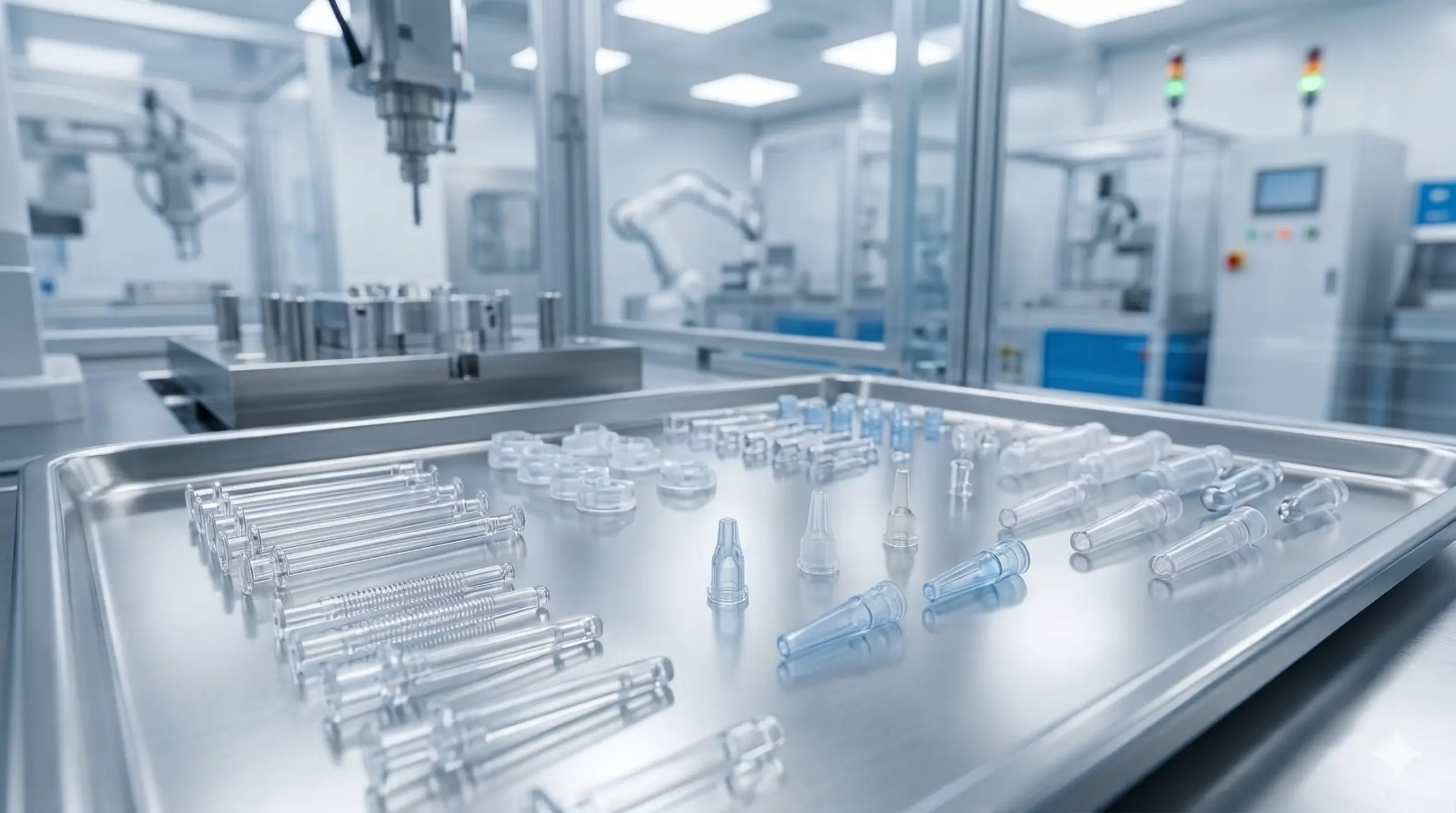
Aptar Pharma has recently expanded its R&D center in France, focusing on the integration of device design, simulation, and digital health. This facility allows the company to test new materials and molding techniques in a controlled environment, accelerating the development of the next generation of injectable devices. By combining their expertise in polymer engineering with a deep understanding of patient needs, they are creating solutions that are both safe and easy to use.
Regulatory Trends and Future Opportunities
The regulatory environment for medical devices is becoming increasingly complex. In late 2025, the update to USP <382> regarding elastomeric component functional suitability came into full effect. This shift requires manufacturers to test the functional performance of the entire system rather than just the individual components. This change underscores the importance of precision molding, as the interaction between different parts is now a key part of the regulatory submission.
Furthermore, the revision of ISO 11040-8 in 2026 is expected to add new test methods and expanded requirements for finished prefilled syringes. Manufacturers must be prepared to provide detailed data on the dimensional stability and functional reliability of their molded parts. This will drive further investment in advanced metrology and data management systems to ensure that every batch is fully documented and traceable.
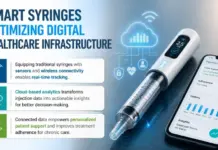
Pharma Advancement observes that the future of precision molding for injectable devices lies in the integration of smart technologies. Connected injectors that can track dose history and provide feedback to the patient are already entering the market. These devices require the molding of even more complex parts that can accommodate sensors and electronics. As we look toward 2030, the ability to produce these sophisticated components at scale will be a defining characteristic of the leading companies in the sector.
References
- “Medical Injection Molding Market Forecast” – Fortune Business Insights
- “Polymer Microinjection Molding Growth Trends” – Grand View Research
- “Injectable Drug Delivery Market Size and Growth” – MarketsandMarkets
- “West Pharmaceutical Services 2025 Financial Outlook” – West Pharmaceutical Services
- “Gerresheimer CEO and Strategy Update” – Gerresheimer
- “Aptar Pharma R&D Center Expansion” – Aptar Pharma
- “Phillips-Medisize Vectura Acquisition Details” – Molex
- “USP 382 Functional Suitability Standards” – United States Pharmacopeia
- “ISO 11040-8 Prefilled Syringe Test Methods” – International Organization for Standardization
- “Nemera Autoinjector Platform Development” – Nemera
