
























The strategic planning of a clinical study has historically been a process reliant on expert intuition and historical precedents. While these elements remain valuable the modern pharmaceutical landscape demands a more rigorous and quantitative approach to forecasting. The adoption of predictive analytics in clinical trials represents a shift toward using statistical models to anticipate challenges before they manifest in the field. By analyzing vast datasets containing information on patient demographics and site performance and regulatory timelines companies can now build more accurate projections for their research projects. This ability to see around the corner is essential in an environment where the cost of failure is astronomical and the pressure to deliver results is relentless.
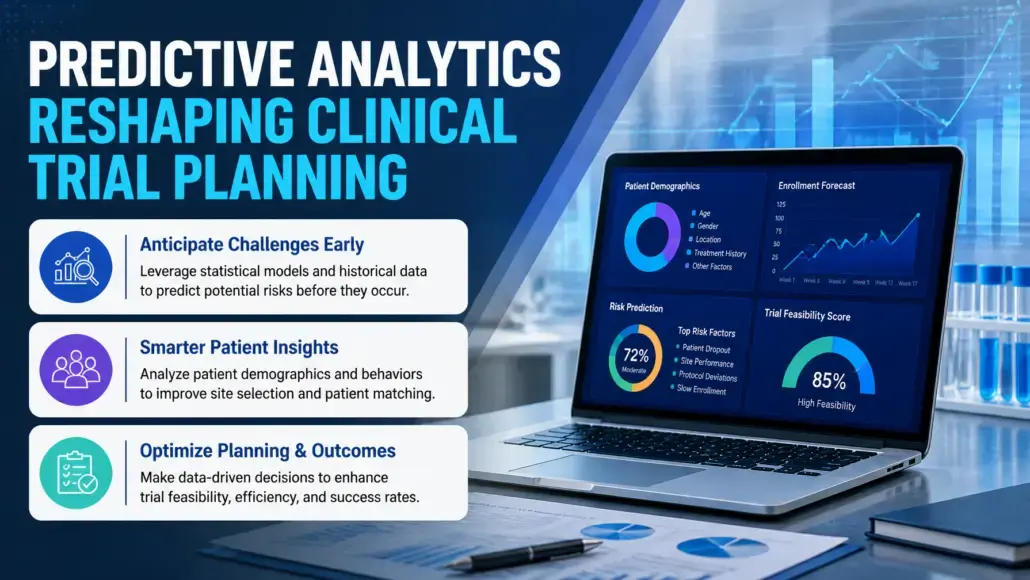
Pharma Advancement notes that at the heart of this revolution is the integration of historical trial data with real time market intelligence. When adoption of predictive analytics in clinical trials is prioritized during the feasibility stage it allows planners to evaluate different scenarios and their likely outcomes. For instance a team can model the impact of adding an extra site in a specific region versus extending the recruitment period at existing sites. These simulations provide a clear picture of the trade offs involved in every decision. By quantifying the risks associated with different strategies leadership can move forward with confidence knowing that their plan is backed by empirical evidence rather than just optimistic estimates.
Improving Patient Recruitment and Risk Management
The recruitment phase of any trial is often the area where the greatest discrepancies between planning and reality occur. Many studies fall behind schedule because the initial enrollment targets were unrealistic or did not account for local competition for patients. Through the adoption of predictive analytics in clinical trials organizations can gain a more nuanced understanding of patient availability. These tools can analyze disease prevalence and physician referral patterns and patient travel tolerance to identify the most promising locations for a study. This precision reduces the likelihood of selecting sites that fail to enroll a single patient which is a common and costly problem in the industry.

Risk mitigation is another critical area where these tools excel. Every clinical trial faces a multitude of potential disruptions from supply chain delays to unexpected safety findings. Adoption of predictive analytics in clinical trials enables study managers to identify early warning signs of these issues. By monitoring performance metrics across all sites the system can flag a location that is experiencing an unusual number of protocol deviations or a sudden drop in participant engagement. This allow the central team to intervene early with additional training or resources before the problem escalates into a major compliance issue that could threaten the entire study.
Transforming Feasibility and Site Selection Processes
The feasibility process is the foundation upon which every successful trial is built. In the past this process often involved sending out surveys to potential investigators and hoping for accurate responses. However self reporting is notoriously unreliable. With adoption of predictive analytics in clinical trials researchers can bypass the guesswork by using objective data to evaluate site capability. They can look at past performance in similar therapeutic areas and staff turnover rates and even local infrastructure to determine if a site is truly equipped to handle a complex protocol. This data driven approach ensures that resources are allocated to the investigators most likely to succeed.
Furthermore the ability to predict patient retention is a game changer for long term studies. Dropping out of a trial is often the result of predictable factors such as the frequency of clinic visits or the complexity of patient reported outcome diaries. Adoption of predictive analytics in clinical trials can help designers optimize these protocols to be as patient friendly as possible. By identifying the specific elements of a study that are most likely to cause fatigue the team can make adjustments early in the design phase. This focus on the patient experience not only improves retention but also leads to higher quality data as participants are more likely to comply with the study requirements.
The financial planning of a trial also benefits significantly from these advanced analytical tools. Managing the cash flow for a multi year global project is a complex task that requires precise forecasting. Through adoption of predictive analytics in clinical trials financial officers can generate more accurate budgets that account for inflation and currency fluctuations and the variable costs of patient care in different countries. This level of detail prevents the budget overruns that frequently plague large scale research efforts. It also allows companies to better communicate their expected R and D expenditures to investors and stakeholders.
Enhancing Regulatory Compliance and Speed to Market
Regulatory agencies are increasingly looking for evidence that sponsors have a robust plan for quality management. The use of adoption of predictive analytics in clinical trials demonstrates a proactive commitment to data integrity and patient safety. By showing that a trial design has been rigorously tested through simulation and that potential risks have been identified and addressed sponsors can often facilitate a smoother review process. The transparency provided by these tools builds trust with regulators and can lead to faster approvals for innovative therapies.

The speed at which a trial progresses from the first patient enrolled to the final database lock is a critical metric for success. Delays in this process can cost a company millions of dollars in lost market exclusivity. Adoption of predictive analytics in clinical trials helps streamline every step of this journey. By predicting the time required for each phase of the study the team can identify potential bottlenecks and allocate additional staff or technology to keep the project on track. This relentless focus on efficiency is what allows the most innovative companies to stay ahead of the competition in a rapidly evolving market.
Building a More Intelligent Drug Development Ecosystem
Looking toward the future the scope of these tools will only continue to expand. As more data becomes available from electronic health records and genetic testing the accuracy of the models will improve even further. The adoption of predictive analytics in clinical trials is just the beginning of a broader movement toward a more intelligent and responsive drug development ecosystem. By embracing these technologies pharmaceutical companies are not just improving their internal processes they are ultimately helping to get new medicines to the patients who need them most in a more timely and efficient manner.
The conclusion of this shift is a research environment where uncertainty is minimized and adoption of predictive analytics in clinical trials is the standard for all strategic planning. Pharma Advancement believes that the transition may require a cultural change within organizations that have traditionally relied on legacy methods but the benefits are undeniable. As we move into an era of increasingly complex and personalized medicine the ability to predict and plan for success will be the defining characteristic of the industry leaders. The synergy between human expertise and machine intelligence is creating a new paradigm for excellence in clinical research.
