





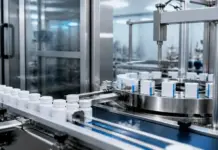


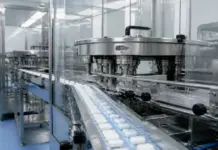
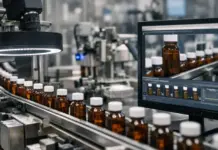
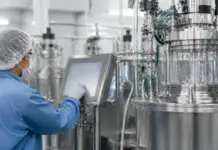



The global pharmaceutical manufacturing landscape is currently navigating a digital renaissance. At the core of this transformation is the concept of data-driven pharma packaging production efficiency. For decades, packaging lines were operated based on historical intuition and manual record-keeping. However, in today’s hyper-competitive and highly regulated environment, the ability to harness real-time data has become the defining factor for operational success. By integrating advanced analytics, Internet of Things (IoT) sensors, and cloud computing, pharmaceutical companies are now able to transform their packaging halls into intelligent ecosystems that learn, adapt, and optimize themselves for maximum output and minimal waste.
Improving pharma production efficiency is no longer just about the mechanical speed of the machines. It is about the intelligent orchestration of every component in the production value chain. From the supply of raw packaging materials to the final palletization of finished goods, every step generates a wealth of data. The challenge and the opportunity lie in extracting meaningful insights from this digital noise to drive continuous improvement. Pharma Advancment highlights that the emphasis is clearly shifting from faster machines to smarter systems that utilize data to solve the most persistent challenges in pharmaceutical manufacturing, such as unexpected downtime, material variance, and complex batch changeovers.
The Pillars of a Data-Driven Packaging Hall
The foundation of data-driven pharma packaging is the comprehensive collection of granular performance data. Modern packaging machines are equipped with hundreds of sensors that monitor everything from motor torque and temperature to the exact vibration frequency of a conveyor belt. When this data is aggregated and analyzed, it reveals the hidden patterns of inefficiency that are often invisible to the human eye. This process, often referred to as the creation of a Digital Twin, allows manufacturers to simulate various production scenarios and identify the optimal settings for any given batch, ensuring that the line operates at its peak potential from the moment it starts.
Real-Time Monitoring and OEE Optimization
Overall Equipment Effectiveness (OEE) is the standard metric for measuring production efficiency, but a data-driven pharma packaging takes it to a new level. By monitoring OEE in real-time, plant managers can instantly see where time is being lost—whether it’s due to minor stops, speed losses, or quality defects. Instead of waiting for a shift-end report to identify a problem, the system can provide instant alerts, allowing for immediate corrective action. This real-time visibility is crucial for maintaining pharma production efficiency in high-volume environments where even a five-minute delay can result in thousands of dollars in lost revenue.
Predictive Maintenance: Reducing Unplanned Downtime
One of the most significant benefits of a data-driven pharma packaging is the transition from reactive to predictive maintenance. By using machine learning algorithms to analyze the historical data of component failures, the system can identify the early warning signs of a breakdown. For example, a subtle change in the sound profile of a bearing or a minor increase in the energy consumption of a servo motor can signal a looming failure weeks in advance. By scheduling repairs during planned downtime rather than responding to an emergency, manufacturers can significantly increase their total uptime. This predictive capability is a cornerstone of the modern smart factory, ensuring that the flow of life-saving medicine is never interrupted by preventable mechanical issues.
Streamlining Changeovers and Small Batch Production
The pharmaceutical industry is moving away from the era of one drug fits all toward personalized medicine and smaller, more frequent production runs. This shift presents a massive challenge for packaging efficiency, as traditional changeovers can take hours of labor and lead to significant material waste. Data-driven pharma packaging addresses this by digitizing the changeover process. Automated systems can now load specific machine profiles for different bottle sizes or blister formats at the touch of a button, ensuring that the line is perfectly calibrated from the first unit.
Data-Enhanced Lean Manufacturing
Lean manufacturing principles, such as reducing the Seven Wastes, are greatly enhanced by high-fidelity data. For example, by analyzing the flow of materials through the packaging hall, companies can identify bottlenecks in the supply of labels or cartons, optimizing the internal logistics to ensure that the machines are never starved for components. Furthermore, data analytics can help minimize material waste by precisely controlling the application of adhesives or the cutting of films, ensuring that every square centimeter of packaging material is utilized effectively.
Quality Control and Right-First-Time Production
Every rejected package is a double loss: the loss of the medication itself and the loss of the production time used to create it. A data-driven pharma packaging system improves pharma production efficiency by fostering a Right-First-Time culture. By correlating production data with quality inspection results, manufacturers can identify the root causes of defects. If a specific batch of foil is consistently leading to seal failures, the system can flag this in real-time, allowing the operator to adjust the temperature or pressure before a large number of defects are produced. This closed-loop quality control is essential for maintaining the high standards required by global regulatory bodies while keeping production costs under control.
The Role of AI in Strategic Throughput Analysis
As manufacturing facilities become more complex, the number of variables influencing efficiency grows exponentially. Human analysts often struggle to understand the complex interdependencies between different stages of the packaging process. This is where Artificial Intelligence (AI) and Big Data come into play. AI can analyze years of production data across multiple facilities to identify high-level trends and opportunities for structural improvement. It might discover that a specific combination of ambient humidity and machine speed always leads to higher efficiency, or that a certain operator training program has a measurable impact on OEE.
Supply Chain Integration and Demand-Driven Packaging
The ultimate evolution of data-driven pharma packaging efficiency is the integration of the packaging hall with the broader global supply chain. By sharing real-time production data with suppliers and distributors, pharmaceutical companies can adopt a demand-driven packaging model. When a pharmacy in one part of the world sees a spike in demand for a specific medication, the packaging line can automatically adjust its schedule to prioritize that product. This agility is a powerful competitive advantage, reducing the need for large inventories and ensuring that the right medicine reaches the right patient at the right time. This level of end-to-end transparency is the hallmark of the industry’s future.
Cybersecurity and Data Integrity in the Digital Age
As packaging lines become more connected through data-driven pharma packaging, the importance of cybersecurity and data integrity cannot be overstated. The pharmaceutical industry is a prime target for cyberattacks, and a breach in the production network could lead to data loss or even the manipulation of production settings. A data-driven pharma packaging approach must therefore be built on a foundation of robust security protocols and encrypted communication. Furthermore, ensuring that the data used for efficiency analysis is accurate and tamper-proof is essential for regulatory compliance. The industry is increasingly adopting blockchain and other distributed ledger technologies to ensure that every byte of production data is verifiable and immutable.
Conclusion: The Competitive Edge of Data
In conclusion, the transition to data-driven pharma packaging production efficiency is not merely a technological trend. It is a fundamental shift in the industrial mindset. Pharma Advancment highlights that by treating data as a valuable raw material, pharmaceutical manufacturers are unlocking new levels of throughput, quality, and sustainability. The ability to listen to what the machines are saying and to translate that language into actionable business intelligence is the key to thriving in the next era of medicine. This evolution is a commitment to precision and excellence, ensuring that the pharmaceutical industry remains a pillar of global health, driven by the unwavering pursuit of efficiency and the transformative power of data. Through the lens of pharma production efficiency, we see a world where waste is minimized, quality is guaranteed, and the delivery of life-saving innovation is faster than ever before.
