












The pharmaceutical industry is currently facing a significant paradox. While its primary mission is to promote human health and well-being, its vast global operations—particularly in the realm of packaging—have historically contributed to substantial environmental challenges. Every year, billions of plastic bottles, blister packs, and secondary cartons are produced, used once, and discarded, often ending up in landfills or incinerators. Pharma Advancement notes that as global awareness of the climate crisis intensifies, there is an urgent move toward the adoption of eco friendly materials for pharmaceutical containers. This transition is not merely a matter of corporate social responsibility. It is becoming a strategic necessity as regulators, investors, and consumers alike demand a more sustainable approach to healthcare.
Emerging Sustainable Material Innovations
Biodegradable Polymers and Bioplastics
One of the most promising avenues for change lies in the development and application of biodegradable plastics. Traditional plastics used in medicine, such as PVC and PET, are prized for their durability and barrier properties, but they can persist in the environment for centuries. Researchers are now exploring polymers derived from renewable sources, such as polylactic acid (PLA) and polyhydroxyalkanoates (PHA), which can break down under specific environmental conditions. These materials offer a significant reduction in carbon footprint compared to petroleum-based alternatives. However, the challenge in a pharmaceutical context is ensuring that these biodegradable options can provide the same level of moisture and oxygen protection required to keep medications stable over a long shelf life.
To address these challenges, material scientists are developing advanced biodegradable composites that combine renewable polymers with high-performance barrier coatings and natural additives to enhance strength, durability, and chemical resistance. Extensive laboratory testing is being conducted to evaluate how these materials perform under sterilization, temperature fluctuations, and long-term storage conditions commonly encountered in pharmaceutical supply chains. Researchers are also focusing on improving manufacturing consistency so biodegradable materials can be processed using existing packaging equipment without major infrastructure investments. As regulatory bodies increasingly encourage sustainable packaging innovations, these next-generation polymers have the potential to reduce environmental impact while maintaining the rigorous quality, safety, and performance standards required for pharmaceutical products across global markets.
The Rise of Plant-Based Packaging Solutions
The emergence of plant based packaging is another exciting frontier in the quest for sustainability. Materials derived from agricultural waste, sugarcane, or even seaweed are being transformed into robust packaging solutions. For example, bio-based polyethylene (Bio-PE) is chemically identical to traditional PE but is produced from sugarcane ethanol rather than fossil fuels. This allows manufacturers to utilize their existing production machinery while significantly improving their environmental profile. Furthermore, the use of mycelium-based materials—grown from fungal spores and agricultural byproducts—is being trialed for secondary packaging and shipping buffers, offering a completely compostable alternative to expanded polystyrene.
Beyond reducing dependence on fossil resources, plant-based packaging is helping pharmaceutical companies align with evolving environmental regulations and corporate sustainability commitments. Continuous improvements in material engineering are enhancing the strength, flexibility, and barrier performance of bio-based materials, making them suitable for a wider range of pharmaceutical applications. Researchers are also investigating renewable coatings and water-based adhesives that maintain package integrity while improving recyclability and compostability. In addition, lifecycle assessments are being used to measure the environmental benefits of these materials, from raw material sourcing to end-of-life disposal. As production scales increase and manufacturing costs decline, plant-based packaging is expected to become an increasingly practical and commercially viable solution for reducing the environmental footprint of pharmaceutical packaging without compromising product quality or patient safety.
Ensuring Safety and Circularity in Resin Design
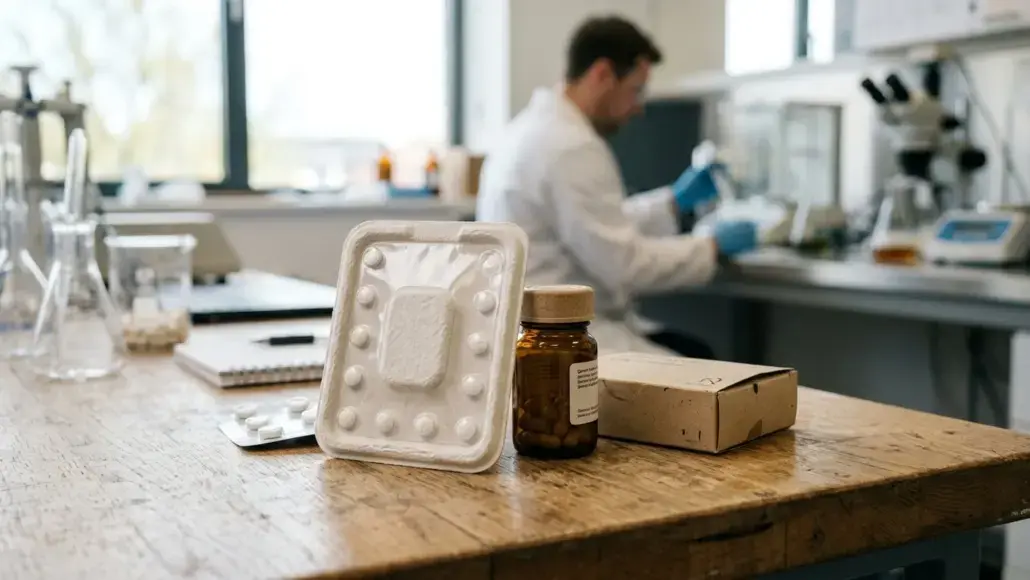
Developing sustainable pharma resins requires a deep understanding of material science and its interaction with sensitive drug molecules. For a material to be considered viable, it must meet stringent medical-grade standards for purity and safety. It cannot leach harmful chemicals into the medication, and it must withstand sterilization processes such as gamma irradiation or autoclaving. Innovation in this space is focusing on mono-material designs. Traditionally, blister packs are made from a combination of different plastics and aluminum, making them nearly impossible to recycle. By creating eco-conscious drug containers from a single type of recyclable resin, companies can ensure that their packaging can be easily processed in existing recycling streams, contributing to a truly circular economy.
Strategic Material Diversification for Plastic Reduction
The push for plastic reduction in healthcare is also driving a return to more traditional materials, but with a modern twist. Glass and aluminum are highly recyclable and offer superior barrier properties, yet their weight and the energy required for their production have often been cited as drawbacks. However, advancements in ‘light-weighting’ technology are making these materials more competitive. Thinner, stronger glass vials and high-recycled-content aluminum tubes are reducing the environmental impact of transport while maintaining the high safety standards required for primary packaging. Furthermore, the development of paper-based blister packs, treated with bio-based coatings for moisture resistance, is providing a middle ground for solid-dose medications that do not require the extreme barrier properties of plastic.
Navigating the Evolving Regulatory Landscape
Regulatory landscapes are also evolving to support the use of eco friendly materials. While the primary focus of health authorities like the FDA remains patient safety, there is an increasing recognition that environmental health and human health are inextricably linked. Guidelines are being developed to help manufacturers navigate the validation process for new, sustainable materials. Furthermore, initiatives such as the European Union’s Packaging and Packaging Waste Regulation (PPWR) are setting ambitious targets for recycled content and recyclability, forcing the pharmaceutical sector to accelerate its innovation cycles. Companies that proactively adopt these changes are finding themselves better positioned to enter markets with strict environmental standards.
A Holistic Approach to the Sustainable Supply Chain
The transition to a greener packaging model also offers an opportunity to rethink the entire supply chain. Sustainability is not just about the material itself, but also how it is sourced, manufactured, and transported. Moving toward localized production and using renewable energy in manufacturing facilities further enhances the environmental benefits of eco friendly materials. Additionally, the adoption of digital labelling—reducing the need for massive paper inserts—complements the move toward sustainable containers. When viewed holistically, these changes represent a fundamental shift in the industry’s culture, moving away from a linear ‘take-make-waste’ model toward one that respects the boundaries of our planet.
The Future of Ecological Stewardship in Pharma
Ultimately, the successful integration of sustainable solutions in the pharmaceutical sector depends on collaboration across the entire ecosystem. Material scientists, packaging engineers, regulatory experts, and waste management professionals must work together to create a system where life-saving medications are delivered in a way that does not harm the world we live in. While the journey toward 100% sustainable packaging is complex and full of technical hurdles, the progress made in recent years is encouraging. Pharma Advancement highlights that by investing in eco friendly materials for pharmaceutical containers today, the industry is ensuring a healthier future for both patients and the environment, proving that medical excellence and ecological stewardship can indeed go hand in hand.
