

















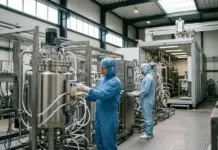

Closed Loop Powder Containment Enabling Modern API Conveying
Closed-loop powder containment is rapidly becoming the most critical infrastructure requirement for the handling and conveying of Active Pharmaceutical Ingredients (APIs), particularly as the...
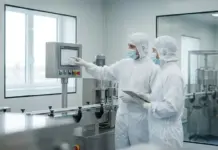
Wash in Place Systems Powering Hygienic Pharma Conveyors
The evolution of hygienic design in the pharmaceutical industry has reached a pivotal moment with the widespread adoption of Wash-in-Place (WIP) systems for conveyor...
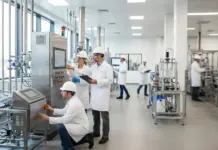
Modular Conveyor Architectures Boosting Pharma Production
Modular conveyor architectures are fundamentally redefining the layout and operational capabilities of modern pharmaceutical manufacturing facilities. In an industry that is rapidly moving away...
Magnetic Levitation Transport Improving Sterile Pharmacy
Magnetic levitation transport is fundamentally changing the way materials are moved within the most sensitive environments of pharmaceutical production. In sterile manufacturing and aseptic...
Pneumatic Vacuum Conveying Aiding OSD Manufacturing Process
Pneumatic vacuum conveying is emerging as a critical technology for pharmaceutical manufacturers seeking to overcome the pervasive issues of product degradation and contamination in...
AI-Driven Predictive Maintenance Optimizing Tablet Conveyors
AI-driven predictive maintenance is rapidly becoming the gold standard for operational excellence in the pharmaceutical manufacturing sector, particularly within the high-stakes environment of high-speed...
High-Speed Precision Conveyor Systems Built for Pharmaceutical Production Demands
Pharmaceutical manufacturers face a critical operational challenge in maintaining precise product positioning while achieving the high-speed throughput demanded by modern schedules. Precision link conveyors...
Subscribe Our Newsletter
White Papers
The Future of Digital Health
The pharmaceutical industry is acutely aware that the future of health and care, particularly in the United States, are trending toward a digital revolution....
Five Best Practices to Deliver Exceptional Multichannel Experiences
A one-size-fits-all customer journey no longer works. In the age of the consumer, the quality of the interaction is paramount. In this paper, we...
The Impact and Use of Social Media in Pharmacovigilance
Social media presents new channels and methods for biopharmaceutical companies to move away from traditional pharmacovigilance (PV) systems and safety reporting methods towards more...