










In the high-stakes world of pharmaceutical manufacturing, the final stage of the production process—the filling of the medication into its primary container—is often the most critical. This is especially true for injectable drugs, vaccines, and biologics that must be produced under strict aseptic conditions. Even the smallest deviation in dosage or the minor ingress of a contaminant can render a batch of life-saving medicine dangerous or ineffective. To meet these challenges, the industry is increasingly turning to precision filling technology, a suite of advanced mechanical and digital solutions designed to deliver liquid dose accuracy at high speeds while maintaining the absolute integrity of the sterile field.
Maximizing Yield through Liquid Dose Accuracy
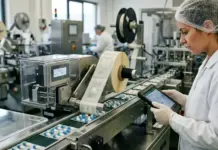
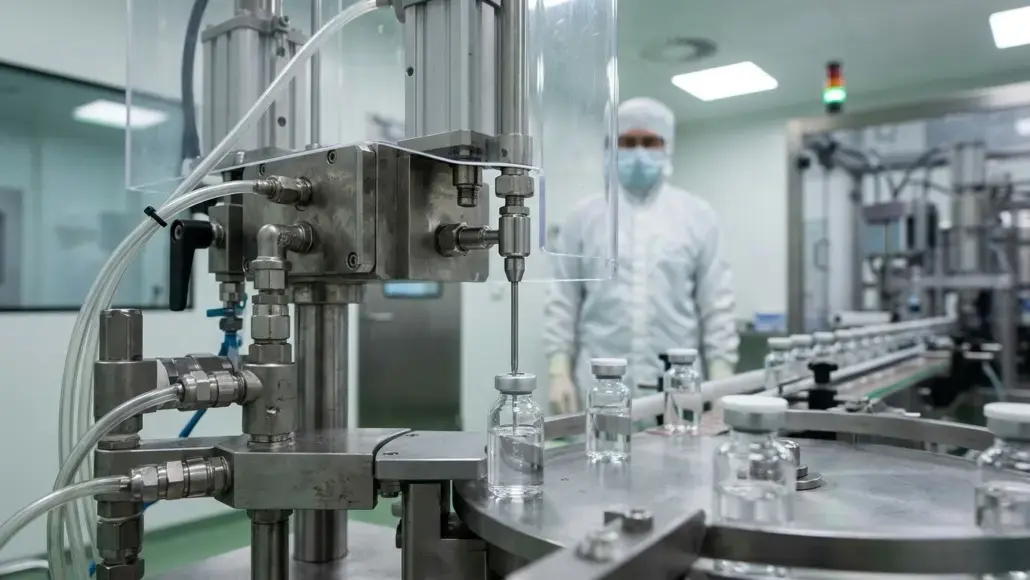
The primary driver for the adoption of precision filling technology is the need to minimize product loss, particularly when dealing with high-value biological therapies. These medications are often produced in small batches and are extremely expensive to manufacture. Traditional filling systems can experience overfill or underfill issues, where the volume of liquid dispensed varies slightly from container to container. Pharma Advancement notes that by utilizing high-speed vial filling systems equipped with advanced flow meters and load cells, manufacturers can achieve accuracies within fractions of a percent. This level of control ensures that every vial contains the exact amount of medication required, maximizing the yield from every batch and significantly reducing the cost per dose.
The Robotic Revolution in Aseptic Packaging
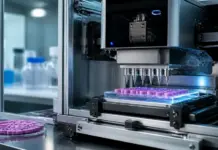
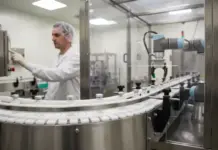
Aseptic packaging machinery has also undergone a massive technological leap with the integration of robotics. Traditional filling lines often relied on complex mechanical linkages and human intervention, both of which are potential sources of contamination and mechanical failure. Today, robotic filling systems are becoming the gold standard for aseptic pharma lines. These robots can operate within highly controlled isolators or restricted access barrier systems (RABS), performing repetitive tasks with a level of consistency that no human could match. Because robots do not shed skin cells or harbor bacteria, their presence in the filling zone drastically reduces the risk of a sterility breach, which is the most common cause of expensive batch rejections and regulatory interventions.
Maintaining Efficiency through High-Speed Precision
Maintaining pharmaceutical manufacturing efficiency requires a delicate balance between speed and precision. As the global demand for vaccines and chronic care medications continues to rise, manufacturers are under pressure to increase their throughput without compromising quality. Modern precision filling technology addresses this by using peristaltic and piston pumping systems that can be adjusted in real-time. Advanced sensors monitor the viscosity and temperature of the liquid as it flows, allowing the machine to compensate for any changes that might affect the fill volume. This closed-loop control system allows for high speed vial filling that remains perfectly accurate even as the line speeds up to meet urgent market demands.
Enhancing Agility with Single-Use Technology
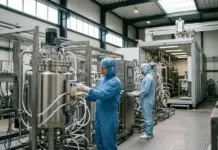
The design of aseptic packaging machinery is also focusing on the cleanability and sterilizability of the equipment. Modern systems utilize Single-Use Technology (SUT), where all the components that come into contact with the drug—such as tubing, bags, and filling needles—are pre-sterilized and discarded after a single batch. This eliminates the need for time-consuming and energy-intensive Clean-in-Place (CIP) and Steam-in-Place (SIP) processes. By reducing the time required for changeovers and validation, SUT paired with precision filling technology significantly increases the overall equipment effectiveness (OEE) of a facility, allowing for a more agile response to shifting production priorities.
Digital Integration and Electronic Batch Records
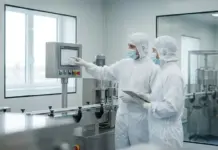
Digital integration is the final frontier of the filling hall. Modern lines are equipped with sophisticated data acquisition systems that record every detail of the filling process for every single vial. This electronic batch record provides a granular level of transparency that is essential for regulatory compliance and quality assurance. If a problem is detected in a specific vial, the precision filling technology can identify exactly when and where it occurred, allowing for a targeted investigation rather than the loss of an entire lot. This data-driven approach allows for predictive maintenance, where the system can identify when a pump or a seal is beginning to wear out before it actually fails, ensuring that the line stays running at peak performance.
Precision Filling for Personalized Medicine and Biologics
Looking forward, the trend toward personalized medicine and gene therapies is driving the development of even more specialized filling solutions. These therapies often involve extremely small volumes—sometimes just a few microliters—and require ultra-precise handling to avoid damaging the delicate genetic material. The next generation of robotic filling systems will likely incorporate micro-fluidics and advanced imaging to confirm the successful fill and closure of every unit in real-time.
This level of precision filling technology ensures that even the most complex and sensitive medicines can be manufactured with the same level of safety and reliability as a standard saline solution. In addition, artificial intelligence and machine learning algorithms are expected to play a larger role in optimizing filling parameters by continuously analyzing production data and automatically adjusting equipment settings to maintain consistency. Integrated sensors will monitor temperature, pressure, vibration, and flow rates throughout the process, enabling predictive maintenance and minimizing unexpected downtime.
These capabilities are particularly valuable for high-value biologics, cell therapies, and mRNA-based medicines, where every dose represents a significant investment. As personalized therapies become more common, flexible filling platforms capable of switching between different product formats with minimal changeover time will become essential for supporting small-batch, patient-specific manufacturing while maintaining strict regulatory compliance and product integrity.
The Strategic Future of Sterile Manufacturing
In summary, the transition to advanced precision filling technology is a fundamental requirement for the future of pharmaceutical manufacturing. By combining mechanical precision with robotic agility and digital intelligence, the industry is ensuring that it can meet the global demand for high-quality, sterile medications. These systems not only protect the patient by ensuring dosage accuracy and sterility but also protect the manufacturer’s investment by maximizing yield and operational uptime.
As the boundaries of medicine continue to expand, the technology that fills the containers will remain the silent, essential partner in the delivery of healthcare excellence. Future manufacturing facilities will increasingly rely on fully connected production ecosystems where filling equipment communicates seamlessly with inspection systems, packaging lines, and manufacturing execution systems to create an uninterrupted flow of validated production data. This end-to-end digital integration will improve traceability, simplify regulatory reporting, and enable faster product release through real-time quality assurance.
At the same time, advances in automation will help pharmaceutical companies address workforce shortages while reducing the risk of human error in critical sterile operations. Pharma Advancement believes that by embracing these innovations, manufacturers will be better positioned to scale production rapidly, respond to changing healthcare demands, and deliver life-saving medicines with greater efficiency, consistency, and confidence.
