











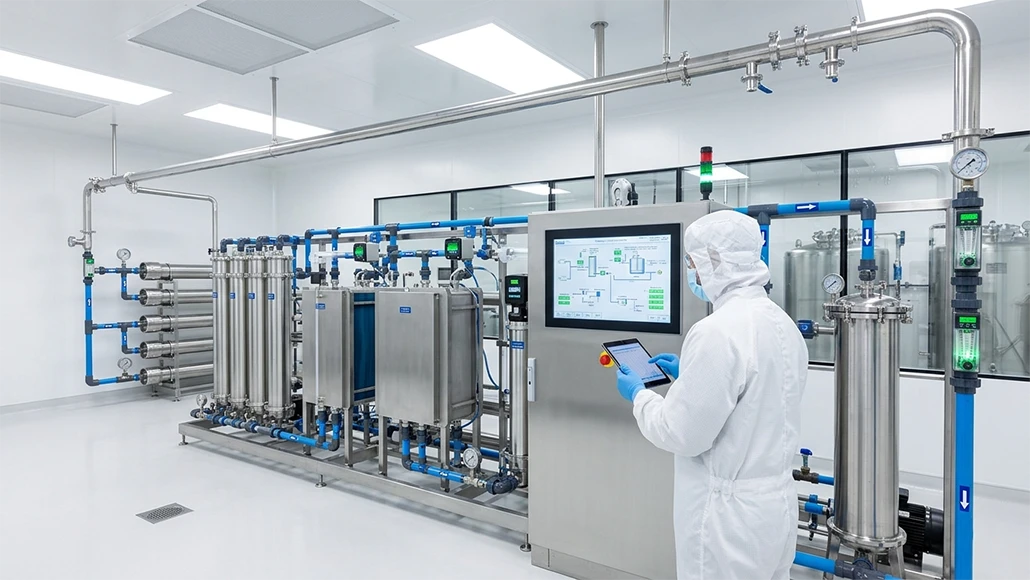
The architecture of a pharmaceutical quality system is built upon layers of rigorous standards, each designed to eliminate risk and ensure patient safety. Within this framework, high purity water pharma quality acts as one of the most essential pillars. As the most common solvent and cleaning agent in the industry, water touches every part of the product lifecycle. If this pillar is weak, the entire quality structure is at risk of collapse. Maintaining ultra-pure water is not simply a technical requirement for the lab it is a fundamental component of the Quality by Design (QbD) philosophy that drives modern drug manufacturing.
Defining the Standard of Purity
In the pharmaceutical world, purity is not a vague concept but a strictly defined set of parameters. High purity water pharma quality is typically achieved through multiple stages of treatment, including reverse osmosis, deionization, and ultrafiltration. These processes remove ions, organic molecules, gases, and microorganisms to levels that are nearly undetectable. This level of purity is necessary because the presence of even trace contaminants can catalyze chemical reactions, degrade active pharmaceutical ingredients (APIs), or interfere with sensitive analytical methods. By setting the bar at ultra-pure, the quality system ensures that the water is a neutral participant in all processes.
Specifically, the resistivity of 18.2 MΩ·cm is the gold standard for Type I water. This measurement indicates the absence of ionic impurities. However, resistivity alone is not enough to define high purity water pharma quality. Total Organic Carbon (TOC) levels must also be strictly controlled, typically below 5 parts per billion (ppb). Organics can serve as food for bacteria or interfere with chromatography peaks. By monitoring both resistivity and TOC in real-time, pharmaceutical companies can ensure that their water meets the highest possible standards of chemical and organic purity, providing a rock-solid foundation for their quality systems.
Prevention of Cross-Contamination
One of the primary goals of any pharmaceutical quality system is the prevention of cross-contamination. Water is the primary tool used for cleaning reactors, piping, and laboratory glassware. If the water used for cleaning is not of the highest quality, it can actually introduce new contaminants into the system. High purity water pharma quality standards ensure that cleaning validation studies are meaningful. When the final rinse water is as pure as the product itself, manufacturers can be certain that no residues are left behind, protecting the integrity of the next batch and ensuring that patients receive exactly what is listed on the label.
The concept of Cleaning Validation is central to GMP. It requires proof that the cleaning process consistently removes the previous product to a level below a calculated safety limit. If the water used in the cleaning process is inconsistent, the validation becomes nearly impossible to maintain. By integrating high purity water pharma quality into the cleaning SOPs, manufacturers can ensure that their equipment is always truly clean, not just visually clean. This is especially critical in multi-product facilities where the risk of carry-over between different drug substances must be managed with absolute precision.
Supporting Analytical Accuracy in Quality Control
The Quality Control (QC) laboratory is the final line of defense before a drug is released to the public. The accuracy of the tests performed here depends entirely on the quality of the reagents used. High purity water pharma quality is essential for the preparation of standards, mobile phases, and samples. If the water used in an HPLC run contains organic impurities, it can create ghost peaks that look like product degradation products, leading to a false failure of a batch. Conversely, if impurities mask a real contaminant, the results could be a false pass.
Furthermore, in the testing of biotechnological products, the absence of nucleases and proteases in the water is critical. These enzymes can degrade the DNA or protein samples being tested, leading to incorrect results about the drug’s potency or purity. High purity water pharma quality for biologics often requires additional purification steps, such as ultrafiltration with a 5,000 Dalton molecular weight cut-off. This ensure that the water is not just chemically pure, but also biologically inert, providing the most accurate possible environment for testing the complex molecules of modern medicine.
Regulatory Alignment and GMP Standards
Adhering to Good Manufacturing Practice (GMP) requires that every material used in production be of a specified and controlled quality. Water is no exception. Incorporating high purity water pharma quality into the Quality Management System (QMS) provides a framework for compliance with global pharmacopeias like the USP, EP, and JP. These standards require continuous monitoring of resistivity and TOC, as well as regular microbial testing. By integrating these metrics into the facility’s QMS, companies can demonstrate a high level of control to regulatory inspectors, proving that they are proactively managing one of their most significant risk factors.
The Water System Validation is a key part of this compliance. It typically involves a three-phase approach over several weeks to prove that the system can consistently produce water of the required quality. High purity water pharma quality is thus not just a snapshot in time, but a continuous state of performance that must be documented and defended. By treating the water system as a critical manufacturing asset equal in importance to the pill press or the bioreactor pharmaceutical companies ensure that they are meeting both the letter and the spirit of global regulations.
Impact on Product Stability and Shelf Life
The quality of the water used in the formulation of liquid drugs or the reconstitution of lyophilized powders has a direct impact on the product’s stability. Trace metals like copper or iron can act as catalysts for oxidation, leading to the rapid degradation of sensitive drug molecules. High purity water pharma quality protocols ensure that these catalytic impurities are removed, thereby extending the shelf life and efficacy of the medication. This is particularly important for protein-based biologics, where even slight changes in the ionic environment can cause the protein to unfold or aggregate.
Consider the development of an injectable medication. If the water used for injection (WFI) contains even trace amounts of minerals, it can affect the tonicity and pH of the final solution, causing pain or tissue damage at the injection site. High purity water pharma quality ensures that the WFI is as close to physiological conditions as possible, while remaining absolutely free of contaminants. This attention to detail at the molecular level is what allows pharmaceutical companies to produce medications that are not only effective but also well-tolerated by patients.
Technological Advancements in Quality Monitoring
The integration of smart technology into water purification systems has revolutionized the way we manage high purity water pharma quality. Modern systems provide real-time data that can be fed directly into a laboratory information management system (LIMS). This allows for real-time release testing of water, where the system automatically confirms that the water meets all quality specifications before it is used in a process. This proactive approach reduces the need for time-consuming retrospective testing and allows for immediate intervention if a quality trend begins to drift.
Moreover, the use of UV-based TOC sensors provides a continuous, non-destructive way to monitor organic purity. In the past, TOC testing was often a discrete, manual process that provided a delayed view of water quality. Today, high purity water pharma quality can be monitored second-by-second, providing an unprecedented level of security. If a TOC spike is detected, the system can automatically divert the water to the drain, preventing it from ever reaching the production line. This fail-safe design is a hallmark of a modern, high-quality pharmaceutical facility.
Sustainability and the Quality Pillar
As the industry moves toward greener manufacturing, the high purity water pharma quality pillar is also evolving to become more sustainable. Traditional water systems can be incredibly water-intensive, but new technologies are allowing for greater recovery rates and lower energy consumption. For example, modern RO membranes can operate at lower pressures while still achieving the same level of salt rejection, reducing the facility’s carbon footprint.
Sustainability is not just about the environment it is also about the long-term viability of the quality system itself. A system that is too complex or too expensive to maintain will eventually fail. By focusing on Sustainable High Purity, pharmaceutical companies are creating systems that are easier to validate, easier to maintain, and more resilient to external shocks. This holistic view of quality integrating scientific purity, regulatory compliance, and environmental responsibility is the true meaning of high purity water pharma quality in the 21st century.
Conclusion: A Foundation of Trust
At its core, a pharmaceutical quality system is about building trust trust between the manufacturer and the regulator, and trust between the physician and the patient. High purity water pharma quality is the foundation upon which this trust is built. By ensuring that the most ubiquitous substance in the facility is of the highest possible purity, a company demonstrates its unwavering commitment to excellence. This dedication to quality at the most fundamental level is what allows the pharmaceutical industry to continue developing life-saving therapies that are both safe and effective.
As we look to the future, the importance of this quality pillar will only grow. With the advent of gene therapies and personalized medicine, the precision required in our manufacturing processes will reach new heights. High purity water will remain the silent, essential partner in this journey, providing the pristine environment needed for the next generation of medical breakthroughs. By treating water with the respect it deserves, the pharmaceutical industry ensures that every dose, every vial, and every patient is protected by the highest standards of science and care.
