






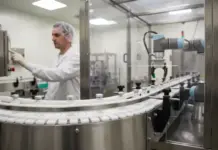
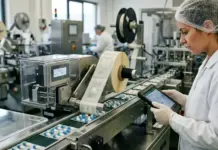



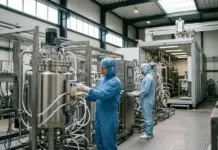
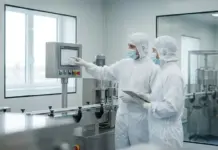

Eli Lilly and Company is indeed a giant in the pharmaceutical industry, and its GLP-1 diabetes and obesity drug franchise has made it even bigger. Lilly’s stock price has risen up to the top of the S&P 500, all due to products such as Mounjaro and Zepbound, which are in every way altering how patients receive medical care and making huge sales.
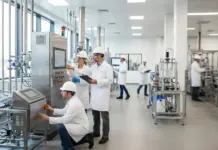
It is well to be noted that Lilly has now made a huge $3 billion, decade-long pledge to grow its manufacturing operations in China. This commitment shows that the company has big plans as far as its future is concerned. This goes on to make shareholders ask a crucial question – Why should they make such a big bet on China right now, when the world looks so complicated? The answer shows a masterclass in strategic foresight and provides Lilly a clear plan for how to grow in the future.
Why China? A once-in-a-lifetime chance in the market
Investors should first understand how big the opportunity is so as to understand the strategy by Lilly. This investment happens to be a direct response to a market that is too big to be overlooked. There is indeed a very big public health problem in China due to the fact that 141 million people there suffer from diabetes. In addition, the country has the largest population of overweight or obese adults in the world, with over 600 million of them. As the middle class expands in China and healthcare costs climb, the need for effective treatments is going to increase greatly.
This goes on to make a huge pool of potential patients for the best drugs from Lilly that is mostly untapped. There is a lot of money to be made right away. Market forecasts say that the GLP-1 diabetes and obesity drug market in China is likely to grow quickly in the next few years, and some analysts even happen to think that it could be worth around fourteen billion dollars by the end of this decade. This sort of fast growth makes China the most vital long-term growth engine when it comes to the main injectable products from Lilly and, most importantly, for its next wave of innovations, such as the oral drug orforglipron. For every day oral medication to work well on a large scale, it needs to be made locally and, too, in large quantities in an efficient way. To stay at the top of the world, one must secure this market.
Lilly’s Great Wall – A Plan for Supply as well as Power
Eli Lilly’s investment happens to be quite a smart strategy that serves two purposes. At the same time, it also builds a shield against the outside threats and an offensive weapon in order to take over the market. This sort of a proactive approach should make investors feel good about the ability of the management to deal with a complicated global environment and also protect the future profits of the company.
The Geopolitical Shield
The fact is that the strategy protects the supply chain, which goes on to act as a defensive shield. The U.S. pharmaceutical industry depends pretty heavily on China for Active Pharmaceutical Ingredients – APIs which are the main parts of many drugs. This reliance is indeed quite a big risk in a time when trade is tense. Lilly protects its most important growth market from prospective export controls or issues with logistics through building a strong presence in China. This choice, which was based upon what was learned from recent global GLP-1 diabetes and obesity drug shortages, guarantees an ongoing and predictable supply of medicine to the Chinese patients, increases loyalty for the brand, and gives shareholders dependable revenue streams that are not impacted by geopolitical instability.
The Weapon of Competition
More importantly, the investment happens to be an offensive weapon in a very competitive market. Lilly is fighting on two fronts when it comes to China. Novo Nordisk, which is its biggest competitor in the world, already does have a large and well-established manufacturing base in the country. The investment made by Lilly is indeed quite a necessary step to make things fair and compete hard in terms of supply and speed, as well as scale.
The fact is that even a wave of local competition may be more critical. Over 60 Chinese pharmaceutical companies are working on their own GLP-1 drugs. Such competition will put a lot of pressure on prices in the years to come. Lilly can save more money through making things in the area and working with regional specialists such as Pharmaron. This strategy lets it change its prices so as to protect its market share against less expensive alternatives in the future, which hence safeguards its long-term profit margins and also builds quite a strong competitive moat.
Why This Move Will Pay Off in the Future
In the end, this kind of a multi-billion-dollar plan directly supports the positive investment case for the stock of Eli Lilly. This is not just about making more sales, but it is more about building a strong, safe, as well as very profitable business for the long term.
The move happens to be quite a strong driver of the top-line growth that Lilly needs to keep its high valuation. Getting a big piece of the GLP-1 market in China could also mean billions of dollars in annual sales in the future, hence giving the company a long runway for growth, which makes it the market leader.
This sort of forward-thinking use of capital is a big reason why Wall Street is still very positive. The average price target for the stock of Lilly is around $1,230, and the analysts agree that it should be a moderate purchase. This hope is based on the fact that Mounjaro as well as Zepbound are doing well right now; however, it is also looking ahead to the future, when management is anticipated to continue making bold, strategic moves in order to ensure future growth. This kind of an investment in China shows that one can trust that.
Interestingly, Lilly is not only accelerating by adding this kind of a strong third pillar of global growth next to the U.S. as well as Europe, but it is also diversifying and bolstering its whole business. Investors do not see this $3 billion commitment as a risk, but it is for sure a well-thought-out and necessary step for the growth of Lilly over the next decade. It strengthens the position of Eli Lilly as an international player in pharmaceuticals and also makes a strong case when it comes to its long-term value.
