


























The biopharmaceutical industry is undergoing a significant paradigm shift, with single-use technology rapidly becoming the preferred choice for modern manufacturing facilities. While the benefits of speed, flexibility, and sterility are well-documented, the widespread adoption of plastic-based systems has brought the issue of environmental impact to the forefront. Understanding and addressing the sustainability in disposable bioprocess technologies is no longer an optional “green” initiative; it is a strategic imperative for companies that want to operate responsibly in a world increasingly focused on climate change and resource scarcity. The challenge lies in creating a circular or low-impact model for a technology that is, by definition, designed to be discarded after a single use.
The Complex Relationship Between Efficiency and Waste
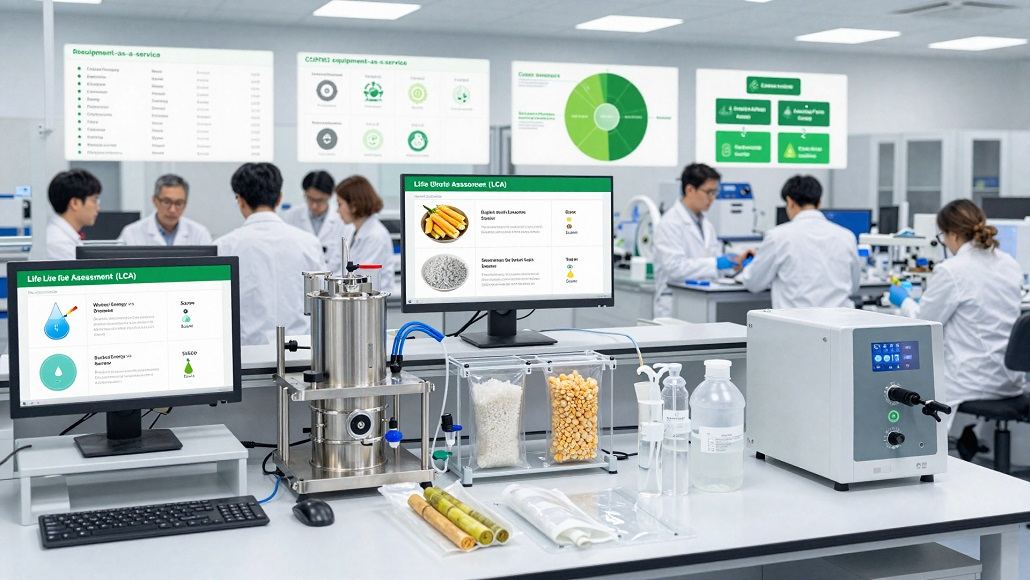
At first glance, the idea of using hundreds of kilograms of plastic for a single manufacturing run seems fundamentally at odds with sustainability. However, a true assessment of sustainability in disposable bioprocess technologies requires a holistic view of the entire manufacturing lifecycle. Traditional stainless steel facilities consume massive amounts of water and energy for cleaning and sterilization procedures (CIP/SIP). Numerous life cycle assessments (LCAs) have shown that in many cases, the energy and water saved by eliminating these steps in a single-use facility can actually outweigh the environmental burden of producing and disposing of the plastic components. The real challenge, therefore, is not just the plastic itself, but the overall carbon footprint of the production process, and how that footprint can be further reduced as the industry scales.
Navigating the Hurdles of Plastic Waste Management
One of the most visible sustainability in disposable bioprocess technologies is the management of the resulting waste stream. Most bioprocess assemblies are made from multi-layer films that combine different types of plastics (e.g., PE, EVOH, and PA) to achieve the necessary barrier properties. This multi-material construction makes mechanical recycling extremely difficult, as the different layers cannot be easily separated. Currently, much of this waste is sent to landfills or incinerated for energy recovery. To move forward, the industry is exploring advanced chemical recycling technologies that can break down complex polymers into their original monomers, allowing for the creation of new high-quality plastic. Establishing the infrastructure and logistics for collecting and processing these materials from cleanroom environments is a major focus for sustainability leaders in the sector.
Energy Consumption and Carbon Footprint in Manufacturing
The carbon footprint of single-use technology extends beyond the cleanroom to the facilities where the components are manufactured. Improving sustainability in disposable bioprocess technologies involves a commitment from equipment suppliers to use renewable energy sources and more efficient manufacturing processes. The production of medical-grade plastics and the subsequent sterilization via gamma irradiation are energy-intensive activities. Leading suppliers are now setting ambitious targets for carbon neutrality, investing in solar and wind power for their factories, and optimizing their supply chains to reduce transport-related emissions. By choosing partners who prioritize green manufacturing, biopharma companies can significantly reduce the “embedded” carbon in their manufacturing processes.
Innovations in Material Science for Greener Bioprocessing
The future of sustainability in disposable bioprocess technologies is closely tied to the development of next-generation materials. Scientists are currently exploring the use of bio-based polymers derived from renewable sources like sugarcane or corn as alternatives to petroleum-based resins. While these materials must still meet the rigorous biocompatibility and performance standards of the pharmaceutical industry, they offer the potential for a significantly lower carbon footprint. Furthermore, designers are working on “monomaterial” films that use different orientations of the same polymer to achieve the necessary strength and barrier properties, making the final assembly much easier to recycle. These material innovations are a critical component of the industry’s long-term strategy for ecological responsibility.
Reducing Water Usage and the Impact of Sterilization
While single-use systems are known for saving water in the facility, the production of the components themselves still requires high-purity water. Enhancing sustainability in disposable bioprocess technologies means looking for ways to optimize water usage at every stage of the supply chain. Additionally, the industry is evaluating alternative sterilization methods to gamma irradiation, such as X-ray sterilization or E-beam, which may offer higher efficiency and a lower environmental impact in certain applications. By continuously refining these foundational processes, the industry can reduce the ecological “price” of maintaining the high standards of sterility required for drug production.
The Role of Design in Minimizing Material Usage
Often, the most effective way to improve sustainability is to use less material in the first place. This “design for sustainability” approach involves creating more compact manifolds, thinner (but still strong) bag films, and more efficient connection systems. By leveraging advanced simulation and modeling tools, engineers can optimize the fluid path to eliminate unnecessary tubing and reduce the overall weight of the plastic assembly. This not only reduces the amount of waste generated but also lowers the energy required for shipping and handling. This trend toward “minimalist” design is a key part of the broader effort to address the sustainability in disposable bioprocess technologies without compromising process performance.
Collaborative Approaches to Industry-Wide Sustainability
The challenge of sustainability is too large for any single company to solve in isolation. True progress in sustainability in disposable bioprocess technologies requires a collaborative effort across the entire value chain, from raw material suppliers to waste management providers. Organizations like the Bioprocess Systems Alliance (BPSA) are working to establish industry standards for life cycle assessments and recycling protocols. By creating a common framework for measuring environmental impact, the industry can more effectively share best practices and drive collective action. Furthermore, partnerships between drug manufacturers and recycling firms are essential for creating the “closed-loop” systems that will be necessary for the long-term viability of disposable technology.
Integrating Sustainability into Procurement and Vendor Selection
For pharmaceutical companies, the procurement process is a powerful lever for driving environmental change. Increasingly, the sustainability in disposable bioprocess technologies is being factored into vendor selection criteria. Manufacturers are asking for detailed information on their suppliers’ carbon footprint, waste reduction goals, and social responsibility initiatives. This market-driven pressure is encouraging suppliers to accelerate their own green transitions. By rewarding companies that demonstrate a commitment to environmental stewardship, the industry can ensure that sustainability becomes a competitive advantage, driving a “race to the top” in terms of ecological performance.
Future Outlook: Toward a Circular Bioprocess Economy
The ultimate goal for the industry is to move toward a circular bioprocess economy, where the value of materials is maintained for as long as possible. This will involve a combination of advanced recycling, the use of renewable materials, and innovative business models like “equipment-as-a-service,” where the supplier takes back the used assemblies for processing. While there are still significant technical and regulatory hurdles to overcome, the momentum toward sustainability in disposable bioprocess technologies is undeniable. As we look to the future, the ability to produce life-saving medicines in an environmentally responsible manner will be a defining characteristic of the world’s most successful biopharmaceutical companies.
Conclusion
The journey toward a more sustainable biopharma industry is complex and requires a fundamental rethinking of how we design, manufacture, and dispose of our equipment. The sustainability in disposable bioprocess technologies represents a significant challenge, but also an opportunity for innovation. By embracing new materials, optimizing manufacturing processes, and fostering industry-wide collaboration, we can ensure that the benefits of single-use technology are not achieved at the expense of the planet. In the end, true success in biomanufacturing will be measured not just by the quality of the medicines produced, but by the legacy of environmental responsibility that we leave for future generations.
